


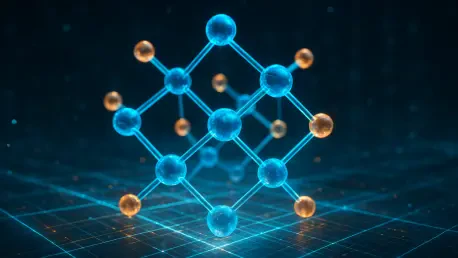

The Hybrid Quantum SchNet ensures that forces are derived directly from the energy landscape, preserving the physical laws necessary for accurate simulations. This shift represents a significant leap forward in the quest to simulate chemical environments where classical approximations typically falter. Historically, molecular dynamics relied on force fields that were either too computationally expensive or too simplistic to capture the nuances of quantum mechanical interactions. By leveraging the continuous-filter convolutional layers of SchNet and augmenting them with parameterized quantum circuits, this hybrid approach bridges the gap between accuracy and efficiency. This development allows for the modeling of large-scale systems while maintaining the rigorous precision of quantum chemistry. As industrial labs seek to reduce the time from hypothesis to synthesis, the implementation of such models has become the standard for achieving predictive power. The methodology fundamentally changes how scientists interpret the subtle shifts in potential energy surfaces during chemical reactions.
Bridging Classical Neural Networks and Quantum Logic
At the heart of this advancement lies the strategic fusion of graph neural networks and quantum variational circuits to represent atomic configurations. Classical SchNet architectures utilize message-passing frameworks to model interactions based on the distance between atoms, which provides a robust foundation for spatial representation. However, when these classical nodes are interfaced with quantum layers, the system gains the ability to process high-dimensional Hilbert spaces that are inaccessible to standard bits. This integration allows for a more nuanced description of electron correlation effects, which are pivotal in understanding the stability of complex molecules. The quantum components act as specialized feature extractors, identifying patterns in electronic structure that would otherwise require massive amounts of training data in a purely classical setting. Consequently, the hybrid model achieves a level of generalization that allows it to predict properties of unseen molecular structures with remarkably high accuracy.
A critical aspect of the Hybrid Quantum SchNet is its commitment to the property of energy conservation through gradient-based force derivation. In many traditional machine learning potentials, forces are predicted as independent vectors, which can lead to non-physical behavior where energy is added or removed from the system during simulation. This hybrid framework avoids such pitfalls by ensuring that the force acting on each atom is the negative gradient of the total energy predicted by the combined quantum-classical network. This mathematical consistency is vital for long-term molecular dynamics simulations, particularly when studying the thermal stability of new polymers or the binding kinetics of drug candidates. By enforcing these physical constraints within the neural network architecture, researchers have successfully eliminated the energy drift that previously plagued long-duration simulations. This rigorous adherence to the laws of thermodynamics ensures that the resulting trajectories are not just visually plausible but are scientifically valid.
Accelerating Discovery: Quantum-Enhanced Scalability
The practical utility of Hybrid Quantum SchNet is further magnified by the recent progress in noisy intermediate-scale quantum hardware. In the period from 2026 to 2028, the industry expects a surge in the availability of error-corrected qubits, which will allow these hybrid models to scale beyond small organic molecules to larger biological complexes. Current implementations utilize specialized kernels that map molecular graphs directly onto quantum gates, reducing the depth of the circuits required for accurate energy estimation. This efficiency is a game-changer for materials science, where the behavior of catalysts often depends on subtle electronic shifts that classical computers struggle to resolve in a timely manner. Moreover, the hybrid nature of the model means that only the most complex portions of the calculation are offloaded to the quantum processor, while the surrounding environment is handled by efficient classical hardware. This balanced distribution of tasks optimizes the use of expensive quantum resources.
Specifically, the use of the Hybrid Quantum SchNet has shown remarkable success in the design of next-generation electrolyte materials for solid-state batteries. These systems require a deep understanding of lithium-ion transport across grain boundaries, a phenomenon that is heavily influenced by local quantum effects. By applying this hybrid modeling technique, engineers have been able to identify optimal dopants that stabilize the interface and prevent dendrite growth. The model’s ability to handle multi-component systems with varying atomic species demonstrates its versatility across different scientific domains. Furthermore, the iterative training process, which utilizes active learning strategies, allows the model to refine itself by identifying regions of high uncertainty in the chemical space. This self-improving loop ensures that the Hybrid Quantum SchNet remains at the cutting edge of predictive chemistry, providing researchers with a reliable tool for exploring the vast landscape of possible materials without the need for exhaustive experimentation.
Strategic Implementation: The Path Forward
Reflecting on the recent adoption of these systems, it was observed that organizations integrating hybrid quantum workflows experienced a drastic reduction in the time required for lead optimization in drug discovery. The transition from purely classical pipelines to those supported by the Hybrid Quantum SchNet necessitated a fundamental rethink of data infrastructure and computational resource allocation. Early adopters focused on building robust middleware that could seamlessly translate molecular graphs into quantum instructions, which proved to be a decisive factor in their success. These pioneers demonstrated that the bottleneck was no longer the availability of raw data, but rather the quality of the physics-based insights extracted from that data. The historical challenge of balancing accuracy with throughput was largely addressed by this hybrid paradigm, which proved that specialized AI architectures could indeed honor the underlying physics of the microscopic world. This shift paved the way for more rigorous virtual screening processes.
To maximize the impact of this technology, researchers focused on the standardization of hybrid datasets and the development of open-source frameworks that facilitated the deployment of the Hybrid Quantum SchNet across diverse hardware backends. It became necessary for computational chemists to collaborate closely with quantum engineers to refine the mapping of atomic interactions onto specific quantum gate sequences. Companies aiming to stay competitive invested in training their teams to handle the complexities of variational quantum algorithms and the integration of quantum-classical feedback loops. Furthermore, exploring the synergy between this model and generative AI led to the autonomous discovery of molecules with pre-defined physical properties. The emphasis remained on maintaining the physical integrity of the simulations while pushing the boundaries of the chemical space that were explored. By prioritizing the development of more efficient error-mitigation techniques, the industry ensured that the precision offered by hybrid models remained resilient.







