


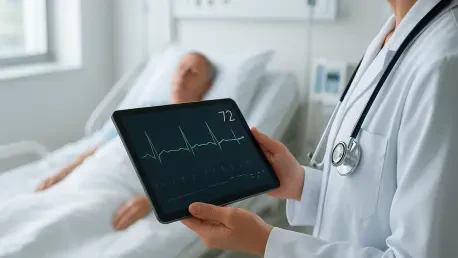

Reinforcement learning agents can automate the adjustment of hyperparameters in real-time to accelerate the convergence of predictive models during collaborative medical research. This capability represents a significant breakthrough in overcoming the persistent paradox within modern healthcare: the abundance of clinical data versus the strict legal protections and massive energy costs associated with processing it. As medical facilities transition toward more data-intensive environments in 2026, the need for scalable AI that respects patient confidentiality has never been more urgent. Current diagnostic tools often require centralized data storage, which inadvertently creates high-risk targets for cyberattacks and consumes vast amounts of electricity. The introduction of the Bio-Inspired Reinforcement Federated Optimization (Bio-RL-FedOpt) framework aims to dismantle these barriers by providing a decentralized ecosystem where institutions can train algorithms locally, thereby ensuring that sensitive patient information remains within the secure confines of the original hospital.
The Architectural Shift: Moving Toward Federated Learning
At the heart of the Bio-RL-FedOpt framework is a commitment to federated learning, a paradigm that completely reverses the traditional data-centralization model. Instead of moving sensitive patient files to a remote central server, the server transmits a “blank” model to various local institutions, such as hospitals or regional clinics. Each participating hospital then trains this model using its own private data and sends only the resulting mathematical updates, commonly referred to as “weights,” back to the central coordinator. This decentralized process ensures that the underlying raw patient records never leave the safety of the institution’s local network, providing a foundational layer of privacy that complies with global standards. By localizing the training process, the framework effectively mitigates the risk of large-scale data breaches that often plague centralized repositories. This approach is particularly relevant for 2026 and beyond, as healthcare systems worldwide seek to balance collaborative research with rigorous data protection mandates.
However, standard federated learning systems are not without flaws, as they can be vulnerable to reverse-engineering attacks where clever adversaries attempt to reconstruct data from model updates. Furthermore, these systems often ignore the energy toll placed on participating devices, such as battery-powered bedside monitors or wearable sensors. Bio-RL-FedOpt addresses these gaps by incorporating a multi-layered pipeline that begins at the network’s “edge,” where data is first collected. This initial phase utilizes lightweight hybrid encryption combined with an energy profiling layer that constantly monitors the battery status of medical hardware. If a device is low on power, the system intelligently throttles tasks or delays processing to ensure that AI computations do not interfere with critical life-saving functions. This proactive resource management ensures that the collaborative network remains sustainable and reliable, even when utilizing hardware with limited computational capacity or restricted power supplies.
Local Data Hygiene: Hybrid Networks and Anomaly Detection
Before the global model can be updated, each participating institution must ensure the quality and security of its local data streams. The Bio-RL-FedOpt framework utilizes a hybrid neural network that combines Convolutional Neural Networks (CNNs) for spatial data, such as high-resolution MRI scans, with Transformers designed for temporal sequences like continuous heart rate monitoring. This dual-architecture approach allows the system to understand both the physical structure of a tumor and the long-term trends in a patient’s vital signs simultaneously. By integrating these different data types, the model achieves a more holistic understanding of patient health than traditional single-architecture models. This complexity is managed locally, ensuring that the heavy computational lifting is done where the data resides. This strategy significantly reduces the amount of information that needs to be transmitted over the network, thereby conserving bandwidth and reducing the carbon footprint of the entire medical AI ecosystem.
To prevent faulty or malicious information from compromising the collective model, the system includes an Adaptive Autoencoder-based Anomaly Detector. This critical component filters out corrupted data caused by sensor malfunctions or transmission errors, ensuring that the AI is built on a reliable foundation of high-quality information. In the context of medical research, “garbage in, garbage out” can have life-threatening consequences, making this automated hygiene layer indispensable. The detector learns the patterns of “normal” medical data and flags any deviations that might suggest a security breach or a hardware failure. By maintaining this level of data integrity, the Bio-RL-FedOpt framework protects the global model from being poisoned by inaccurate local updates. This robust filtering mechanism allows hospitals to participate in large-scale studies with the confidence that their contributions will not be undermined by external errors or internal data inconsistencies.
Optimization Core: Tunicate Swarms and Learning Efficiency
The most distinctive feature of the research is the dual optimization strategy used during the aggregation of local model updates. A reinforcement learning agent is employed to automate the setting of hyperparameters, which are the internal settings that govern how a model learns. By observing how the training is progressing, the agent adjusts the model’s learning speed in real-time to accelerate the path to a final, accurate diagnostic tool. This automation removes the need for human engineers to manually fine-tune settings, a process that is usually time-consuming and prone to error. In 2026, where the speed of medical discovery can dictate the success of public health interventions, this real-time acceleration is vital. The reinforcement learning agent ensures that the model converges as quickly as possible without sacrificing accuracy, allowing medical researchers to see the results of their collaborative efforts in a fraction of the time required by older, more manual optimization methods.
This reinforcement learning is paired with an Energy-Sensitive Tunicate Swarm-based optimizer, which draws inspiration from the jet-propulsion movement and social behavior of marine tunicates. This biological algorithm searches for the most efficient way to merge model updates by mimicking how these organisms form complex swarms to find food while conserving energy. The algorithm effectively minimizes the amount of data that needs to be transmitted between the hospitals and the central server, which significantly reduces the total energy consumption of the entire network. By prioritizing communication efficiency, the Bio-RL-FedOpt system allows smaller clinics with limited infrastructure to participate in advanced AI research without incurring prohibitive electricity costs. This bio-inspired approach proves that high-performance AI does not have to be synonymous with high energy consumption, offering a “green” alternative that aligns with modern environmental goals while maintaining a high level of predictive performance.
Advanced Security: Differential Privacy and Blockchain
To further harden the system against sophisticated cyber threats, Bio-RL-FedOpt applies Energy-Sensitive Differential Privacy to the shared model updates. This technique introduces a calculated level of statistical “noise” into the weights before they are sent to the central coordinator. This noise makes it mathematically impossible for an outside observer to identify an individual patient within the aggregate data, even if they have access to the model updates. The system is specifically designed to apply this noise efficiently, ensuring that the computational cost of data protection does not overwhelm the processing power of hospital hardware. This balance allows for high-level security without sacrificing the accuracy of the final diagnostic model, solving a long-standing conflict in the field of privacy-preserving machine learning. It ensures that while the global model learns the general trends of a disease, it never memorizes the specific details of a single patient.
In addition to differential privacy, the framework emphasizes institutional trust through a blockchain-based auditing mechanism. By utilizing Zero-Knowledge Proofs (ZKP), any participating hospital can verify that the central server has merged the models honestly and correctly without ever seeing the raw data contributed by other hospitals. This creates a permanent, tamper-proof record of the training history, ensuring full accountability across the entire network. If a particular update causes a drop in model performance, the blockchain record allows administrators to trace the issue back to the source without compromising privacy. This combination of differential privacy and blockchain technology provides a “learning without leaking” environment that meets the highest standards of medical ethics. Such a system is essential for building the trust required for international collaboration, where different legal jurisdictions and institutional policies might otherwise prevent the sharing of clinical insights.
Performance Metrics: Validating the Bio-RL-FedOpt Model
The researchers validated the Bio-RL-FedOpt framework using the MIMIC-IV database, which is a massive collection of de-identified clinical records widely used by the medical AI community. When compared against traditional federated learning methods, the system demonstrated superior performance across several critical metrics, including prediction accuracy and training speed. Most importantly, the simulation results indicated “almost zero” privacy leakage, a feat that is often difficult to achieve when also optimizing for speed and energy efficiency. The success of the framework is largely attributed to the synergy between the reinforcement learning agent and the bio-inspired swarm optimizer. These components worked in tandem to ensure that every byte of data sent over the network was necessary and that every computational cycle contributed directly to the model’s intelligence. This efficiency translated into a significant reduction in the carbon footprint of the training process.
The results of this study reflect a growing trend in the medical community toward “green computing” and “edge intelligence.” As the Internet of Medical Things (IoMT) continues to expand from 2026 to 2030, there is a clear consensus that centralized cloud computing is becoming insufficient for the real-time needs of modern healthcare. Bio-RL-FedOpt represents a shift toward a collaborative network of specialized devices that prioritize local processing and global learning. By reducing the reliance on massive data centers, the framework not only protects privacy but also makes advanced AI more accessible to institutions in developing regions where high-speed internet and reliable power may be scarce. The framework demonstrated that decentralized models can match or even exceed the performance of centralized ones, provided that the optimization algorithms are sufficiently sophisticated to handle the challenges of a distributed environment and heterogeneous hardware.
Future Pathways: Overcoming Real-World Deployment Barriers
Real-world implementation of the Bio-RL-FedOpt framework required a shift in how medical institutions approached their digital infrastructure and collaborative protocols. In the years leading up to 2028, researchers worked to integrate these decentralized algorithms into existing hospital management systems, focusing on the challenges of intermittent connectivity and hardware diversity. The transition was supported by the development of standardized APIs that allowed different brands of medical sensors to communicate seamlessly with the federated learning agent. These efforts proved that while the theoretical foundations of bio-inspired AI were robust, the success of the system ultimately depended on institutional willingness to adopt transparent, blockchain-verified auditing. By demonstrating that privacy and performance were not mutually exclusive, the framework encouraged a new era of data philanthropy, where hospitals shared the “intelligence” of their data without ever risking the confidentiality of the patients who provided it.
Moving forward, the focus shifted toward scaling these models to include a wider variety of rare diseases and multi-modal data sources. The successful deployment of the tunicate-inspired optimizer showed that biological metaphors could solve complex engineering problems in ways that traditional linear algorithms could not. Future versions of the framework were designed to incorporate even more efficient cryptographic techniques, such as fully homomorphic encryption, to further reduce the overhead of secure computations. For healthcare administrators and policymakers, the actionable takeaway was the necessity of investing in edge-ready hardware that could support local AI training. By prioritizing energy-efficient and privacy-preserving technologies, the medical community established a sustainable path for AI-driven diagnostics that could be deployed globally. This progress ensured that the benefits of machine learning reached every patient, regardless of their location or the technical limitations of their local healthcare facility.







