
Imagine a world where artificial intelligence (AI) was expected to wipe out an entire medical profession, only to become its greatest ally, sparking a staggering 40% job growth by 2033. That’s the surprising reality unfolding in radiology today. Far from the doom-and-gloom predictions of automation replacing human doctors, AI is proving to be a game-changer, enhancing radiologists’ skills and redefining their role in healthcare. This isn’t a tale of machines taking over; it’s a story of technology amplifying human expertise, making medical imaging more efficient and vital than ever. As aging populations and preventive care drive up demand for scans, AI steps in to streamline processes, yet it’s clear that human judgment remains irreplaceable. This unexpected partnership is not just saving jobs—it’s creating them at an unprecedented rate, turning radiology into one of the most dynamic fields in medicine.
Transforming Workflows with AI’s Precision
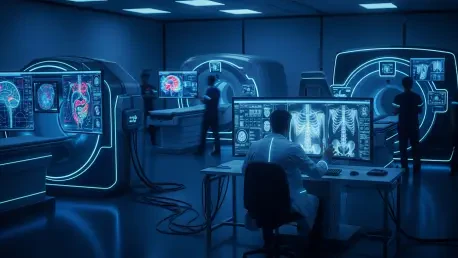
In the fast-paced world of radiology, AI is revolutionizing how professionals manage their day-to-day tasks, acting as a powerful tool to boost efficiency. By handling repetitive chores like sorting through thousands of scans and flagging urgent cases with predictive analytics, AI ensures that critical images get immediate attention. This cuts down on delays, allowing radiologists to focus their expertise on complex diagnoses rather than getting bogged down by routine work. The result is a significant improvement in patient outcomes, as life-threatening conditions are identified faster. Moreover, this technological assist reduces burnout—a longstanding issue in the field—by lightening the mental load on doctors. As AI takes on the grunt work, radiologists can handle a higher volume of cases without sacrificing quality, directly contributing to the growing need for skilled professionals in this space.
Beyond easing individual workloads, AI addresses broader systemic challenges like workforce shortages that have long plagued healthcare. Advanced triage systems, powered by cutting-edge algorithms, instantly highlight critical scans, ensuring no urgent case slips through the cracks. This capability doesn’t diminish the role of radiologists; rather, it amplifies their impact, enabling them to oversee more patients in less time. Reports from leading medical institutions underscore how these tools are expanding capacity across hospitals, creating a ripple effect of demand for human oversight to validate and act on AI insights. Far from replacing doctors, this technology is carving out space for more positions, as the efficiency gains translate into a need for additional expertise to manage the growing influx of imaging requests spurred by modern healthcare trends.
Demographic Shifts and the Surge in Imaging Needs
As the global population ages, the demand for medical imaging is skyrocketing, fueled by a rise in chronic conditions and an emphasis on early detection through preventive care. Older patients often require frequent scans to monitor diseases like cancer or heart conditions, creating a workload that could overwhelm any system without technological support. AI steps in as a crucial ally, automating processes like scheduling and generating initial reports to prevent bottlenecks in busy hospitals. However, while these tools manage the sheer volume, they cannot replicate the nuanced judgment of a trained radiologist. The need for human experts to interpret results, refine AI outputs, and engage with patients ensures that staffing demands continue to climb, setting the stage for significant job growth over the next decade.
In addition, the push for preventive screenings across younger and older demographics alike adds another layer of pressure on imaging services. With healthcare systems advocating for routine checks to catch issues early, the number of scans ordered each year is outpacing the field’s ability to adapt without assistance. AI helps keep things moving by prioritizing cases and streamlining workflows, yet this very support highlights an ironic twist: the more efficient the system becomes, the more radiologists are needed to handle the increased capacity. This demographic-driven demand, paired with technology’s enabling role, flips the narrative of automation as a threat. Instead, it positions AI as a catalyst for expanding the profession, ensuring that human expertise remains at the heart of patient care amidst this unprecedented growth.
Economic Rewards and Evolving Education
Radiology has long been recognized as a financially rewarding specialty, and AI’s integration is making it even more appealing by enhancing productivity and potential earnings. With tools that boost case throughput, radiologists can manage more patients in less time, translating directly into higher income opportunities. This economic incentive, coupled with a notable reduction in burnout due to AI handling repetitive tasks, is drawing fresh interest from medical students eager to enter a field that promises both stability and satisfaction. Social media platforms buzz with excitement from aspiring doctors who see radiology as a perfect blend of cutting-edge technology and meaningful patient impact. The financial and lifestyle benefits are clear drivers behind the projected job boom, as more talent is attracted to meet the rising demand.
Equally important is how educational institutions are adapting to prepare the next generation of radiologists for an AI-driven landscape. Leading universities have revamped curricula to integrate training on working alongside advanced tools, focusing on high-value skills like critical analysis over outdated manual tasks. This shift ensures that new professionals aren’t just ready to use technology but are equipped to innovate within it, making the specialty more dynamic and appealing to tech-savvy individuals. By emphasizing collaboration with AI, education is fostering a workforce that views these tools as partners rather than threats. This forward-thinking approach not only supports the influx of new talent needed by 2033 but also reinforces radiology’s status as a pioneering field, where human expertise and technology converge to shape the future of healthcare.
The Future of Human-AI Synergy in Radiology
Looking ahead, the synergy between AI and radiologists promises to redefine healthcare delivery, with job growth reflecting a deeper integration of technology as an enabler. AI’s ability to handle high-volume, repetitive tasks frees up professionals to focus on intricate diagnostics and patient interaction—areas where human empathy and insight are paramount. This partnership isn’t about replacement; it’s about enhancement, creating hybrid roles that blend medical expertise with technological proficiency. As global healthcare needs expand, particularly in underserved regions, AI facilitates remote diagnostics under human oversight, further increasing the need for skilled radiologists to ensure accuracy and ethical standards.
Moreover, while challenges like regulatory oversight and algorithmic bias must be addressed to prevent disparities, the trajectory is one of optimism. Industry leaders and practitioners alike view AI as a transformative force that amplifies human potential, a sentiment echoed in discussions at major medical conferences. The projected 40% job increase by 2033 isn’t just a statistic; it’s a testament to how technology, when thoughtfully applied, can expand opportunities rather than diminish them. As radiology continues to evolve, the focus should remain on balancing innovation with accountability, ensuring that this boom benefits both professionals and patients. This remarkable shift offers a broader lesson for other fields: embracing technology as a collaborator can unlock growth in ways once unimaginable, paving the way for a future where human skill remains indispensable.