


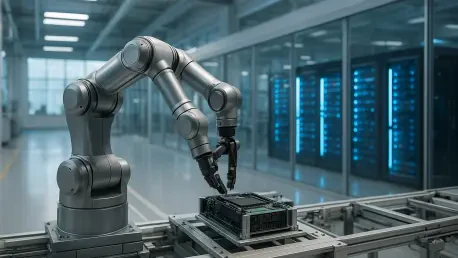

The virtual-to-physical translation of machine recipes for processes like PCB glue dispensing allows for instant verification and deployment across global production sites. This technical milestone represents a broader shift as Delta Electronics marks its 55th anniversary by transitioning from a component supplier into a central architect of autonomous industrial ecosystems. The current manufacturing landscape faces persistent challenges, ranging from critical labor shortages in specialized sectors to the logistical complexities of localized production. To address these hurdles, the company introduced its latest initiative, focusing on AI-empowered digitization to bridge the gap between abstract computational models and the physical realities of the factory floor. This transformation is not merely about adding software layers to existing hardware; it involves a fundamental reimagining of how machines perceive, learn, and interact with their surroundings. By integrating sophisticated digital tools with robust industrial machinery, the organization provides a blueprint for factories that are both highly efficient and capable of rapid adaptation to changing market demands.
The strategic vision guiding these developments centers on the concept of glocalization, a framework that balances global standardization with regional flexibility. In an era where supply chains must be resilient yet responsive, the ability to deploy identical production standards across diverse geographical locations is invaluable. Delta has targeted high-growth industries, such as semiconductor fabrication and advanced robotics, as the primary beneficiaries of this new paradigm. These sectors require a level of precision and uptime that traditional automation struggles to maintain consistently. By deploying AI-ready platforms, manufacturers can now lower the technical barriers associated with complex system integration. This approach ensures that even as production requirements become more intricate, the underlying infrastructure remains manageable and scalable. The ultimate objective is to move beyond simple, script-based automation toward true industrial autonomy, where systems possess the cognitive capacity to optimize their own performance without constant human intervention.
Evolution of Intelligence: Robotics and Embodied Artificial Intelligence
At the forefront of this technological shift is the development of the Embodied AI Dual-Arm Robot Platform, a system that represents a significant leap over previous generations of industrial robotics. By utilizing the NVIDIA Jetson AGX Orin module, the platform achieves the massive computational throughput necessary for processing multimodal data in real-time. This allows the robot to move beyond the limitations of rigid, pre-defined programming. Instead of following a fixed path, these machines can interpret abstract instructions and even voice commands, enabling them to perform tasks that were previously considered too nuanced for automation. For instance, the robots have demonstrated the ability to interpret artistic styles and translate those visual concepts into physical actions, such as drawing portraits. This level of adaptability is crucial for modern manufacturing lines where the ability to quickly switch between different product versions is a major competitive advantage.
To function effectively in dynamic and unpredictable environments, these dual-arm systems employ advanced 3D modeling for proactive obstacle avoidance. This capability is particularly relevant in high-precision settings, such as the assembly of AI servers, where components are both delicate and expensive. In these environments, the robots must navigate around human workers and other machinery while maintaining sub-millimeter accuracy. The integration of embodied AI allows the system to perceive its physical surroundings with a degree of depth and context that was previously unavailable. Consequently, the factory floor becomes a safer and more fluid space, where robots can handle high-mix, low-volume production tasks with the same efficiency as traditional mass production. This flexibility ensures that manufacturers can respond to sudden shifts in consumer demand without the long lead times traditionally associated with retooling and reprogramming robotic systems.
Digital Foundations: Virtual Environments and Synthetic Data Integration
The acceleration of production cycles is being driven by the widespread adoption of high-fidelity digital twins, which serve as virtual mirrors of physical manufacturing lines. These digital environments allow engineers to conduct exhaustive testing and optimization before a single piece of hardware is installed on the factory floor. By merging virtual simulations with physical execution, Delta has significantly reduced the risks and costs associated with commissioning new facilities. The simulation process goes beyond simple layout planning; it includes the behavior of every motor, sensor, and robotic joint, providing a comprehensive preview of how the entire system will perform under various stress conditions. This predictive capability ensures that when the physical line is finally activated, it operates at peak efficiency from the very first hour, eliminating the traditional period of trial and error that often plagues new industrial projects.
One of the most innovative applications of this virtual framework is the use of synthetic data to enhance defect detection systems. Historically, training an artificial intelligence to identify subtle flaws in manufactured goods required months of manual data collection and labeling, often involving thousands of physical samples. However, by leveraging foundation models to generate synthetic defect patterns within a digital environment, the time required to develop these systems has been slashed from three months to just two weeks. This approach allows the AI to “experience” a vast library of potential errors that might rarely occur in the real world, making the final inspection system far more robust. These advancements have already led to measurable improvements in automated optical inspection rates across global production sites, ensuring that quality control keeps pace with the increasing speed of modern assembly lines.
Operational Excellence: Refining Human and Machine Collaboration
While the trend toward autonomy is clear, many complex assembly processes still depend on the unique dexterity and problem-solving abilities of human workers. To support this hybrid workforce, Delta has introduced AI-enabled production lines that utilize vision analytics to monitor manual work cells in real-time. This system functions as a digital supervisor, capable of identifying deviations from standard operating procedures as they happen. If a worker misses a step or uses the wrong component, the system provides immediate feedback, preventing the error from moving further down the line. Beyond simple error correction, these vision-based tools capture data from manual tasks, allowing the company to digitize aspects of production that were previously invisible to management software. This ensures that the entire lifecycle of a product is tracked, providing a complete digital thread from the initial component assembly to the final packaging.
Precision in assembly is further reinforced through the use of intelligent sensors that monitor the physical forces applied during manufacturing. For example, during the press-fit process of sensitive electronic components, even a slight variation in force can lead to structural damage or long-term reliability issues. AI-driven solutions now monitor these micro-variations, issuing real-time warnings if the pressure exceeds safe thresholds. All of these insights are funneled into centralized management software that acts as the operational “brain” of the factory. By analyzing data from both human-operated and fully automated stations, the software identifies hidden bottlenecks and suggests specific optimizations to maximize total yield. This holistic view of the production process ensures that every part of the facility, regardless of its level of automation, contributes to the overall goal of manufacturing excellence and resource efficiency.
Infrastructure Resilience: Connectivity and Mobile Logistics Optimization
Efficient manufacturing extends beyond the assembly line and into the logistical infrastructure that keeps materials moving throughout the facility. The rise of autonomous mobile robots has created a critical need for seamless, high-capacity wireless connectivity that can withstand the interference-heavy environment of a modern factory. Delta has addressed this by implementing Wi-Fi 7 solutions specifically designed for industrial roaming. These systems allow mobile robots to transition between network access points without any loss of data or connection stability, which is essential for maintaining the safety and coordination of a large fleet. In complex environments where hundreds of robots might be operating simultaneously, this level of connectivity ensures that the logistics chain remains fluid and that automated vehicles can react instantly to new instructions or changing environmental conditions.
Safety and operational uptime in logistics are also managed through innovative charging and control systems. Functional safety protocols have been integrated into the mobile equipment, allowing large robotic vehicles and human workers to share the same aisles and workspaces without the need for physical barriers. To keep these fleets running around the clock, the company developed high-efficiency wireless and contact-based charging solutions that minimize the time vehicles spend offline. These systems are designed to support a massive scale, with the current infrastructure capable of powering over a million industrial vehicles worldwide. By optimizing the way materials are transported and how mobile assets are maintained, the organization has created a support structure that matches the high-speed requirements of AI-driven production lines, ensuring that the entire factory operates as a single, synchronized entity.
Structural Reliability: Industrial Power and Environmental Governance
The foundation of any successful digitization strategy is the underlying hardware, particularly the power systems that keep critical infrastructure operational. In modern factories, control cabinets are increasingly crowded as more sensors and communication modules are added, making space-saving designs a priority. Delta has responded by developing a series of ultra-slim power supplies, some as narrow as 30 millimeters, which provide high performance without consuming excessive space. These components are engineered to survive the harsh realities of the industrial environment, including extreme temperature fluctuations and electrical noise. Furthermore, they meet the stringent standards required for semiconductor manufacturing, where even a momentary power fluctuation can result in the loss of an entire production batch. This commitment to hardware reliability ensures that the digital layers of the factory are supported by a physical foundation that is equally robust.
The move toward industrial autonomy was ultimately defined by a commitment to environmental responsibility and sustainable growth. Industry leaders recognized that the massive energy requirements of AI and high-speed robotics necessitated a more disciplined approach to power management. Delta maintained its leadership in this area by consistently ranking at the top of global sustainability indices, proving that technical innovation and climate change mitigation could coexist. Manufacturers were encouraged to adopt high-efficiency power solutions that not only reduced operational costs but also lowered the overall carbon footprint of the production process. The path forward was clear: the factories of the future required a balance of cognitive intelligence, physical precision, and ecological stewardship. By establishing these pillars, the industry ensured that the next phase of manufacturing would be resilient enough to handle global challenges while remaining focused on long-term sustainability.







