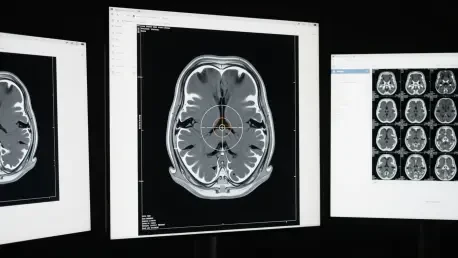

The landscape of neurosurgical intervention has underwent a fundamental transformation as specialized technologies like Gamma Knife radiosurgery evolved from a secondary alternative into a cornerstone of modern clinical practice. Historically, patients with deep-seated lesions or those deemed too high-risk for open craniotomy were the primary candidates for stereotactic radiosurgery, yet the current standards of care frequently position this noninvasive modality as the initial recommendation. This remarkable shift stems from the convergence of ultra-high-resolution neuroimaging and a massive repository of longitudinal clinical data that reinforces the safety profile of contemporary protocols. Platforms such as the Leksell Gamma Knife Esprit represent the pinnacle of this progress, allowing clinicians to deliver concentrated radiation with sub-millimeter precision. By utilizing these advanced systems, medical teams can now address brain metastases, vascular malformations, and benign tumors without making a single incision, effectively eliminating many of the systemic risks associated with traditional surgical approaches while maintaining equivalent or superior efficacy.
The Vital Role: Multidisciplinary Radiologic Collaboration
The successful implementation of radiosurgical treatment now depends heavily on a sophisticated, multidisciplinary partnership that places the radiologist at the center of the therapeutic journey. Unlike earlier eras where the radiologist’s contribution ended after providing a diagnostic report, today’s specialists are deeply integrated into five distinct phases of the clinical workflow, ranging from pre-treatment mapping to intricate target delineation. This collaborative framework ensures that the identification of lesion boundaries is conducted with exceptional accuracy, leveraging the specialized knowledge of neurosurgeons, radiation oncologists, and medical physicists alike. By participating in image fusion processes that merge PET, CT, and MRI data, the team creates a comprehensive volumetric map of the patient’s cranial anatomy. This high level of integration allows for the development of radiation delivery paths that are optimized to hit the target while navigating safely around critical neural pathways and delicate vascular structures.
Beyond the initial planning phase, the radiologist’s expertise remains critical for the long-term monitoring of biological responses and the differentiation of complex post-treatment changes. One of the most significant challenges in neuro-oncology is distinguishing between radiation-induced necrosis, which is a localized inflammatory response, and the actual recurrence of a tumor. Through the use of advanced imaging sequences and metabolic mapping, the multidisciplinary team can accurately interpret these signals, preventing unnecessary secondary interventions and ensuring that the patient’s care plan remains properly aligned with their physiological state. This ongoing assessment loop represents a major advancement in the precision of neurosurgical care, as it provides a data-driven foundation for adjusting dosages or exploring supplemental therapies. By fostering a culture of shared expertise, these clinical teams have moved beyond traditional silos, creating a unified approach that maximizes the therapeutic window for each individual patient through highly personalized imaging protocols.
Harnessing Innovation: Artificial Intelligence and Functional Precision
Technological progress in 2026 has seen the widespread integration of artificial intelligence into the radiosurgical suite, fundamentally accelerating the efficiency of complex clinical workflows. AI-driven algorithms are now utilized to automate the labor-intensive tasks of organ-at-risk contouring and structural segmentation, which has significantly reduced the time required for treatment planning while simultaneously enhancing consistency. These machine learning models are trained on vast datasets, enabling them to identify subtle anatomical variations that might be overlooked by the human eye during the initial assessment. Furthermore, AI is proving indispensable in personalized dosimetry, where it helps predict the most effective radiation fractionation schemes based on a patient’s unique tumor profile and medical history. This shift toward an AI-augmented environment does not replace clinical judgment but rather provides a robust analytical layer that allows physicians to focus more on high-level decision-making and patient interaction, ultimately leading to a more streamlined and reliable standard of care.
The capabilities of Gamma Knife technology are expanding rapidly into the realm of functional neurosurgery and behavioral health, opening new doors for treating conditions that were once considered intractable. By utilizing sophisticated MR-based fiber tracking, often referred to as tractography, clinicians can now map the brain’s connectome to identify specific neural pathways involved in chronic pain, depression, and obsessive-compulsive disorder. International guidelines now support the use of stereotactic radiosurgery for procedures such as capsulotomy, providing a noninvasive alternative for patients who have not responded to traditional psychiatric or pharmacological interventions. This ability to target deep-seated functional circuits with millimeter accuracy allows for the modulation of brain activity without the risks of hemorrhage or infection associated with implanted electrodes. As researchers continue to refine these techniques, the synergy between advanced imaging and radiosurgical precision is poised to redefine the treatment landscape for a wide array of neurological and psychiatric disorders.
Clinical Endpoints: Prioritizing Patient Quality of Life
In the modern era of neurosurgical excellence, the metrics for success have evolved to place a heavy emphasis on patient-reported outcomes and the preservation of long-term cognitive integrity. Success is no longer defined solely by tumor shrinkage or survival rates; it is increasingly measured by the patient’s ability to maintain their daily functions and mental acuity following intervention. Gamma Knife surgery excels in this regard by minimizing the peripheral radiation dose, thereby protecting eloquent areas of the brain responsible for motor skills, speech, and memory. National registries and clinical studies have indicated that patients undergoing these precise treatments often report stabilized or even improved quality of life compared to those receiving whole-brain radiation or invasive surgery. By sparing sensitive structures like the hippocampi and the optic apparatus, clinicians can effectively treat intracranial pathology while ensuring that the patient remains an active participant in their personal and professional life, reflecting a more holistic approach to neuro-oncological management.
The evolution of noninvasive radiosurgery established a new benchmark for brain health by synthesizing advanced physics, deep learning, and multidisciplinary expertise. Clinicians discovered that moving toward a precision oncology model allowed for treatments to be tailored to the specific biological characteristics of a lesion, which significantly reduced the incidence of neurological deficits. To further advance this field, medical organizations should prioritize the integration of real-time adaptive planning tools and expand training for radiologists in specialized functional mapping. Future considerations must also involve the development of standardized protocols for the “connectome” mapping used in psychiatric applications to ensure consistent outcomes across global institutions. As the technology continues to mature, the focus shifted from simply treating a disease to preserving the complex essence of the individual, proving that the most effective surgical interventions often involve no scalpel at all. This transition ensured that neurosurgery remained at the forefront of medical innovation, providing patients with safer and more predictable pathways to recovery.