


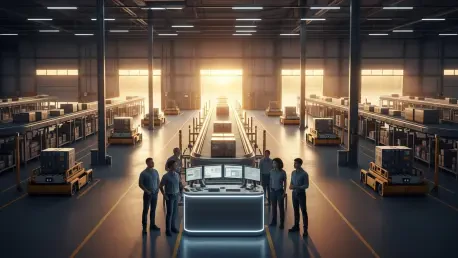

The traditional landscape of American logistics is undergoing a profound transformation as the focus shifts away from saturated coastal hubs toward the burgeoning regional cities of the interior. Companies are moving their operations to be closer to the people who buy their products, which helps speed up deliveries and lower transportation costs across the board. As these smaller markets become the new centers for supply chain growth, advanced robotics are becoming essential tools for local warehouse operators rather than optional upgrades for the elite. This migration represents a strategic pivot designed to bypass the congestion and high overhead associated with traditional logistics corridors like Southern California or the Northeast. While major ports remain vital, the expansion into cities like Louisville and Phoenix highlights a broader desire for agility. By decentralizing inventory, brands can meet the rising demand for same-day shipping that has become the standard in the modern marketplace today. Consequently, regional warehouses are no longer just storage sites; they are high-velocity distribution points powered by cutting-edge automation.
Navigating the Drivers of Regional Automation
Meeting the High Expectations of Last-Mile Delivery
The primary reason for this transition is the intense pressure of “last-mile” delivery, where customers expect orders to arrive at their doors almost immediately after clicking a button. Smaller warehouses in regional cities must manage a huge variety of items with extreme precision, a task that is difficult to handle with manual processes alone in a fast-paced environment. Automated systems allow these facilities to stay organized and maintain the high speed required by modern e-commerce standards without sacrificing accuracy. For many operators, the complexity of managing thousands of unique stock-keeping units in a constrained space necessitates the use of intelligent sorting systems. Without these tools, human errors become more frequent under the stress of rapid turnaround times and high volume. By implementing automated guided vehicles and smart conveyor systems, regional facilities can maintain a level of throughput that was previously only achievable in massive fulfillment centers. This evolution ensures that even mid-sized markets can provide the seamless shopping experience that urban consumers have come to expect.
Bridging the Workforce Gap Through Collaborative Systems
Recruiting and keeping a steady workforce is another significant challenge in smaller regional markets where the labor pool is often shallower than in major metropolitan areas. The work in a traditional warehouse is often physically grueling and repetitive, leading to high employee turnover that disrupts operational continuity and increases training costs. Robotics acts as a force multiplier, taking over the most difficult chores so that human workers can focus on higher-level tasks that require problem-solving, which improves job satisfaction and overall productivity. This shift helps employers create a safer and more attractive workplace environment, which is crucial for retention in a competitive hiring landscape. Instead of spending hours walking miles across a warehouse floor, employees now work alongside collaborative robots that bring items directly to picking stations. This cooperative model reduces physical fatigue and allows staff to handle more complex logistical puzzles, transforming warehouse labor into a more skilled and sustainable career path. As a result, companies find it easier to maintain steady operations even during seasonal peaks.
Implementing Versatile Technological Solutions
Optimizing Existing Infrastructure With Flexible Hardware
Regional facilities are adopting specific types of robots that can work within existing building layouts without requiring massive renovations or expensive ground-up construction projects. Tools like autonomous mobile robots can navigate warehouse floors dynamically, while vertical storage systems allow businesses to store more inventory in a smaller footprint than ever before. These technologies help warehouses process a much higher volume of orders without needing to move into larger, more expensive buildings located on the outskirts of the city. By optimizing every square inch of available space, companies can maintain operations closer to urban centers where real estate is at a premium. The ability to integrate these machines into older “brownfield” sites that were not originally designed for automation has been a game-changer for regional logistics. Instead of investing millions in new infrastructure, operators can deploy flexible robotic fleets that adapt to the aisles and shelving they already have in place. This practical approach lowers the barrier to entry for high-tech fulfillment and allows smaller businesses to thrive.
Integrating Digital Ecosystems for Seamless Operations
Modern automation relies as much on digital systems as it does on physical machines that move products through the facility from the receiving dock to the shipping area. Software ecosystems now connect every part of a warehouse, from inventory tracking to the robots themselves, into one synchronized operation. This integration ensures that the entire facility runs smoothly, reducing errors and preventing the bottlenecks that often slow down regional fulfillment centers during periods of high demand. These software platforms utilize machine learning to predict picking patterns and optimize the paths taken by robotic units, ensuring that no time is wasted during the fulfillment cycle. When the hardware and software are perfectly aligned, the warehouse functions as a single, cohesive organism capable of reacting to real-time changes in order volume. This digital backbone also provides managers with unprecedented visibility into their inventory, allowing for better forecasting and more efficient replenishment. By leveraging data-driven insights, regional operators can compete with much larger distributors on both speed and accuracy.
Achieving Sustainable Economic Growth
Adopting Scalable and Modular Business Models
For businesses in smaller cities, the ability to grow at a steady, manageable pace is vital for maintaining long-term financial health and operational stability. Instead of investing in a massive, fixed system that might become obsolete or redundant, many operators are choosing modular solutions that can be expanded as the company grows. This flexible approach allows warehouses to start with basic automation and gradually add more complex systems as their workload increases, making high-tech logistics more financially reachable for mid-sized firms. The “Robotics as a Service” model has particularly gained traction, allowing companies to lease equipment and scale their fleet up or down based on current needs. This flexibility protects regional businesses from the risks of over-investment while still providing them with the tools needed to handle rapid spikes in consumer demand. By treating automation as a scalable resource, companies can align their technological growth with their actual revenue, ensuring that every new robot contributes directly to the bottom line.
Strengthening Local Economies Through Logistical Resilience
This move toward automation allows for a type of growth that does not require a company to constantly hire more people or buy more land to stay competitive in the market. A warehouse can significantly increase its output through efficiency alone, ensuring that service quality remains high regardless of the city’s size or the local labor availability. By embracing these tools, regional hubs are creating a more resilient supply chain that can handle the shifting demands of the national economy with greater agility. The economic impact on regional cities is significant, as these facilities become stable anchors of local employment and technological innovation. Furthermore, the increased efficiency of these hubs helps lower overall transportation costs and carbon emissions by reducing the distance that goods must travel to reach the final consumer. As regional warehouses become more self-sufficient through automation, they play a critical role in stabilizing the broader logistics network across the country. This shift ultimately fosters a more balanced economic landscape where technological advancement is widespread.
Establishing a Framework for Long-Term Operational Success
Strategic leaders recognized that the most effective way to modernize regional logistics involved a careful blend of flexible hardware and robust data integration. They focused on implementing modular robotic systems that allowed for incremental growth without the need for massive capital expenditures or disruptions. Organizations prioritized training their existing workforce to manage these new digital tools, which successfully bridged the gap between manual labor and high-tech operations. By analyzing the successes of early adopters, it became clear that the integration of autonomous mobile robots and cloud-based management systems was essential for maintaining a competitive edge. Decision-makers invested in technologies that maximized their current square footage, effectively avoiding the high costs of real estate expansion. This proactive approach turned regional centers into highly efficient nodes that supported a more decentralized and responsive supply chain for businesses and consumers. Companies that adopted these strategies positioned themselves to navigate the complexities of modern commerce with greater confidence and much higher operational resilience.







