
While public fascination remains fixated on the human-like chatter of sophisticated chatbots, a quieter and potentially more consequential artificial intelligence revolution is unfolding within the world’s industrial and commercial backbones. This new front in the global AI race is not about winning a Turing test but about automating the complex workflows that power supply chains, financial services, and telecommunication networks. Here, a different strategic doctrine is emerging, one that prioritizes autonomous action over eloquent conversation and presents a formidable, if less visible, challenge to Western tech dominance.
While the West Debates the Consciousness of Chatbots is the Real AI Race Being Won in the World’s Supply Chains Financial Back Offices and Communication Networks
The central question is no longer who can build the most convincing digital conversationalist, but who can deploy intelligent systems that independently manage critical business operations. As Western firms refine consumer-facing AI assistants, Chinese technology giants are aggressively engineering specialized AI “workers” designed to operate with minimal human oversight. This divergence in strategy signals a fundamental shift in the competitive landscape, moving the contest from the public-facing internet to the private, high-stakes world of enterprise infrastructure. The outcome of this contest will likely be measured not in viral social media posts, but in percentage points of efficiency gained in global commerce.
Understanding the New Battlefield Beyond Chat to Autonomous Action
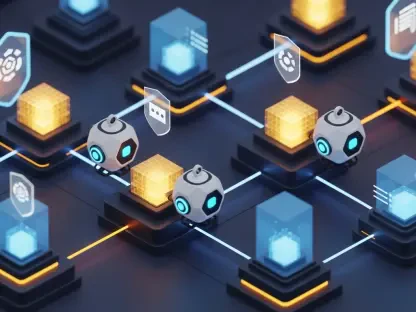
Agentic AI represents a significant leap beyond the conversational models that have captured popular attention. These are not merely systems that respond to prompts; they are autonomous agents designed to understand a high-level goal, break it down into a series of executable steps, and interact with various software, data sources, and digital services to complete complex tasks. This evolution from passive information retrieval to proactive task execution is the technological bedrock of the next wave of automation, where AI transitions from an assistant to an autonomous operator.
China’s technology hyperscalers have made a deliberate strategic pivot toward this new paradigm. Instead of prioritizing the creation of a single, all-knowing general-purpose agent, their focus is on developing specialized AI agents embedded directly into high-value enterprise workflows. This industry-first approach is designed to deliver immediate, quantifiable returns in sectors like manufacturing, logistics, and finance. By building AI “workers” that can optimize a factory floor or manage a financial portfolio, these companies are creating a fundamentally different competitive challenge to the consumer-centric models prevalent in the West.
This strategic divergence is critical because it reframes the nature of the AI race. The competition is not simply about model performance on abstract benchmarks but about the successful deployment of autonomous systems in real-world commercial environments. China’s approach creates a powerful value proposition for industries seeking tangible efficiency gains, sidestepping a direct confrontation in the saturated consumer market and instead aiming to become the indispensable engine of global industrial automation.
The Playbooks of China’s Tech Titans
Alibaba is pursuing an ecosystem-centric strategy built around its Qwen family of large language models. By releasing many of these powerful, multilingual models under open-source licenses, the company is cultivating a global developer community. This gambit is spearheaded by the Qwen-Agent framework, a direct strategic challenge to Western open-source projects like Microsoft’s AutoGen. Alibaba is not just providing the models; it is actively integrating these agentic capabilities into its massive commerce and payments ecosystem and its widely used DingTalk collaboration platform, turning its existing business infrastructure into a testing ground for autonomous AI.
In contrast, Huawei has adopted a vertically integrated, full-stack industrial strategy. This approach combines its proprietary Pangu foundational models with purpose-built hardware and a specialized “supernode” cloud architecture engineered for the intense workloads of agentic AI. Rather than a general platform, Huawei engineers its entire technology stack for specific vertical markets, including telecommunications, utilities, and manufacturing. Early deployments of Pangu-based agents are already demonstrating their value, autonomously performing complex tasks like predictive maintenance on industrial equipment and real-time network optimization with minimal human input.
Tencent has charted a more pragmatic, “scenario-based” course. Instead of a single overarching platform, the company offers a suite of targeted SaaS tools designed for specific enterprise use cases. This approach focuses on integrating agent capabilities into its popular WeCom workplace platform to automate discrete tasks like meeting scheduling, project tracking, and code management. While its global cloud footprint is smaller than its rivals, Tencent’s strategy leverages its deep penetration in business communication to introduce agentic AI as a practical, workflow-enhancing feature rather than a complex new system to be adopted wholesale.
Market Realities The Uphill Battle for Western Adoption
Despite their technological sophistication, Chinese agentic AI platforms face a formidable “Great Wall” of geopolitics and data governance in Western markets. Deep-seated security concerns and stringent regulatory frameworks in North America and Europe create significant barriers to entry for any technology perceived as being tied to foreign state interests. This environment makes it exceedingly difficult for Chinese firms to win the trust required for enterprise-level contracts, particularly in sensitive sectors.
Furthermore, these companies must contend with the immense incumbency advantage of Western tech ecosystems. Businesses in the West are deeply entrenched in platforms provided by Amazon Web Services, Microsoft Azure, and Google Cloud, with developer workflows heavily reliant on established standards like NVIDIA’s CUDA. The cost, complexity, and risk associated with migrating from these dominant ecosystems to a new, unproven architecture present a nearly insurmountable hurdle for most enterprises. This is compounded by hardware constraints, as restricted access to advanced Western GPUs forces Chinese firms to innovate with domestic processors or build out costly overseas data centers to access necessary computing power.
An unlikely bridge, however, has emerged through the global open-source community. The widespread availability of models like Alibaba’s Qwen on standard development hubs allows Western developers and researchers to evaluate and integrate the core technology without engaging in direct enterprise sales. This bottom-up adoption bypasses geopolitical and commercial barriers, allowing the underlying AI to gain a foothold and prove its capabilities on a technical level, potentially creating a long-term pathway to broader acceptance.
Mapping the Competitive Landscape Where China Can Win
The core of China’s strategy is its relentless pragmatism. By focusing on specialized, autonomous AI for discrete commercial contexts, Chinese tech giants have created a clear and compelling value proposition for industries where efficiency gains translate directly into profit. This focus on building functional “AI workers” rather than generalist AI personalities is a calculated move designed to capture specific market segments that prioritize operational performance over conversational flair.
While direct enterprise penetration in the West remains a significant challenge, the true battlegrounds for this technology are emerging elsewhere. Widespread adoption of these Chinese-developed agentic AI systems is far more likely in regions with strong Chinese economic influence, such as the Middle East, South America, and across Africa. In these markets, geopolitical barriers are lower, and the appeal of cost-effective, industry-specific automation solutions is high. These regions are becoming the primary export markets for China’s AI-driven industrial solutions.
Ultimately, the global AI market has demonstrated it is not a monolith but is fragmenting into distinct spheres of technological and economic influence. While the West continues to lead in consumer-facing and general-purpose AI, China has positioned itself to become the dominant force in the industrial and enterprise AI sectors of the world’s emerging economies. The competition of the next decade was not just about building the smartest AI, but about embedding that intelligence into the machinery of global commerce.