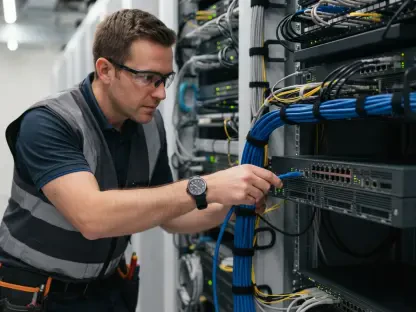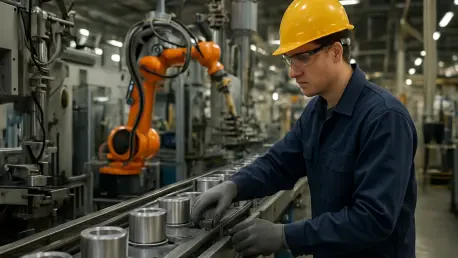

A metal-industry company cut its mean time to repair by 45% through an AI-agent maintenance routine, says Tim Gaus, principal at Deloitte Consulting. Yet some deployments produce no meaningful change, he cautions. That contrast puts the business question in focus: whether a plant can turn AI output into useful action, rather than simply add another technology to its operations.
Deloitte’s AI Institute report, The AI Dossier, examines applications across physical assets, infrastructure and employee safety. For maintenance leaders, its scope points toward a broader shift: prediction, engineering knowledge and physical inspection are becoming connected parts of the same operational workflow. The opportunity is substantial, but each application brings different requirements for data, worker involvement and ongoing support.
From predicting failure to getting repairs done
Predictive maintenance becomes useful when a warning reaches someone who can act on it. Gaus describes a distribution-sector client that manages an extensive asset portfolio and combines downtime prediction with agents that deliver findings to users. Workers can adjust the system’s outputs, reducing irrelevant notifications rather than accepting every alert as equally important.
That ability to tune the workflow is central to adoption. A technically capable model can still create an operational burden if its warnings overwhelm maintenance teams. Giving users control over what reaches them helps align predictions with the decisions they actually need to make.
Gaus identifies several roles for industrial agents: monitoring sensor streams, finding anomalies, investigating likely causes and generating or scheduling work orders. Simulation and reinforcement learning also fall within the potential application set. In human-led teams, agents can help check outcomes, rank alerts and explain findings in everyday language.
Connecting equipment readings with maintenance history offers another practical entry point. Gaus says AI has demonstrated value where workers struggle to retrieve machine data and compare it with service records. For plant leaders, that suggests a useful starting question: where does the team lose time assembling the evidence needed for a repair decision?
His recommendations place the operating problem ahead of the technology:
- Choose a specific maintenance or reliability issue before selecting an AI application.
- Start with data the team trusts, without waiting for every record to be perfect.
- Design around workers, with repeatable processes that can expand beyond the initial deployment.
- Bring IT and operational technology expertise together; neither can carry the implementation alone.
Gaus argues that supplying more data improves performance, while also warning against delaying experimentation indefinitely. The practical balance is to select a bounded task with credible inputs. Expansion should follow evidence that the system helps workers resolve the original problem.
Adoption is growing, but broad autonomy remains a forecast
A Manufacturing Leadership Council survey in early 2025 found that 22% of manufacturers expected to adopt generative and agentic physical AI over the following two years, compared with 9% already using it. Those figures describe intentions as well as current use. They should not be read as proof that widespread deployment has already arrived.
Gaus similarly says Deloitte’s research shows adoption expanding while much existing use remains confined to bounded settings. That distinction is useful for investment planning. A narrowly scoped agent that supports maintenance decisions presents a different deployment challenge from a mobile machine making decisions around employees.
Even the term AI covers markedly different systems. Gaus includes machine learning, deep learning, large language models, agentic systems and physical AI within the report’s definition. Buyers therefore need to specify the workflow they want to change, rather than treat the category as a single capability.
| Application | Practical role | Deployment consideration |
|---|---|---|
| Maintenance agents | Relate equipment signals to repair activity and support follow-up work | Reliable inputs and manageable alerts |
| Engineering knowledge agents | Answer junior staff’s questions and review documents | Capturing experience beyond existing files |
| Robotic inspection | Collect images, temperature readings and gauge observations | Maintenance skills and safety controls |
These applications share a need for human involvement, but they place it at different points. Maintenance staff refine alerts. Experienced engineers contribute judgment. People working alongside robots require safe operating arrangements. Scaling depends on preserving those roles as the technology takes on more tasks.
Retiring engineers’ knowledge can become a working resource
Knowledge transfer offers a separate route to operational value. Gaus describes a company whose senior capital engineers, responsible for implementing programs, were approaching or entering retirement. Their experience existed partly in documents and emails, and partly as knowledge that had never been written down.
The company used interviews to extract that unwritten expertise, then combined it with the engineers’ files through AI. Junior engineers could consult the resulting agent conversationally or use it to review documents. Gaus sees this as a way to provide support resembling senior engineering oversight when the experienced person is absent.
For business leaders, the significance lies in access. Stored files become more useful when a less-experienced employee can ask a question or obtain feedback within a working task. The interview process also recognizes a limitation: a document collection alone may not contain the reasoning that made a senior employee effective.
This application could help bridge the gap created by retirement, but the example does not establish that an agent replaces professional judgment. A sensible deployment would treat its responses as support for junior staff while retaining appropriate human review. The strategic gain is continuity of expertise, with responsibility still attached to people.
Mobile inspection changes what plants can observe
Physical AI extends the workflow into the facility itself. Gaus notes that vision sensors have existed for 25 years; the change is their lower cost and easier installation, combined with greater mobility. He illustrates the price shift with sensors that might now cost $20 rather than $40,000, rather than presenting a universal price comparison.
Robots on wheels or legs can carry those sensors through a plant, gathering images and temperature readings or checking gauges. That makes them relevant to inspections involving awkward access or areas employees may overlook. More consistent observation could help teams spot conditions such as an oil leak before equipment fails.
The business value comes from making inspections easier to repeat and reducing physically demanding observation work. A patrol still needs to feed a usable maintenance process. Collecting a reading has limited value if nobody can interpret it, prioritize it or respond.
Gaus expects more collaboration with robots and greater independent decision-making, but says humanoid designs remain too technically complex for large-scale adoption. His assessment favors attention to the work being performed over the machine’s resemblance to a person. Close collaboration also requires rigorous safety standards and control systems.
Operating costs and support determine whether AI lasts
Deployment creates its own maintenance obligations. Gaus warns that some technologies are insufficiently mature and that organizations will need new skills to support AI-enabled devices. Technical feasibility therefore leaves several questions unanswered: can the system be sustained, can it be maintained, and does the return justify the expense?
Robotics-as-a-service adds a financial consideration. Gaus notes that many advanced robotics providers use this model, with spending often treated as OpEx rather than CapEx. Executives need to evaluate the recurring service expense alongside the expected operational benefit, rather than assess every robotic deployment as an equipment purchase.
Industrial AI matters now because its applications reach several pressing workflows at once: repair decisions, the transfer of retiring employees’ expertise and routine asset inspection. The strongest adoption path is to choose a concrete problem, keep workers involved and budget for continued support. That gives plants a basis for expanding systems that prove useful, without assuming that prediction or autonomy alone will deliver a return.