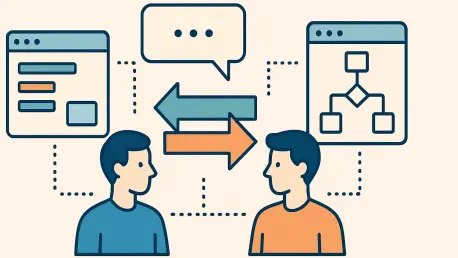

The architectural constraints of the first generation of artificial intelligence agents often felt like a series of digital walled gardens where a user’s data remained trapped within a single provider’s ecosystem. This isolation hindered the true potential of automated systems, forcing individuals to choose between different proprietary platforms that could not communicate with one another. However, the rise of interoperable communication frameworks has begun to dismantle these barriers, allowing for a more fluid exchange of information across diverse AI models. By prioritizing a decentralized approach, these frameworks shift the focus from a single “god-like” model to a collaborative network of specialized agents. This transition is not merely a technical upgrade but a fundamental change in how digital agency is exercised and maintained.
Evolution of Interoperable Agentic Systems
The early landscape of agentic technology was dominated by isolated large language model interfaces that functioned as sophisticated chatbots rather than true autonomous entities. These systems were designed for a one-to-one relationship between the human and the machine, meaning that any task requiring coordination between different people or different software required the human to act as the primary bridge. As the limitations of this “hub-and-spoke” model became apparent, the industry began to explore “multiplayer” agent communication. This evolution aimed to move away from proprietary, locked-in ecosystems where an agent’s knowledge was restricted to the silo of its creator. The goal became clear: to build a decentralized context-sharing environment where agents could collaborate as peers.
This shift represents a move toward a world where agents act as representatives of their users in a broader digital society. Instead of a single model attempting to manage every aspect of a user’s life, multiple agents can now work in concert. This collaborative approach addresses the inherent friction of switching between different AI tools, as it allows for a unified experience where data is no longer held hostage by a specific service provider. The transition from isolated chat interfaces to collaborative agent networks is a response to the growing demand for personal agency and data sovereignty. It marks the end of the era where a user had to adapt to the limitations of a single model, ushering in a period defined by flexibility and cross-platform cooperation.
The relevance of this technology in the current landscape of 2026 cannot be overstated, as it provides the infrastructure necessary for agents to handle complex, multi-party tasks. In previous iterations, if two people wanted their agents to coordinate a meeting, those agents often had no secure way to talk to each other without sharing full access to their respective users’ accounts. Modern interagent frameworks solve this by creating a common language and a shared context layer. This ensures that the transition from a solitary experience to a networked one is seamless, secure, and respectful of individual privacy boundaries. The move toward decentralization is thus the primary driver of innovation in the current agentic market.
Core Pillars of Universal Agent Communication
Decentralized Context Backends
The foundation of any effective interagent system is a robust, user-owned context backend that serves as a single source of truth for all authorized agents. Unlike traditional data storage, these backends, such as the “Context Lake” developed by Fulcra Dynamics, do not just store information; they normalize it into an AI-native format. This normalization process ensures that regardless of whether an agent is built on a transformer architecture or a more specialized logic-based model, it can interpret the same situational awareness. By placing data on a unified timeline, these systems allow agents to observe changes in a user’s environment and react accordingly, creating a more proactive and less reactive AI experience.
A “Context Lake” functions as a living repository that blends structured data, such as calendar events, with unstructured data, like notes or past conversations. This unique implementation allows for a higher degree of situational intelligence because the agent is not just querying a database but understanding a narrative of the user’s life. When multiple agents access this same backend, they gain a shared understanding without the need for redundant data entry. This effectively decouples the “thinking” part of the AI from the “memory” part, ensuring that the user remains the ultimate owner of their history and context, rather than the company providing the reasoning model.
Furthermore, this decentralized approach mitigates the risks associated with data silos. In a typical locked-in environment, losing access to a specific provider means losing the history and context that made the agent helpful. With a decentralized backend, the context remains intact even if the user decides to switch their primary agent model. This independence is what makes the technology truly transformative, as it treats context as a personal asset rather than a product feature. It allows the agentic ecosystem to grow in complexity without compromising the security or ownership of the individual’s digital footprint.
Model-Agnostic Interoperability
One of the most significant breakthroughs in interagent communication is the achievement of “harness-independent” interoperability. This allows a user to deploy diverse models like Claude, ChatGPT, Hermes, or OpenClaw simultaneously within a single collaborative task. In the past, using different models meant managing different context windows and dealing with fragmented outputs. However, universal frameworks now allow these models to read from and write to the same shared context layer. This means that a user can leverage the creative writing strengths of one model and the analytical capabilities of another without any loss of continuity between steps.
This interoperability is vital because the AI market moves too quickly for any single model to remain the definitive leader in every category. By enabling model-agnosticism, these frameworks empower users to “rent the reasoning” that best fits their current needs. If a new, more secure, or more efficient model is released, a user can simply point it at their existing context lake. The new agent can then pick up where the previous one left off, having access to the same history and goals. This prevents the monopolistic cycles that have characterized much of the software industry, fostering a more competitive and innovative environment.
Moreover, model-agnosticism extends to how agents from different users interact. If one person prefers a highly secure, locally-hosted model and another uses a cloud-based high-performance model, the two agents can still coordinate tasks effectively. The framework acts as a universal translator, ensuring that the intent and context are preserved across different architectures. This capability is essential for creating a truly global agent network where the choice of tool does not limit the ability to participate in the digital economy. It turns agents into interchangeable commodities that compete on their reasoning ability rather than their data access.
Permissioned Multiplayer Workflows
The complexity of agent-to-agent coordination requires a sophisticated approach to permissioned “multiplayer” spaces. These are shared environments where agents can interact and execute tasks on behalf of their users while adhering to strict privacy boundaries. For instance, in a project planning scenario, agents from different departments can coordinate timelines and resources without granting each other full access to their respective users’ private documents. The framework brokers these exchanges, ensuring that only the specific information necessary for the task is shared. This granular control is what separates modern interagent frameworks from simple data-sharing protocols.
In these multiplayer workflows, agents function like digital ambassadors. They can negotiate, suggest alternatives, and reach agreements based on the preferences and constraints provided by their owners. This is particularly useful in scheduling or professional synchronization where multiple parties have conflicting requirements. The system allows for “credential-free” collaboration, meaning agents can work together without ever needing to exchange user passwords or impersonate the user. This architecture significantly reduces the attack surface for potential security breaches, as the interaction is limited to a purpose-built, permissioned layer.
Technical execution of these workflows also involves the ability to trace and revoke permissions at any time. Users have full visibility into what their agents are sharing and can intervene if an agent begins to overreach. This transparent “revocability” is a critical feature for building trust in autonomous systems. By maintaining a clear audit trail of agent interactions, the framework ensures that the human remains in the loop, even when the heavy lifting of coordination is handled by the AI. This balance of autonomy and oversight is fundamental to the successful adoption of multiplayer agentic systems.
Emerging Trends in Agent Coordination
A prominent trend currently reshaping the industry is the shift away from “Instinct-to-Instinct” closed loops toward open-standard frameworks. Earlier models of agent coordination often required both parties to use the same platform to achieve any meaningful level of automation. This created a significant barrier to entry and limited the utility of agents in diverse social or professional groups. In contrast, the current trend favors frameworks that prioritize personal agency. Users are increasingly demanding the ability to choose their agents based on specific talents or security profiles rather than being forced into a single ecosystem for the sake of compatibility.
Moreover, there is an increasing focus on “Context-Focused Infrastructure” as the primary value driver in the AI sector. As reasoning models become more commoditized, the unique value of an agentic system lies in its ability to understand the specific, nuanced context of its user. This has led to the development of systems that prioritize long-term memory and cross-platform situational awareness. The trend is moving toward a world where the agent is a temporary interface, while the context lake is the permanent, evolving representation of the user’s digital life. This philosophy ensures that users are not starting from scratch every time a new technology emerges.
Another emerging development is the move toward low-friction invitation systems that allow new users to join agentic groups without immediate heavy investment. These systems allow an existing agent to invite a new participant, helping them set up a basic agent of their own to facilitate a specific task, such as a dinner plan or a group trip. This “viral” growth of agent networks relies on the interoperability of the underlying framework, making it easy for people to experience the benefits of agentic coordination without a steep learning curve. These trends collectively point toward a more collaborative and user-centric future for AI.
Real-World Implementations of Agent Networks
The practical applications of interagent communication are becoming increasingly visible in both social and professional settings. In the realm of social coordination, automated group dinner planning serves as a prime example. When a group of friends wants to meet, their agents can consult individual preferences, dietary restrictions, and travel constraints to find a suitable location and time. If one person’s meeting runs late, their agent can communicate this change to the others, and the group agents can collectively decide whether to move the dinner or suggest a different venue. This level of coordination happens autonomously, requiring only a final approval from the humans involved.
In professional environments, cross-team project synchronization has benefited significantly from these frameworks. Agents can coordinate tasks, deadlines, and document updates across different teams using different tools. For instance, an engineering team’s agent might notice a delay in a specific feature and automatically inform the marketing team’s agent, which can then adjust the launch timeline. This reduces the need for constant status meetings and ensures that everyone is working with the most current information. The ability of agents to synthesize input from various stakeholders and present a unified plan is a major productivity boost for complex organizations.
Travel orchestration also provides a unique use case for this technology. When multiple people plan a trip together, agents can manage budgets, itineraries, and bookings across different preferences. If one traveler has a specific preference for a certain airline or hotel chain, their agent can ensure that these needs are considered in the collective plan. Furthermore, the integration of new users into these plans is simplified through automated invitations that help them onboard their own agents. This real-world utility demonstrates that interagent frameworks are not just theoretical concepts but practical tools that simplify the logistics of modern life.
Technical and Ethical Hurdles to Adoption
Despite the progress made, several technical and ethical challenges remain in the path of widespread adoption. One of the primary technical difficulties is maintaining context normalization across varying model architectures. Different AI models may interpret the same piece of data in slightly different ways based on their training and tokenization methods. Ensuring that a “Context Lake” remains truly universal requires sophisticated translation layers that can account for these differences without losing the nuance of the original data. This is an ongoing area of research that demands significant computational resources and architectural precision.
Security risks also present a major hurdle, particularly concerning cross-agent data sharing. While permissioned workflows aim to mitigate these risks, the possibility of an agent inadvertently leaking sensitive information remains a concern. The challenge lies in creating a system that is open enough for collaboration but closed enough to prevent data exfiltration. Market resistance from monolithic AI providers also poses a threat, as these companies often have a financial interest in maintaining closed ecosystems. Convincing these giants to adopt open standards for the sake of the user is a difficult task that may require regulatory intervention or a massive shift in consumer demand.
Ethical considerations regarding agentic transparency and accountability are equally important. As agents take on more responsibility for decision-making, it becomes harder to trace the logic behind certain outcomes. Users need to be able to trust that their agents are acting in their best interests and not being influenced by hidden biases or external pressures. Ongoing development efforts, such as credential-free collaboration and transparent “revocability” features, are steps in the right direction, but they must be matched by clear legal frameworks that define the responsibilities of both the users and the developers of these autonomous systems.
The Future of the Unified Context Layer
Looking ahead, the potential for agents to become entirely interchangeable commodities is a central theme in the evolution of the unified context layer. As the infrastructure for context sharing becomes more standardized, the focus will likely shift toward the quality of the reasoning models themselves. This will create a highly competitive market where models are judged solely on their ability to solve problems, rather than their access to a user’s history. The “Rent the Reasoning, Own the Context” philosophy will become the standard, ensuring that data sovereignty remains a core pillar of the digital economy.
Future developments in “Context-Focused Infrastructure” will likely see agents becoming even more integrated into our physical lives. We can expect agents to move beyond digital tasks and begin coordinating real-world logistics with a high degree of precision. This could include everything from managing household energy consumption to coordinating complex global supply chains. The long-term impact of this technology will be a more efficient and interconnected world where the friction of coordination is virtually eliminated. This will allow humans to focus on higher-level creative and strategic tasks while the agents handle the repetitive logistics of daily life.
Furthermore, the global AI competition will be shaped by how different regions approach the issue of context ownership. Those that favor open, interoperable frameworks are likely to see more innovation and user trust than those that stick to proprietary, closed-off systems. The move toward a universal context layer is not just a technological shift but a social one, as it redefines the relationship between humans and their digital tools. By placing the user at the center of the ecosystem, these frameworks ensure that the benefits of artificial intelligence are distributed more equitably across society.
Final Assessment of Interagent Frameworks
The review of interagent communication frameworks demonstrated a significant shift toward a more collaborative and decentralized artificial intelligence landscape. The analysis highlighted how the transition from isolated, proprietary models to open-standard frameworks allowed for a higher degree of personal agency and data sovereignty. It was observed that by decoupling the reasoning capabilities of an agent from the underlying context, these systems provided users with the freedom to choose the best tools for their specific needs without fear of data loss. The technical pillars, including decentralized context backends and model-agnostic interoperability, were found to be the essential drivers of this newfound flexibility.
Practical implementations in social and professional environments proved that the technology effectively addressed long-standing coordination challenges. The ability of agents to communicate across different platforms and manage complex tasks like travel planning or project synchronization showed a clear path toward increased productivity and reduced logistical friction. However, the assessment also recognized that significant hurdles remained, particularly in the areas of security and model normalization. These challenges required ongoing innovation and a commitment to transparency to ensure that the benefits of agentic coordination were not overshadowed by potential risks.
Ultimately, the verdict of this review was that interagent frameworks represented a critical step in breaking the monopolistic cycles of the AI industry. The shift toward a “multiplayer” agentic future offered a more user-centric approach that prioritized the individual’s control over their digital life. By fostering a collaborative environment where agents could interact as peers, the technology set the stage for a more integrated and efficient digital future. The findings suggested that as these frameworks continue to mature, they will play a central role in shaping the next decade of technological progress, ensuring that AI remains a tool for empowerment rather than a mechanism for lock-in.