
The rapid proliferation of specialized artificial intelligence applications has led to a fragmented digital landscape where users often find themselves switching between a dozen different browser tabs just to complete a single task. In this environment, the demand for a centralized hub has never been higher as individuals and enterprises alike seek to reduce the friction caused by managing multiple high-cost subscriptions. Monica AI has emerged as a significant contender in this space by offering a unified interface that aggregates the world’s most powerful large language models into one cohesive platform. By bridging the gap between isolated tools like GPT-4o, Claude 3.5 Sonnet, and DeepSeek R1, the system attempts to solve the fundamental problem of tool fatigue. This strategy not only simplifies the billing process for users but also creates a more fluid experience where the specific strengths of various models can be leveraged within seconds, effectively redefining what it means to have a versatile digital assistant in the modern professional era.
A Unified Engine for Computational Intelligence
Strategic Integration of Premier Language Models
Monica AI distinguishes itself by bypassing the loyalty typically required by single-vendor ecosystems, allowing users to select the most appropriate engine for their specific needs without exiting the primary application window. For instance, a software developer might utilize the logical precision of Claude 3.5 Sonnet for debugging complex code snippets while simultaneously employing GPT-4o for drafting client-facing documentation that requires a more conversational tone. This flexibility is supported by an underlying architecture that prioritizes sub-second response times and seamless transitions between different computational backends. By integrating models such as DeepSeek R1 alongside the established industry leaders, the platform ensures that users always have access to the latest advancements in natural language processing. This curated approach effectively democratizes high-level AI, making sophisticated reasoning and creative writing tools accessible through a single mobile or desktop portal.
Beyond mere text generation, the platform emphasizes real-time interaction through a sophisticated voice mode that facilitates hands-free problem-solving in fast-paced environments. This feature is particularly useful for professionals who need to brainstorm ideas while commuting or for students who require an interactive tutor to explain complex academic concepts without the need for constant typing. The inclusion of high-speed chat capabilities ensures that the dialogue remains natural and unhindered by the latency issues that plagued earlier generations of AI assistants. Furthermore, the system’s ability to maintain context across different sessions allows for a more personalized experience, where the AI understands the user’s specific preferences and historical data. This level of synchronization across devices means that a conversation started on a smartphone can be continued on a workstation with no loss of information or momentum, reinforcing the idea of a truly persistent digital companion.
Streamlining Workflows through Model Customization
The true strength of a multi-model approach lies in the ability to customize workflows based on the unique constraints of a project, whether those constraints involve cost, speed, or reasoning depth. Users can toggle between lightweight models for quick administrative tasks and high-parameter models for intense analytical work, ensuring that computational resources are used efficiently. This granular control is essential for enterprises that need to manage API costs while still providing their teams with cutting-edge tools. Moreover, the platform provides a bridge for users who may not be technically inclined but still require the power of specialized AI, as the interface abstracts the complexity of different prompt engineering requirements. By providing a consistent user experience regardless of the underlying model, the platform reduces the learning curve typically associated with adopting new software, allowing for immediate productivity gains upon implementation across various departments.
In addition to individual model selection, the system allows for the creation of specialized personas that are tuned for specific professional roles, such as a legal researcher or a creative copywriter. These personas leverage the broad knowledge base of the integrated models but apply specific constraints and stylistic preferences to ensure the output remains relevant to the field. This level of customization ensures that the AI does not just provide generic answers but acts as a specialized consultant that understands the nuances of different industries. By maintaining a library of these custom configurations, users can rapidly switch between different modes of operation, such as moving from a technical report to a marketing email with perfect stylistic consistency. This adaptability makes the platform a powerful asset for multidisciplinary teams who need to balance diverse tasks without compromising on the quality or tone of their professional communications.
Transforming Creative and Analytical Workflows
Advanced Multimedia Synthesis in the Art Studio
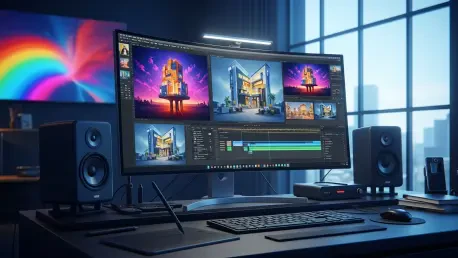
The creative suite within the platform, known as the Art Studio, represents a significant leap forward in generative media by combining text-to-image and text-to-video capabilities into a professional-grade workspace. Utilizing powerful engines like Flux, Sora 2, and Runway Gen-3, the platform enables creators to produce high-fidelity visual content from simple descriptive prompts with a level of detail previously reserved for specialized studios. Users can experiment with over 50 distinct artistic styles, ranging from photorealistic architectural renderings to abstract digital art, while maintaining full control over the final output through integrated editing tools. These utilities allow for upscaling resolutions, modifying background elements, and adjusting lighting parameters with minimal technical expertise. This accessibility empowers small businesses and independent content creators to generate marketing materials and social media assets that rival the quality of large-scale productions.
Looking deeper into the video generation aspect, the inclusion of Sora 2 and Runway Gen-3 signifies a commitment to staying at the absolute forefront of cinematic AI technology. These models are capable of producing fluid, coherent motion and complex scene transitions that were virtually impossible for consumer-grade tools just a few years ago. The interface simplifies the often-intimidating process of video prompting by providing intuitive suggestions and presets that help users achieve their desired aesthetic quickly. Moreover, the ability to iterate on generated clips, such as adjusting camera angles or character movements, ensures that the final product meets the specific requirements of a project rather than being a random output. This integration of creative tools within a broader productivity framework means that a user can transition from researching a topic to generating a promotional video about it without ever needing to export files or learn a new software environment.
Sophisticated Data Synthesis and Research Capabilities
In an age of information overload, the platform’s research agent serves as a critical filter, moving beyond the simple keyword matching of traditional search engines to provide cross-referenced and curated answers. By analyzing multiple high-quality sources in real-time, the system can synthesize comprehensive reports that highlight key data points, conflicting viewpoints, and emerging trends within any given field. This functionality is complemented by robust summarization tools designed to extract essential insights from dense PDF documents, lengthy academic papers, and even hour-long YouTube videos. For researchers and corporate analysts, the “chat-with-files” feature is particularly transformative, as it allows for direct interrogation of a document to find specific clauses, financial figures, or statistical evidence without manual skimming. This targeted approach to information retrieval significantly reduces the cognitive load associated with managing large datasets.
Visualization plays a central role in the platform’s approach to knowledge management, specifically through the automatic generation of mindmaps and structural diagrams from analyzed text. When dealing with multifaceted subjects, the system can break down complex hierarchies into intuitive visual formats that help users see the relationships between different concepts more clearly. This is especially beneficial for project managers who need to map out workflows or students who are trying to organize study materials for comprehensive examinations. By providing these visual aids alongside traditional text summaries, the platform caters to diverse learning styles and ensures that information is not just gathered, but also understood and retained. The seamless integration of these analytical tools into the daily workflow means that insights can be instantly converted into actionable plans or shared with colleagues in a professional format, positioning the platform as a foundational tool.
Strategic Considerations for Future Digital Workspaces
The evolution of Monica AI demonstrated that the path to true digital productivity lay in the strategic consolidation of diverse technological capabilities rather than the pursuit of isolated features. By successfully unifying advanced language models, sophisticated creative suites, and powerful analytical tools, the platform provided a compelling blueprint for the next generation of digital assistants. Users who adopted this integrated approach found that they could significantly reduce the time spent on administrative overhead and technical transitions, allowing for a deeper focus on creative and strategic endeavors. Moving forward, the most effective strategy for professionals involved evaluating how such multi-modal tools could replace fragmented workflows and looking for opportunities to automate repetitive data synthesis tasks. The shift toward these comprehensive platforms suggested that the modern workspace required the ability to orchestrate multiple AI engines through a single interface, making it essential for organizations to prioritize interoperability.