
The launch of the Luskin X series marks a significant technological leap, using ultraviolet and polarized light to detect skin imperfections that remain invisible to the naked human eye. This advancement serves as the centerpiece of a broader mission by Lululab, a venture that emerged from Samsung Electronics’ prestigious C-Lab, to fundamentally change how the global beauty and healthcare industries interact with human biology. Under the guidance of CEO Choi Yong-jun, the company has successfully transitioned from a specialized internal project into a dominant AI skin data infrastructure provider. By cataloging an unprecedented repository of over 5.5 million distinct skin data points across more than 60 countries, the firm is moving beyond simple aesthetic suggestions toward a future where skin health is measured with the same mathematical precision as a blood panel. This digitization of dermal characteristics allows for the objective tracking of wrinkles, pores, and pigmentation, effectively bridging the gap between subjective consumer desire and evidence-based medical treatment. As the industry moves away from marketing-led narratives, the focus shifts toward a data-driven ecosystem that prioritizes transparency and verifiable outcomes for users worldwide.
The Academic Foundation: From Biotechnology to Facial Biomarkers
The conceptual origins of this data-centric approach are found in Choi Yong-jun’s extensive academic background in biotechnology, specifically his research into the early detection of systemic diseases. During his tenure at Cornell University and later at a research institute associated with Harvard Medical School, his focus was initially on genetic biomarkers that could signal the onset of illnesses before symptoms became apparent to a patient. However, a significant hurdle emerged in the form of scalability; genetic testing for a broad range of conditions often required highly specific, expensive, and time-consuming tests that were difficult to implement for the general public. This challenge sparked a realization that the human face could serve as a more accessible and versatile biological dashboard. Because various internal health conditions and lifestyle factors frequently manifest through physical changes in the skin, the face represents a continuous record of an individual’s physiological state. This insight led to the hypothesis that facial imaging could function as a universal biomarker, provided the right technology existed to interpret the data consistently across different populations.
Recognizing that the hardware for high-resolution data collection was already in the pockets of billions of people, the vision shifted toward leveraging smartphone technology and artificial intelligence to democratize health monitoring. By treating the skin as a repository of biological information rather than just a cosmetic surface, it became possible to envision a system that could detect subtle shifts in health through regular image analysis. This transition from laboratory-based genetic testing to digital facial biomarkers allowed for a more dynamic and frequent assessment of wellness. When Choi pitched this concept to Samsung’s C-Lab, it was selected for its potential to merge the massive beauty market with the precision of the healthcare sector. The resulting infrastructure was built on the premise that if skin health could be quantified and standardized, it could lead to earlier interventions and a significant improvement in global quality of life. This academic rigor remains the backbone of the company’s current operations, ensuring that every data point collected is grounded in biological reality rather than just superficial appearance.
Strategic Market Entry: The Logic of the Cosmetics Counter
While the long-term objective for the technology was always rooted in health management and medical diagnostics, the decision to enter the cosmetics market first was a calculated move designed to overcome the “data bottleneck” common in clinical research. In traditional medical settings, the acquisition of high-quality patient data is often hampered by strict privacy regulations, ethical reviews, and a slow-moving institutional bureaucracy that can take years to produce significant findings. Conversely, the beauty industry offers a unique environment where consumers are highly motivated to volunteer their biological data in exchange for personalized product recommendations and improved self-care routines. By placing sophisticated AI analysis tools at cosmetics counters, the company could bypass traditional barriers to data gathering while simultaneously building a massive, diverse database. This strategy allowed for the collection of millions of data points from individuals who were eager to see how their skin responded to various treatments, providing a wealth of information that would have been impossible to obtain in a hospital setting alone.
Furthermore, the retail environment facilitated the collection of longitudinal, or time-series, data, which is far more valuable for training artificial intelligence than isolated snapshots. Unlike a medical test that a patient might take only once every few years, beauty consumers tend to check their skin health frequently, often every few weeks or months. This frequency allowed the company to track how an individual’s skin reacted to specific products, environmental changes, and the natural aging process over extended periods. This continuous feedback loop created a high-fidelity dataset that reflects real-world conditions rather than controlled laboratory environments. By establishing this massive data infrastructure through the beauty sector, the firm created a solid foundation for its successful expansion into professional dermatology. This phased approach ensured that when the technology finally moved into the medical sphere, it was already backed by a sophisticated AI trained on the most diverse and comprehensive skin database in existence, making its clinical applications far more reliable and accurate from the start.
Technological Evolution: Overcoming the Limitations of Physical Sensors
The progression of the company’s hardware reflects a commitment to replacing inconsistent manual methods with standardized digital solutions. The initial flagship product, LUMINI, redefined the retail skin consultation by introducing non-contact, AI-driven image analysis. Prior to this, most skin-measuring devices used in department stores relied on physical sensors that had to be pressed against the user’s face to measure moisture, oil, or elasticity. These contact-based methods were notoriously prone to error, as the results could vary significantly depending on the pressure applied by the consultant or the exact spot on the skin being measured. By utilizing a high-resolution camera and AI to capture and analyze the entire face simultaneously, the new system provided a comprehensive and consistent report on pores, blemishes, and texture in just ten seconds. This technological reliability quickly attracted the attention of the global beauty elite, including major groups like LVMH and L’Oréal, who integrated the solution into their high-end retail experiences to provide a more scientific basis for their luxury services.
However, moving from a controlled retail environment to a global scale required solving the “reproducibility crisis” that often plagues AI imaging. For skin analysis to be scientifically valid, results must remain identical whether a photo is taken in a brightly lit studio or a dimly lit bathroom. If an AI interprets a shadow as a pigmentation issue or a bright light as a lack of redness, the data becomes useless for long-term health tracking. To combat this, the engineering team published dozens of AI-related papers and developed seven proprietary engines specifically designed to neutralize the impact of external lighting and camera variations. This focus on consistency was further reinforced by a rigorous three-stage data labeling process. Every image in the 5.5 million-point database underwent verification by human operators, followed by technical reviews from AI developers, and finally random audits by professional dermatologists. This multi-layered verification system ensured that the AI was trained on clinically accurate information, allowing the technology to maintain its precision regardless of the environment in which it was deployed.
Clinical Integration: Bridging the Gap Between Beauty and Healthcare
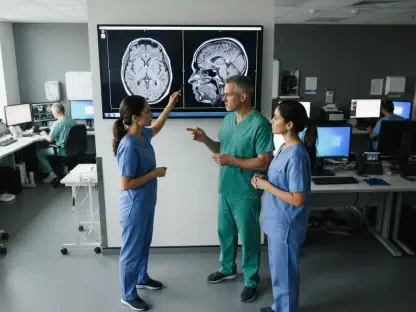
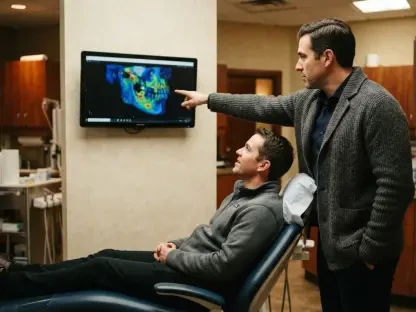
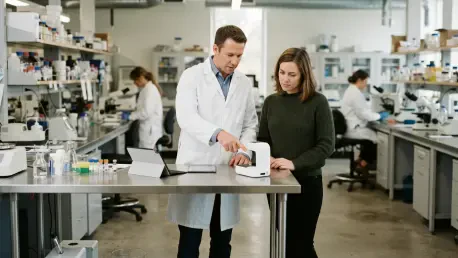
The launch of the Luskin series marked the company’s definitive shift into the professional medical market, providing dermatologists with tools that offer unprecedented visibility into sub-dermal health. The Luskin X device is specifically designed for clinical use, employing a combination of 3D modeling and specialized light frequencies to visualize issues that are typically hidden from the naked eye. It can quantify the size of pores down to 0.1 millimeters and map out pigmentation at the pixel level, allowing doctors to move away from qualitative descriptions toward quantitative diagnoses. This capability is particularly transformative for aesthetic procedures, as it enables clinicians to simulate potential outcomes and provide patients with objective “before and after” comparisons based on hard data rather than subjective perception. Meanwhile, the Luskin S model operates as a self-service kiosk for hospital waiting rooms, automating the initial data collection phase and allowing patients to arrive at their consultation with a pre-analyzed profile of their skin condition, thereby streamlining clinic operations.
A central ambition of this clinical expansion is to eliminate the information asymmetry that often complicates the relationship between patients and providers, especially in competitive medical markets. In regions known for advanced medical tourism, such as South Korea, international patients frequently seek treatments based on social media trends or influencer recommendations rather than their actual biological needs. By providing a standardized, objective diagnosis that patients can access through a mobile application, the technology empowers individuals to take ownership of their skin data. CEO Choi envisions the platform becoming the “InBody” of the skincare world—a reference to the body composition machines that became the global standard for tracking muscle and fat percentages. Just as an athlete can track progress across different gyms using a single standardized metric, a consumer should be able to carry their skin health data from a department store in Paris to a clinic in Seoul, ensuring every treatment is consistent with their long-term health history and biological profile.
Data-Driven Dominance: Redefining the Global Reputation of K-Beauty
The evolution of the Korean beauty industry was historically fueled by a combination of rapid manufacturing cycles and masterful marketing, but the current era demands a shift toward scientific validation. While the global reputation of K-Beauty remains strong, the next phase of its dominance will likely be defined by the ability to prove product efficacy through standardized data. By providing the infrastructure for this validation, the company is enabling cosmetic firms, pharmaceutical manufacturers, and medical device companies to back their claims with objective evidence. When a brand asserts that a new formulation reduces fine lines or improves skin barrier function, the data infrastructure provides the means to verify these results across thousands of users and diverse skin types. This movement toward “proven results” is essential for maintaining consumer trust in an increasingly crowded market, where buyers are becoming more skeptical of traditional advertising and more reliant on verified performance metrics and transparent data.
As the industry moved forward into 2026, the company’s financial performance demonstrated the massive market demand for these objective health metrics, with first-half sales already surpassing the total annual revenue from the previous year. This growth suggested a fundamental change in consumer behavior, where the human face is increasingly viewed as a vital dashboard for personal health rather than just a canvas for cosmetics. To capitalize on this shift, organizations should prioritize the integration of AI-driven diagnostics into their standard service models, moving away from one-size-fits-all recommendations. For retailers and clinics, the next logical step involves adopting portable data standards that allow for a seamless patient experience across different geographic locations. By embracing a universal language for skin health, the global beauty sector can transition into a true branch of the healthcare industry, where every product and procedure is backed by millions of points of evidence, ultimately fulfilling the promise of personalized medicine for every individual.