Today, we’re thrilled to sit down with Laurent Giraid, a trailblazer in the field of Artificial Intelligence with a deep focus on machine learning, natural language processing, and the ethical implications of AI. With a passion for transforming complex technologies into practical solutions, Laurent has been at the forefront of integrating AI into specialized fields like radiology. In this conversation, we’ll explore groundbreaking innovations in speech recognition, the power of multi-model architectures, and how AI is reshaping workflows to prioritize patient care. We’ll also dive into real-world impacts, partnerships, and a glimpse into the future of radiology at an upcoming industry showcase. Let’s get started.
How does the latest speech recognition technology differ from traditional systems in truly understanding clinical context, and what was a defining moment in its development?
Traditional systems often just capture words, but they miss the nuance of medical language and the intent behind a radiologist’s dictation. Our latest technology, launched on December 1, 2025, goes beyond transcription by embedding intelligence that grasps clinical context—think of it as recognizing not just what’s said, but why it matters in a diagnostic report. It picks up on specific terminology, measurements, and even subtle cues like laterality or timing, which are critical in radiology. I’ll never forget the moment during testing when a radiologist dictated a complex case in a noisy emergency department setting, and the system flawlessly captured every detail without a single correction needed. That was a game-changer, showing us we’d cracked a major barrier. We got there through relentless iterations, training the system on vast datasets of radiology-specific language, and integrating feedback from actual users to refine how it interprets real-world speech patterns. It felt like teaching a machine to think like a doctor, and seeing that payoff was incredibly rewarding.
What inspired the multi-model architecture with its unique “voting” algorithm, and can you walk us through how it’s made a difference in challenging environments?
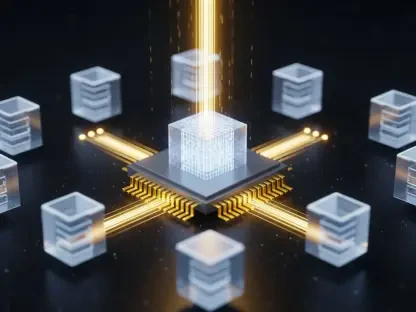
The inspiration came from a simple realization: no single speech engine can handle the incredible diversity of accents, environments, and medical jargon that radiologists encounter daily. We designed a multi-model architecture that runs multiple speech engines in parallel, each processing the input, and then uses a proprietary “voting” algorithm to pick the most accurate transcription in real time. Picture a group of experts debating and converging on the best answer—that’s essentially what happens inside the system. I recall a case in a bustling hospital where background noise was a constant issue; our system still delivered high-fidelity results because the algorithm dynamically weighted the cleanest transcription from the models. Step by step, it works like this: each engine transcribes the audio, the algorithm assesses confidence scores and contextual fit, and then it selects or blends outputs for the final result. This adaptability ensures consistency, whether in a quiet reading room or a chaotic emergency setting, and it’s been a relief to see radiologists trust the output even under pressure. Honestly, watching it perform in those tough spots feels like witnessing a small miracle of engineering.
Your philosophy of “speak less, say more” is fascinating—how did you pinpoint the inefficiencies in radiologists’ reporting workflows, and what’s been the impact on patient care?
We started by asking a fundamental question: what’s slowing radiologists down when they’re creating reports? Through workflow analytics, we dug into the data and observed patterns—like how much time was spent dictating redundant info such as “pertinent negatives” or repeating template phrases. It was eye-opening to see how these small frictions added up, stealing focus from actual diagnosis. During early evaluations, one radiologist shared how cutting down redundant dictation shaved minutes off each report, which doesn’t sound like much until you realize they handle dozens of cases a day—those minutes meant they could review imaging with deeper attention or consult on urgent cases sooner. The impact on patient care is direct: faster, clearer reports lead to quicker clinical decisions, and radiologists feel less bogged down by repetitive tasks. It’s not just about efficiency; it’s about giving them back the mental space to prioritize what truly matters. I still remember the relief in that radiologist’s voice when they described finishing a shift without feeling utterly drained—that’s the kind of change we’re after.
When a major group adopted your reporting technology in February 2025, efficiency improved for 79% of their radiologists. What hurdles did you face during this rollout, and how did the partnership evolve?
Rolling out our technology at a large health specialist group in February 2025 was a significant milestone, but it wasn’t without challenges. One big hurdle was ensuring seamless integration into their existing systems—every practice has unique workflows, and we had to adapt without disrupting their day-to-day operations. There were moments of frustration early on when some radiologists struggled with the learning curve, but our team worked closely with theirs, offering hands-on training and rapid-response support to iron out kinks. I remember a specific instance where a senior radiologist was initially skeptical, but after a week of using the system and seeing a personal efficiency boost in report turnaround time, he became one of our biggest advocates. That 79% efficiency improvement, measured by median time spent on reports, was a proud metric for us—it showed the real impact. The partnership evolved into a true collaboration; we listened to their feedback, tweaked features, and built trust. Seeing their practice transform, with physicians feeling more in control of their workload, reinforced why we do this—it’s about making their tough jobs just a little bit easier.
With your upcoming showcase at a major radiology conference in 2025, what can attendees expect from the “Radiology Reimagined” exhibit, and why does it matter for the field’s future?
At the 2025 conference, in Booth #4753, our “Radiology Reimagined” exhibit will be an immersive experience focused on how AI can be scaled within radiology workflows. Attendees will see live demos of our speech recognition and reporting tools, showing how they integrate seamlessly to reduce clicks, cut unnecessary words, and boost clarity in reports. One key interaction I’m excited about is a demo where visitors can try dictating in simulated challenging environments—think noisy hospital settings—and witness firsthand how our system maintains accuracy. It’s not just a tech show; it’s about painting a picture of a future where AI removes friction, letting radiologists focus on diagnosis over documentation. This matters because radiology is at a tipping point—workloads are increasing, burnout is real, and AI can be the partner that helps manage that burden. Walking through the exhibit, I hope attendees feel a sense of possibility, imagining how these tools could transform their own practices. It’s like opening a window to what’s next, and I can’t wait to see their reactions.
What is your forecast for the role of AI in radiology over the next decade?
I believe AI will become an indispensable partner in radiology over the next ten years, evolving from a helpful tool to a core component of every workflow. We’re already seeing it tackle repetitive tasks like dictation and report generation, but I foresee AI diving deeper into predictive analytics—flagging potential issues in imaging before a radiologist even spots them. It’ll also enhance personalization, adapting to individual radiologists’ styles and preferences in ways that feel intuitive, almost invisible. The challenge will be balancing this power with ethical considerations, ensuring patient data is protected and bias is minimized. I’m optimistic, though; I’ve seen firsthand how radiologists light up when technology frees them to focus on patients, and I think we’ll see that joy multiply as AI matures. My hope is that a decade from now, we’ll look back and marvel at how much closer AI brought us to truly patient-centered care. It’s an exciting road ahead, and I’m eager to be part of shaping it.