
The traditional model of floor maintenance is being upended by rising supply prices and a projected increase in cleaning costs for 69 percent of contractors. This financial strain is forcing a massive rethink of operational strategies across the commercial cleaning sector, where the reliance on manual labor is increasingly becoming a liability for long-term growth. A recent comprehensive analysis by Nassco, Inc. underscores a pivotal shift toward automation, illustrating that the integration of robotic floor care is no longer a futuristic concept but a present-day necessity for business survival. By examining current market studies and industry surveys, the report details how the convergence of staffing shortages, surging operational expenses, and heightening client expectations is driving a rapid transition toward autonomous technology. This change is permanent. Facility managers and building service contractors are now prioritizing tech-driven solutions to maintain hygiene standards that were once manageable through human efforts.
Market Evolution: The Rise of Autonomous Systems
The pace at which building service contractors are adopting robotics has reached a historic turning point in the industry’s evolution. Recent data indicates that approximately 32 percent of contractors plan to implement robotic floor equipment within the next 12 months, a figure that represents a staggering doubling of interest compared to previous reporting periods. This rapid surge suggests that robotic technology has moved decisively past the experimental or evaluation phase and is now a critical component of strategic planning for a third of the market. This shift is not merely about novelty but reflects a broader acceptance of robotics as a reliable tool for consistent performance. As the technology matures, the barriers to entry are lowering, allowing smaller firms to compete with larger entities by leveraging autonomous systems that provide predictable cleaning results regardless of local labor availability or individual worker performance and attendance records. Innovation is now essential.
Beyond individual adoption plans, the broader market consensus highlights a profound technological evolution where automation is becoming a standard requirement in cleaning contracts. Nearly 38.3 percent of survey respondents expect the demand for automation to be explicitly written into service agreements, as clients increasingly demand the efficiency and transparency that only integrated technology can provide. Furthermore, roughly 37.4 percent of industry professionals anticipate that technologies like the Internet of Things and robotics will become standard as cleaning expectations continue to heighten. This trend indicates a top-down pressure where facility owners and property managers view technology as a prerequisite for quality assurance. The ability to provide data-driven proof of service, such as digital heat maps showing exactly where and when an autonomous scrubber operated, is transforming the client-contractor relationship from one of trust to one of verified performance. It is a major shift.
Strategic Implementation: Optimizing Human Capital and ROI
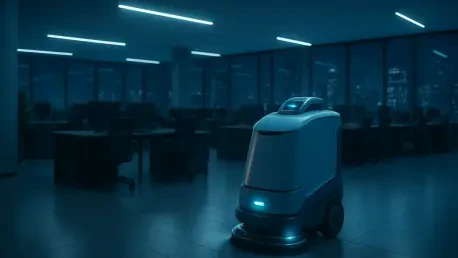
The strategic benefit of automation lies in the redirection of labor rather than the total elimination of the human workforce. By delegating repetitive, time-consuming floor routes to autonomous scrubbers, facilities can reallocate their human staff to high-priority, high-detail tasks that require critical thinking and manual dexterity. These tasks include restroom sanitation, detailed dusting, specialized surface disinfection, and periodic inspections that ensure a building remains truly clean rather than just looking tidy. This optimization allows contractors to handle more square footage with the same number of employees, effectively mitigating the impact of the staffing crisis. Instead of struggling to find multiple people to mop floors, a manager can employ one skilled technician to oversee a fleet of robots while focusing on the nuanced cleaning needs of the modern workspace. This approach improves overall job satisfaction by removing the most monotonous tasks from the worker’s routine. Efficiency is the new goal.
Leading organizations navigated this industry shift by prioritizing comprehensive staff training and integrating data analytics into their daily workflows. These managers successfully identified the most labor-intensive floor routes and transitioned them to autonomous systems, which allowed them to stabilize their operational costs despite the surrounding economic volatility. They moved beyond simple cleaning to a model of total facility wellness, where robotics provided the foundation of consistency. Moving forward, the focus for the industry shifted toward the integration of multi-functional robots capable of more than just floor care, such as air purification and security monitoring. Decision-makers who acted early were able to secure more favorable contract terms by demonstrating a commitment to technological transparency and labor stability. These strategic moves ensured that facilities remained clean, safe, and profitable even as the broader labor market faced unprecedented challenges. It was a successful transition.