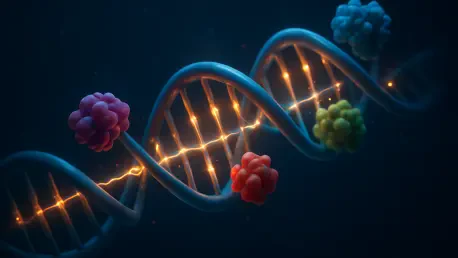

Engineering synthetic promoters with customized functions has become a reality following the deep analysis of half a million unique DNA sequences. For decades, the biological mechanisms that dictate when and where a gene should turn on remained one of the most stubborn puzzles in genomics. While researchers could identify the genes themselves, the regulatory sequences acting as the molecular switches were often buried in the vast dark matter of the genome. By leveraging advanced transformer-based neural networks, a team of international researchers has successfully decoded these activation signals, providing a comprehensive map of how transcription factors interact with promoter regions. This breakthrough allows for the creation of synthetic DNA segments that can be programmed to trigger gene expression only under specific cellular conditions, such as the presence of a tumor. Speaking the language of the genome directly marks a monumental shift from observing natural processes to actively directing the machinery of life.
Computational Mastery: The Neural Architecture of Genetic Decoding
The methodology behind this achievement relied on a massive library of synthetic DNA sequences, totaling over 500,000 unique variations, each tested for its ability to drive gene expression in human cells. Traditional wet-lab experiments would have taken decades to process this volume of data, but high-throughput sequencing combined with machine learning accelerated the timeline significantly. The AI models were trained to recognize the subtle hierarchies of nucleotide arrangements that form the basis of promoter strength and specificity. Unlike earlier attempts that focused on single motifs, these deep learning architectures identified complex dependencies between multiple binding sites, revealing that the spacing and orientation of genetic letters are just as critical as the letters themselves. This computational approach enabled the team to predict the activity of any given sequence with unprecedented accuracy, effectively creating a predictive dictionary for gene regulation in the cell.
Beyond mere prediction, the AI-driven analysis uncovered previously hidden rules governing how enhancers and silencers communicate across the vast distances of the double helix. The research demonstrated that the human genome utilizes a highly redundant and sophisticated system of checks and balances to prevent accidental gene activation. By dissecting these layers, the neural network highlighted how specific protein complexes cluster around promoter regions to initiate the transcription process. This granular understanding of biochemical recruitment has resolved long-standing debates regarding the role of the TATA box and other sequences in diverse cell types. The findings suggested that gene activation is not a binary switch but a tunable dial, where slight modifications to the non-coding DNA can amplify or dampen protein production. This level of control is essential for maintaining cellular homeostasis and preventing the uncontrolled growth characteristic of many major diseases and disorders.
Clinical Implementation: Transformation of Therapeutic Design and Engineering
The practical applications of this technology are already reshaping the landscape of precision medicine, particularly in the development of safer and more effective gene therapies. Current viral vectors often struggle with off-target effects, where a therapeutic gene is expressed in the wrong tissue, leading to potential toxicity. By utilizing the newly decoded activation sequences, bioengineers can now construct synthetic promoters that remain dormant in healthy cells but activate instantly upon entering a diseased environment. This logic-gated approach ensures that highly potent treatments, such as those used in oncology or regenerative medicine, are delivered with surgical accuracy. Furthermore, this research facilitates the rapid prototyping of biosensors capable of monitoring real-time changes in a patient internal chemistry. From 2026 to 2028, these advancements are expected to move into clinical trials, offering hope for conditions that were previously considered untreatable.
The successful decoding of human gene activation sequences provided a definitive roadmap for the next generation of synthetic biology and molecular diagnostics. Researchers established a standardized protocol for engineering customized promoters, which significantly reduced the time required to develop cell-specific genetic tools. This development allowed for a more nuanced approach to treating complex disorders like neurodegeneration and autoimmune conditions, where precise timing of protein delivery is vital. The scientific community recognized the necessity of establishing ethical guidelines to govern the use of such powerful genetic design capabilities, ensuring that the technology remained focused on therapeutic benefits. Moving forward, the focus shifted toward integrating these synthetic sequences into larger regulatory circuits that could respond to environmental cues. The collaboration between computational scientists and biologists proved that the integration of AI was the key to unlocking the human genome.