
The persistent struggle against operational friction has reached a critical juncture where conventional process improvements can no longer keep pace with the sheer volume of data generated by modern enterprise ecosystems. In many organizations, employees spend upwards of forty percent of their workday navigating fragmented software interfaces, manually reconciling spreadsheets, and waiting for approvals that move through sluggish, hierarchical chains. This structural waste acts as a silent tax on innovation, draining financial resources and exhausting the mental bandwidth of the workforce before high-value projects can even begin. While previous technological iterations focused on automating repetitive tasks to shave seconds off a clock, the modern challenge lies in addressing the cognitive load of decision-making within these workflows. When a single procurement delay or a misrouted customer inquiry can cascade into a million-dollar loss, the necessity for a more autonomous and intelligent layer of operational oversight becomes an undeniable requirement for survival.
The fundamental disconnect in many corporate strategies is the tendency to treat visible errors as isolated incidents rather than symptoms of a systemic failure in workflow architecture. Managers often respond to high error rates or missed quarterly targets by adding more layers of oversight, which inadvertently compounds the problem by introducing more administrative gatekeepers and slower response times. True efficiency requires a forensic approach to process mapping, one that ignores the idealized flowcharts found in employee handbooks and instead captures the messy reality of how work actually gets done. By analyzing the digital footprints of every transaction and communication, leadership can identify the specific points where momentum stalls, such as redundant data entry points or siloed databases that refuse to talk to one another. Only by stripping away these historical inefficiencies can an organization create a clean foundation upon which more advanced, agentic technologies can be successfully deployed to manage complex operational demands.
The Evolution of Intelligent Systems: From Rules to Reasoning
The journey toward modern efficiency began with basic automation that operated on rigid, “if-this-then-that” logic, which excelled at predictable data entry but failed the moment it encountered a slight variation in input. These early systems were essentially digital assembly lines, incapable of handling the nuance or ambiguity that defines the majority of professional office work. As the landscape shifted, organizations integrated artificial intelligence to create more robust frameworks, allowing systems to recognize patterns and process semi-structured information like invoices or standard emails. However, even these advanced tools remained reactive, requiring human intervention for every exception or strategic pivot. The current era represents a departure from this tethered approach, moving toward a model where the software is not just a tool but an active participant in the workflow. This shift allows the technology to transition from simply following instructions to actually understanding the broader business objectives that those instructions were meant to achieve.
Building on the foundation of intelligent automation, the rise of agentic systems has introduced a level of autonomy that was previously reserved for human operators. Unlike their predecessors, these AI agents are given specific high-level goals—such as optimizing supply chain costs or resolving complex billing disputes—and are empowered to determine the most effective sequence of actions to reach those ends. They can navigate through different software environments, interact with various APIs, and even negotiate with other automated systems to clear bottlenecks in real-time. This capability to reason through a problem and adjust tactics on the fly represents a significant leap forward, as it eliminates the need for a human to pre-program every possible scenario. By delegating the management of unstructured data and the handling of routine exceptions to these autonomous agents, companies can finally liberate their human staff from the drudgery of administrative firefighting, allowing them to focus on the creative and strategic work that drives long-term growth.
Strategic Implementation: Orchestrating Human and Machine Collaboration
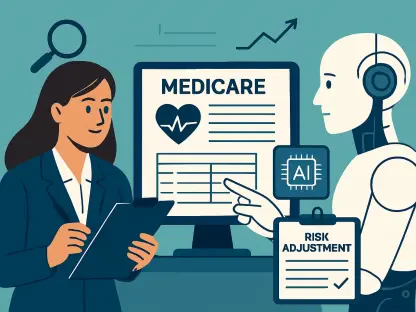
To fully realize the benefits of these autonomous systems, a shift in organizational mindset is required, moving away from viewing automation as a replacement for labor toward seeing it as a sophisticated orchestration of resources. Success in this environment depends on how effectively a company can link its people, applications, and data streams into a single, cohesive narrative. This involves more than just installing new software; it requires a complete reimagining of the employee experience and the customer journey. When an agentic system takes over the heavy lifting of data synthesis and logistical coordination, the human role evolves into one of oversight and high-level judgment. For instance, in a complex claims adjustment process, the AI agent might gather all relevant evidence, cross-reference it with policy documents, and propose a resolution, leaving the human expert to handle only the most sensitive or ethically complex aspects of the case.
The long-term implications of failing to adopt this dynamic approach are severe, ranging from inflated operational costs to a total loss of competitiveness as more agile rivals move faster. Organizations that cling to manual, siloed workflows will find themselves unable to scale, as their labor costs will rise in direct proportion to their growth. Moreover, the internal impact of inefficient systems is often reflected in the external customer experience, where delays and inconsistencies can rapidly erode brand loyalty and market share. By implementing a robust orchestration layer that utilizes agentic automation, businesses can create a more resilient infrastructure that thrives on complexity rather than being paralyzed by it. As we move from 2026 into 2028, the distinction between successful market leaders and struggling laggards will likely be defined by their ability to integrate these self-optimizing systems into the very fabric of their daily operations, ensuring that every resource is utilized to its maximum potential.
The transition toward agentic automation has provided a clear roadmap for organizations seeking to eliminate the structural bottlenecks that have historically hindered their progress. Moving forward, the priority for executive leadership must be the identification of high-impact pilot programs where autonomous agents can demonstrate immediate value, such as in real-time inventory management or automated financial auditing. It is essential to invest in continuous training for the workforce to ensure that employees are equipped to collaborate with these intelligent systems rather than competing against them. Companies should also establish rigorous governance frameworks to monitor the decision-making processes of AI agents, ensuring that all autonomous actions remain aligned with corporate ethics and regulatory standards. By taking these practical steps, businesses shifted their focus from merely surviving daily operational crises to building a scalable, future-proof engine for innovation. The era of manual intervention as a default is over, and the path to sustained efficiency now lies in the hands of those who can master the art of automated reasoning.