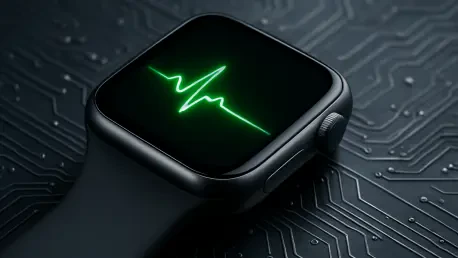

Implementing homomorphic encryption in cardiology ensures that sensitive rhythms are never exposed in plaintext even while being analyzed by cloud algorithms. This breakthrough addresses a critical weakness in the digital health pipeline, where the journey from a patient’s wearable sensor to a central server often leaves data vulnerable during active processing. In 2026, the proliferation of smartwatches and patches capable of recording continuous electrocardiograms has transformed heart health from a clinic-based snapshot into a relentless stream of telemetry. However, this convenience introduces a paradox: the very cloud-based artificial intelligence required to interpret these complex signals often necessitates the temporary decryption of data. While encryption “at rest” and “in transit” provides a perimeter of safety, the computation phase remains a notorious blind spot. As hospitals and tech providers collaborate to scale predictive analytics for arrhythmias, the necessity of maintaining privacy without compromising speed has become a defining challenge for the medical industry.
Structural Vulnerabilities: The Modern Digital Pipeline
Three Layers: Defining the Trust Boundaries
Analyzing the modern cardiac data lifecycle requires a sophisticated understanding of how trust is distributed across multiple digital environments. Research led by experts like Beyazıt Bestami Yüksel has defined a stratified threat model that categorizes this journey into three distinct trust boundaries. The first boundary exists at the source, encompassing the physical sensors and edge devices that capture the raw electrical activity of the heart. Moving beyond the patient, the second boundary involves the communication and storage infrastructure, where data is relayed through smartphones and local networks to the cloud. Finally, the third and most complex boundary is the computation and collaboration layer. It is within this final stage that sensitive information is most often exposed, as standard protocols typically require data to be converted back into plaintext for analysis by machine learning models. This structural vulnerability highlights the urgent need for a shift in how medical organizations perceive the boundaries of their digital trust.
The Computation Gap: Where Encryption Fails
The traditional security paradigm relies heavily on the assumption that data is safe as long as it is shielded during transit or while sitting on a hard drive. However, this approach fails to account for the moments when a server must actually read the data to perform complex arithmetic or identify patterns of atrial fibrillation. In this critical window, information is effectively “naked,” leaving it susceptible to internal breaches or sophisticated server-side attacks. This gap in protection is particularly concerning in cardiology, where high-resolution ECG data contains unique physiological signatures that are virtually impossible to anonymize perfectly. To mitigate these risks, the industry has begun exploring advanced cryptographic techniques that allow for mathematical operations to be performed directly on encrypted strings. By closing the plaintext gap, healthcare providers can ensure that even if a server is compromised, the sensitive patient records remain unintelligible. This transition marks a fundamental change from passive security to active, privacy-preserving computation models.
Future-Proofing Privacy: Technologies and Economic Realities
Advanced Solutions: Homomorphic Encryption and Federated Learning
Two primary technologies have emerged as the frontrunners in securing the computation phase of cardiac care: Homomorphic Encryption and Federated Learning. Homomorphic Encryption is particularly revolutionary because it allows a cloud server to receive encrypted ECG packets, process them using trained AI models, and return an encrypted result to the physician without ever seeing the raw data. Parallel to this, Federated Learning provides a different strategy by decentralizing the training process itself. Instead of pooling all patient records into a single massive database, individual medical institutions can train a shared global model using their own local datasets. Only the resulting model weights, rather than the raw patient data, are shared across the network. This dual-pronged approach offers a robust defense against centralized data leaks, though the integration of these technologies into existing hospital workflows requires significant technical reconfiguration and a commitment to long-term digital infrastructure investments.
Resource Allocation: Balancing Performance and Data Protection
The research findings concluded that this challenge extended far beyond cardiology into any industry utilizing cloud relays. Every organization that leveraged IoT devices and third-party AI analysis faced a similar dilemma regarding performance penalties. Experts determined that the technical feasibility of protecting data throughout its lifecycle was hampered by significant expenditure. Consequently, leaders chose to move beyond generic marketing promises to perform rigorous threat modeling. These stakeholders successfully identified the specific costs and trade-offs required to secure data while it was actively being used. By prioritizing these assessments, the industry moved closer to a standard where security did not automatically come at the expense of clinical utility. Ultimately, the transition to fully encrypted environments required a calculated balance between total privacy and the practical limits of contemporary computing resources.