
The vast, interconnected digital ecosystems that power global commerce are built on a foundation of code that has become so complex that its creators can no longer fully comprehend its intricate dependencies. In this environment, where software underpins every aspect of modern business, reliability is not a feature but the bedrock of customer trust. The sheer complexity and scale of today’s systems have pushed traditional quality assurance methods to their breaking point, rendering them inadequate for the challenges ahead. This article explores the rising trend of leveraging Artificial Intelligence to proactively engineer software reliability, a paradigm shift that moves beyond simple bug detection to systemic risk mitigation. This analysis will examine the drivers of this trend, delve into a groundbreaking case study from Datadog, incorporate expert insights, and project the future of AI-driven system stability.
The Rise of AI in Proactive Reliability Engineering
The Data-Driven Shift from Reactive to Predictive Quality
The software industry is undergoing a fundamental reorientation, moving from a reactive posture of incident response to a proactive discipline of reliability engineering. This transformation is fueled by the stark reality that manual code reviews and conventional static analysis tools are unsustainable in hyper-scale environments. The cognitive burden placed on senior engineers to identify potential cross-service failures has become an insurmountable bottleneck, while automated linters, which excel at finding surface-level errors, consistently fail to grasp the architectural context needed to prevent major outages. Consequently, a new category of AI-powered development tools is emerging.
This new generation of tooling is not merely focused on accelerating code generation but on performing deep, contextual analysis to preempt failures before they occur. Reports indicate a significant and growing investment in AI solutions capable of understanding the labyrinthine dependencies within modern microservices architectures—a task that has long exceeded human cognitive capacity. The trend is clear: organizations are recognizing that true agility cannot be achieved without a corresponding leap in the intelligence of their quality assurance systems. This marks a pivotal move toward a future where quality is predicted and engineered, not just tested and repaired.
A Case Study in Practice: Datadog’s AI Code Reviewer
Datadog, a leader in the observability space, epitomizes the challenge of maintaining platform stability while pursuing rapid, continuous deployment. For a company whose reputation is built on helping clients diagnose their own system failures, internal reliability is paramount. Recognizing the limitations of both human oversight and existing automated tools, their AI Development Experience (AI DevX) team embarked on an innovative project: implementing an AI agent using OpenAI’s Codex directly into their pull request workflow. This agent was designed not just to scan code for stylistic errors but to reason about its intent and potential systemic impact.
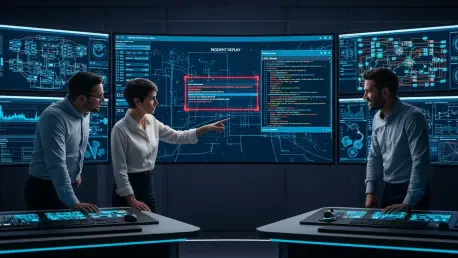
To validate the AI’s efficacy in a tangible way, the team developed an “incident replay harness.” This ingenious system tested the AI agent against historical code changes that were known to have caused production outages. The results were compelling and unambiguous. The AI successfully identified the potential for an incident in over 10 of these past cases, catching critical, system-destabilizing bugs that had previously slipped past multiple layers of human expert review. This accounted for approximately 22% of the replayed incidents, providing a clear, quantifiable measure of risk reduction and demonstrating the AI’s superior ability to detect complex failure patterns.
Expert Perspectives: AI as the Ultimate Engineering Partner
The successful adoption of this AI agent has done more than just prevent outages; it has begun to transform the engineering culture at Datadog. According to AI DevX team lead Brad Carter, interacting with the AI’s feedback feels like getting input from “the smartest engineer I’ve worked with and who has infinite time to find bugs.” This sentiment captures a crucial aspect of the trend: the AI is not perceived as a rigid gatekeeper but as an incredibly insightful and tireless collaborator. Its ability to surface non-obvious connections and potential downstream effects has earned it the respect of the engineers it serves.
This perspective highlights a key theme in the evolution of software development: AI is becoming a powerful partner, not a replacement for human engineers. The technology effectively offloads the immense cognitive burden of tracking cross-service dependencies and understanding the entire state of a complex system. This allows human reviewers to elevate their focus from granular bug-hunting to higher-level concerns such as architectural integrity, system design principles, and long-term strategic direction. In this new model, the human role transitions from tactical code inspection to strategic oversight, with AI providing the deep analytical support necessary to make informed decisions at scale.
The Future Trajectory: AI’s Evolving Role in System Stability
Potential Developments
The success of AI in the context of code review represents only the initial phase of a much broader trend. Future advancements will likely see AI systems evolve from reviewers into active participants in the design and maintenance of resilient systems. These developments will include AI capable of accurately predicting performance degradation from proposed code changes, suggesting architectural improvements to enhance resilience, and even performing automated remediation of potential issues before they are ever merged into the main codebase.
This evolution points toward a future where AI acts as a co-architect of reliable systems. Instead of simply flagging problems, it will offer constructive solutions and help shape more robust and fault-tolerant software from the ground up. The trend will move from a human-led process augmented by AI to a truly collaborative partnership where the system’s intelligence contributes to its own stability throughout the entire development lifecycle.
Benefits and Challenges
The primary benefit of this trajectory is the potential to achieve a new echelon of software reliability while simultaneously increasing deployment velocity. By automating the most complex aspects of quality assurance, organizations can build and ship with greater confidence. However, this path is not without its challenges. A significant risk is the potential for over-reliance on AI, where engineering teams may become less diligent in their own analysis. Furthermore, the complex models that power these systems require sophisticated management, validation, and governance to ensure they are performing as expected.
There is also the possibility that AI systems could introduce new, unforeseen failure modes. An improperly trained or configured AI could approve harmful changes or develop blind spots that lead to novel types of outages. To mitigate these risks, organizations will need to cultivate new skill sets focused on AI governance and develop robust processes for auditing and overseeing these powerful new tools, ensuring that human oversight remains an integral part of the development process.
Conclusion: Redefining Reliability in the Age of AI
The long-established methods for ensuring software reliability are no longer sufficient to manage the scale and complexity of modern digital platforms. As powerfully demonstrated by Datadog’s implementation, AI with deep contextual understanding can systematically prevent a significant percentage of production incidents that elude even the most experienced human reviewers. This marks a pivotal shift from using AI for marginal productivity gains to leveraging it as a core instrument for enterprise-wide risk mitigation and operational stability.
The integration of AI into the software development lifecycle has moved beyond simple code generation and is now aimed at ensuring the fundamental resilience of the systems that power the global economy. For engineering leaders, the focus must shift toward strategically investing in AI that can protect their organization’s most critical asset: customer trust. This trend is not merely about writing better code; it is about architecting a more durable and resilient digital future for everyone.