
In a bold response to the disruptive force of Generative AI, enterprise automation leader UiPath is undergoing a profound transformation. The company, once the face of Robotic Process Automation (RPA), is strategically pivoting from its legacy of “deterministic” bots that follow rigid rules to a new frontier of “agentic” automation. This shift represents a fundamental bet that the future of enterprise software lies not in automating simple tasks, but in orchestrating sophisticated AI agents capable of reasoning, planning, and executing complex workflows across the entire business landscape. This journey, unfolding through late 2025 and into 2026, is a high-stakes endeavor to redefine the company’s identity and secure its leadership in an industry being reshaped by artificial intelligence. The success of this pivot will determine whether UiPath becomes an indispensable layer in the new AI-powered enterprise or a relic of a previous automation era.
The Agentic Pivot as a New Corporate Vision
At the core of this transformation is UiPath’s deliberate repositioning from a provider of task-oriented bots to the essential orchestration layer for the modern “Agentic Enterprise.” The company astutely recognized that the rapid rise of powerful generative AI models posed an existential threat, capable of making traditional, rule-based RPA obsolete. In response, the “Agentic Pivot” was conceived as a strategic gambit built on a compelling thesis: as companies inevitably deploy fleets of specialized AI agents from various vendors, they will desperately need a neutral, robust, and scalable platform to manage, govern, and coordinate their activities. This platform must function seamlessly across a complex web of legacy systems, such as SAP and Oracle, and the cutting-edge AI models that are defining the future of work. UiPath is betting that it can become this indispensable connective tissue for the enterprise of tomorrow, a central nervous system for a new digital workforce.
Driving this ambitious renaissance are two pivotal developments that have fundamentally reshaped the company’s trajectory and infused it with new momentum. The first was the return of founder Daniel Dines to the chief executive officer role in mid-2024, a move that signaled a renewed, founder-led focus on deep product innovation and a clear, unwavering vision for the company’s future in the age of AI. The second crucial development was the deepening of its strategic collaboration with AI pioneer OpenAI. This alliance provides UiPath with priority access to the frontier models necessary to power its next-generation agentic capabilities, ensuring it remains at the cutting edge of AI development. Together, these strategic moves represent a calculated and aggressive response to market forces, designed not just for survival but to establish a dominant position in the next evolution of enterprise automation.
From IPO Peak to AI Renaissance
UiPath’s corporate journey has been a dramatic narrative of meteoric highs and challenging lows, evolving from its humble origins in a Bucharest apartment in 2005 to one of the largest U.S. software IPOs in April 2021. This celebratory peak, however, was soon followed by a difficult period marked by a broader market rotation away from high-growth technology stocks. More significantly, the disruptive emergence of powerful large language models (LLMs) created a wave of uncertainty that threatened to upend the entire automation industry. This challenging environment, which tested the company’s resilience and strategic foresight, ultimately became the crucible in which its new, AI-centric strategy was forged, compelling a fundamental reevaluation of its core value proposition and long-term vision in a rapidly changing technological landscape.
In response to these profound market shifts, UiPath has undertaken a comprehensive overhaul of its business model, moving decisively into a new operational paradigm. The company has evolved beyond its original model of licensing individual software robots, embracing a more sophisticated, cloud-first subscription framework designed for the modern enterprise. Its revenue generation is now centered on Annual Recurring Revenue (ARR) derived from “Agentic Units” and overall platform consumption. This new structure is strategically designed to capture the immense value of orchestrating entire end-to-end business processes rather than just the execution of discrete, isolated tasks. This transition is critically supported by a large and loyal customer base of over 10,000 organizations, including a significant percentage of the Fortune 500, who rely on the UiPath platform to bridge their critical legacy infrastructure with the new world of AI.
Financial Realities and Market Sentiment
The company’s stock performance on the New York Stock Exchange under the ticker PATH tells a cautionary tale of post-IPO volatility common in the technology sector. After debuting at $56 per share and soaring to a peak above $85 in 2021, the stock experienced a prolonged and steep decline, hitting a low in the high single digits by the middle of 2024. As of early 2026, the stock trades at approximately $12.89. This price represents a modest recovery, fueled by a cautious but growing optimism regarding its AI-driven pivot. However, it remains over 75% below its all-time high, a clear indication that the market, while acknowledging the strategic necessity of the pivot, is currently in a “wait-and-see” mode, demanding tangible proof that the new agentic strategy will successfully re-accelerate top-line growth and justify a higher valuation in the long term.
Despite the market’s prevailing skepticism, UiPath has successfully achieved a state of disciplined financial stabilization by late 2025, laying a solid foundation for its strategic initiatives. The company’s Annual Recurring Revenue reached $1.78 billion, reflecting a modest year-over-year growth rate of around 11%—a significant deceleration from the hyper-growth numbers seen during its IPO era. However, this has been effectively counterbalanced by a sharp and sustained focus on operational efficiency. UiPath now boasts strong non-GAAP gross margins of approximately 85% and has improved its non-GAAP operating margin to around 20%. A key priority for management in 2026 is achieving sustained GAAP net profitability to regain the full confidence of institutional investors. The company remains well-capitalized with a healthy cash reserve of roughly $1.7 billion, providing a solid foundation for strategic acquisitions and continued investment in research and development.
Technology and the Competitive Battleground
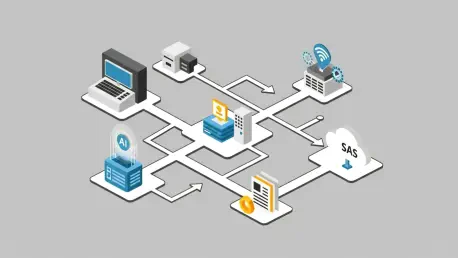
The technological centerpiece of UiPath’s strategic transformation is a sophisticated suite of new products meticulously designed for the Agentic Age. The UiPath Agent Builder empowers both developers and business users to create powerful, semi-autonomous AI agents that can leverage large language models for complex decision-making, problem-solving, and exception handling. These advanced agents are managed by UiPath Maestro, a critical orchestration layer engineered to prevent “agent sprawl” and ensure seamless interaction and collaboration between AI agents, their human counterparts, and the company’s fleet of legacy RPA bots. A key technological innovation underpinning this ecosystem is “ScreenPlay,” an agentic UI automation technology. This groundbreaking feature allows AI to visually perceive and interact with any application’s user interface in a human-like manner, crucially bypassing the need for fragile and often non-existent API integrations, especially with older, entrenched legacy systems.
In this new landscape, UiPath finds itself navigating an intense competitive “pincer movement” from two primary directions. From above, hyperscalers like Microsoft are aggressively bundling their Power Automate platform deeply within the ubiquitous Windows and Office 365 ecosystems, often at a highly competitive price point that presents a significant challenge. From the side, Software-as-a-Service (SaaS) giants such as Salesforce and ServiceNow have launched their own proprietary agent platforms, aiming to keep customers within their walled gardens. UiPath’s primary competitive differentiator and strategic advantage in this crowded field is its steadfast commitment to “cross-platform neutrality.” Unlike its competitors, who aim to lock customers into their respective ecosystems, the UiPath platform is engineered from the ground up to orchestrate complex processes that span disparate environments, from modern cloud applications to the entrenched legacy mainframes that newer AI tools cannot easily or effectively access.
Navigating Risks and Seizing Opportunities
As the broader automation market undergoes a “Great Convergence,” where the traditional distinctions between Robotic Process Automation, Intelligent Document Processing, and Generative AI are rapidly dissolving into a single, unified category of AI-powered automation, UiPath’s strategic pivot is not without substantial risks. A key challenge is the potential for monetization friction; as a single, highly capable AI agent becomes able to perform the work of multiple traditional bots, the company must innovate new ways to price its value to avoid cannibalizing its own revenue streams. The operational complexity of managing “agent swarms” presents another significant technical hurdle, with governance, hallucination mitigation, and preventing cascading errors in critical business systems being paramount concerns for enterprise customers.
Despite these challenges, significant opportunities have emerged that could propel UiPath forward. Strategic Mergers & Acquisitions have become a key catalyst for growth, exemplified by the recent acquisition of WorkFusion. This move allows UiPath to offer “pre-trained” agents specialized for high-value, complex verticals like financial crime compliance, dramatically accelerating the time-to-value for customers in those sectors. Another major tailwind is the continuous and rapid improvement in “computer-use” AI models from partners like OpenAI. These advancements simplify the once-arduous process of automating tasks within complex legacy software, thereby expanding the total addressable market and lowering the barrier to entry for new automation initiatives, creating a fertile ground for UiPath’s agentic platform to flourish.
Orchestrating the Future of Work
By early 2026, UiPath had firmly positioned itself at a pivotal crossroads in the evolution of enterprise software. Through its decisive embrace of Agentic Automation, the company successfully navigated the initial disruptive wave of Generative AI, avoiding the obsolescence that threatened its core business. Under the visionary leadership of its returning founder and fortified by a strategic alliance with OpenAI, UiPath established a credible and compelling path forward. Although intense competition and a cautiously skeptical stock market remained significant hurdles, the company solidified its position as a central player in the next technological wave. The defining question for UiPath and its investors was no longer about its ability to automate tasks, but about its capacity to become the essential operating system that would orchestrate the millions of AI agents poised to become the new digital workforce of the 21st century.