
The Great AI Divide: A Puzzle of Progress and Hesitation
The promise of artificial intelligence transforming the workplace has been a dominant narrative for years, yet the reality on the ground is far more complex. A comprehensive Gallup survey of over 23,000 U.S. workers in August 2025 reveals a landscape of AI adoption that is not a uniform wave but a series of scattered, uneven ripples. While AI usage is undeniably growing, its integration is highly fragmented, concentrated among a specific subset of the workforce. This article delves into the critical factors driving this disparity, exploring why an employee’s job title, industry, and even their awareness of company policy dictate their access to and use of transformative AI tools. By examining the data, we will uncover the deep divisions between sectors, the pervasive communication gaps within organizations, and the true nature of how AI is—and is not—being used today.
From Sci-Fi to Spreadsheets: The Origins of the Current AI Landscape
To understand today’s uneven adoption, we must look at the recent evolution of AI itself. The explosion of powerful, user-friendly generative AI platforms in the early 2020s marked a pivotal shift. These tools were not designed for specialized factory floors or complex medical procedures; their initial strengths lay in processing language, synthesizing data, and generating digital content. Consequently, they were a natural fit for roles already centered around computers, documents, and data streams. This foundation pre-selected the earliest and most enthusiastic adopters: knowledge workers in fields like technology and finance. The very nature of these foundational AI tools created an inherent bias toward desk-based, cognitive labor, setting the stage for the adoption gap we see today and making it crucial to recognize that the current landscape was shaped by the technology’s initial capabilities, not its ultimate potential.
The Core Drivers of Uneven Adoption
A Tale of Two Sectors: The Knowledge Worker vs. Manual Labor Divide
The most significant driver of uneven AI adoption is the stark contrast between industries. The 2025 Gallup data paints a clear picture: AI is overwhelmingly the domain of the knowledge professional. More than three-quarters of employees in the IT sector report using AI tools, a figure that is closely followed by nearly 60% in finance and professional services. This concentration is a direct result of current AI platforms being optimized for tasks like data analysis, information synthesis, and digital workflow management. In sharp contrast, sectors dominated by manual or in-person, customer-facing work lag far behind. Only about one-third of retail workers, for instance, report any AI use. While adoption is slightly higher in fields like healthcare and manufacturing, the chasm remains immense, highlighting that AI’s initial wave has primarily benefited those whose work was already digitized.
The Communication Chasm: Widespread Uncertainty Over AI Policies
Beyond industry-specific factors, a major barrier to broader adoption is a simple lack of clarity. The survey reveals a striking level of uncertainty among employees regarding their own company’s stance on AI. Nearly a quarter of all U.S. workers were unsure if their employer had any formal policy or had implemented AI tools. While just over a third confirmed their organization used AI, a full 40% stated there was no adoption at all. This communication gap is most pronounced among non-managerial staff, part-time employees, and those in hands-on roles, suggesting a significant disconnect between corporate decision-making and the frontline workforce. This widespread ambiguity creates a hesitant environment where employees may be unaware of available tools or unsure if they are permitted to use them, effectively throttling adoption from the inside.
From Occasional Tool to Daily Companion: Decoding Actual AI Usage
Even among those who have adopted AI, the depth of integration varies dramatically. The technology has not yet become an indispensable part of the daily grind for the majority. The survey shows that while around 45% of workers use AI a few times a year, only a slim 10% rely on it every day. For this user base, the most common applications involve consolidating and searching for information, brainstorming ideas, and interacting with chatbots—over 60% of users engage in this. While specialized tools like coding assistants are popular within their niche, the broader pattern is one of occasional, task-specific assistance rather than deep, continuous workflow integration. This data dispels the myth of a universal AI takeover and points to a more realistic picture of AI as a supplemental tool, one that is still far from being a constant companion for most employees.
The Future of AI Integration: Beyond the Desk Job
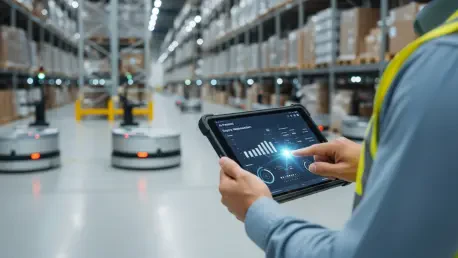
The current landscape, though skewed, hints at the next frontier of workplace AI. While today’s tools excel in data-centric office roles, the greatest long-term competitive advantage may lie in successfully deploying AI in the very sectors where it is currently scarce. The future of AI integration will involve developing and implementing systems tailored for hands-on, operational, and customer-facing work—from optimizing logistics in manufacturing and streamlining patient workflows in healthcare to personalizing customer experiences in retail. Organizations that pioneer these applications will not only bridge the internal adoption gap but also unlock profound efficiency gains and new sources of value, fundamentally reshaping industries that the first wave of AI largely bypassed.
Bridging the Gap: Actionable Strategies for Leaders
The key takeaway for business leaders is that uneven AI adoption is not an intractable problem but a correctable one, driven by a combination of tool limitations and internal communication failures. The most immediate and impactful step is to address the information vacuum. By simply clarifying the organization’s stance on AI, publicizing the availability of approved tools, and providing clear usage guidelines, leaders can achieve an easy win and significantly boost adoption rates. Looking forward, a more strategic imperative is to actively explore and invest in AI applications that support a broader range of work. Instead of focusing solely on knowledge workers, businesses should seek out opportunities to empower their frontline, operational, and customer-facing teams with tailored AI solutions, turning a source of internal disparity into a driver of holistic growth.
Charting a Course for Inclusive AI Transformation
Ultimately, the uneven adoption of AI in the workplace was less a sign of technological failure and more a reflection of its current stage of maturity. The initial concentration in knowledge-based sectors represented a logical starting point, but it was never the endpoint. The journey toward a truly AI-integrated workforce required a conscious and strategic effort to move beyond the path of least resistance. For organizations, the challenge and opportunity were clear: foster a culture of clarity, invest in tools that served the entire workforce, and envision a future where AI’s benefits were not siloed but shared. The companies that successfully navigated this transition not only enhanced productivity but also built a more equitable and resilient foundation for the future of work.