
Apple, a technology giant long celebrated for its seamless integration of hardware and software, now finds itself in an unfamiliar and precarious position, grappling with a profound crisis in its artificial intelligence development. The company, known for its polished user experiences and flawless execution, is facing repeated failures and strategic postponements centered on the next-generation version of its virtual assistant, Siri. This series of significant technical snags has not only derailed its ambitious AI roadmap but has also raised serious questions about its fundamental ability to compete in what is widely considered the most critical technology race of the decade, threatening its long-held reputation and market leadership. The stark contrast between the company’s public promises and its private development struggles paints a picture of a titan struggling to adapt to a rapidly evolving landscape where its core principles of privacy and on-device processing have become immense technical hurdles, casting a long shadow over its future ambitions.
A Pattern of Delays and Diminishing Expectations
The immediate catalyst for the current crisis stems from the revamped, AI-powered Siri failing critical internal testing, revealing fundamental flaws that go far beyond minor bugs. Engineers and quality assurance teams discovered that the new assistant, which is partially powered by Google’s Gemini large language model, suffered from two unacceptable issues: severe latency that made interactions feel sluggish and a high rate of inaccurate responses. These were not peripheral problems but core performance failures affecting the most anticipated new features first previewed at WWDC 2025. These capabilities were designed to transform Siri into a truly intelligent agent, capable of deep on-device personalization, seamless integration with third-party applications, and the execution of complex, multi-step tasks across the entire operating system. The failure to meet Apple’s notoriously high quality standards has forced the company to consider pushing these key features from the upcoming iOS 26.4 release to a later, unspecified update, leaving a significant gap in its software strategy.
This latest setback is not an isolated incident but rather the culmination of a chronic pattern of missed deadlines that has plagued the Siri overhaul project for more than a year, steadily eroding confidence in Apple’s ability to execute on its AI vision. The dramatically improved assistant was originally signaled for release with iOS 26 in the fall of 2025. When that target was missed, the first wave of enhancements was rescheduled for iOS 26.2. That deadline also passed without the promised features, shifting the new target to iOS 26.4, which was anticipated for early 2026. Now, with even this revised timeline in jeopardy, reports suggest that the most advanced capabilities could be pushed as far back as iOS 27 in the fall of 2026, or even later. This consistent cycle of postponements has cultivated a sense of frustration among industry observers and loyal customers, chipping away not only at faith in the Siri product but also at Apple’s broader competence to compete in the modern AI landscape.
The Complex Web of Technical and Strategic Hurdles
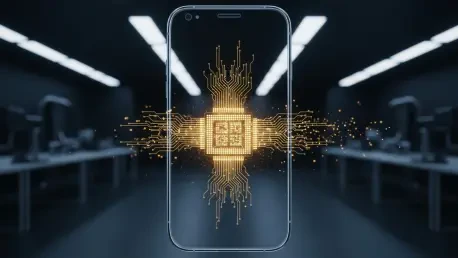
At the heart of Apple’s struggles lies a monumental engineering challenge rooted in its own core philosophy: the difficulty of integrating a powerful third-party large language model into Siri’s existing architecture while adhering to an uncompromising commitment to user privacy. This principle necessitates that a significant portion of AI processing occurs directly on the user’s device rather than in the cloud. While this on-device approach is a key brand differentiator that sidesteps many of the privacy concerns plaguing competitors, it creates enormous computational demands on the iPhone’s Neural Engine. The hardware must simultaneously manage performance, preserve battery life, and avoid thermal throttling, all while delivering the instantaneous, accurate responses that users expect from a premium assistant. This delicate balancing act represents one of the most difficult engineering trade-offs in consumer AI today and has become a significant technical bottleneck for the company’s ambitions.
Further complicating this intricate technical puzzle is the strategic partnership with Google, a fierce competitor in nearly every market Apple operates in. Layering Google’s Gemini model into the core of iOS—the “Gemini Factor”—introduces a unique set of strategic and architectural complexities that appear to have been underestimated. Ensuring that a rival’s AI can operate securely and harmoniously within Apple’s tightly controlled ecosystem, with potential access to a user’s most personal and sensitive data, requires extraordinary safeguards and a level of integration that is proving incredibly difficult to achieve in practice. The need to maintain brand identity while relying on a competitor’s technology creates an inherent tension, forcing Apple to navigate a treacherous path between innovation and a potential loss of control over a core user experience, a compromise the company has historically been unwilling to make.
Mounting Pressure and a Shrinking Lead
The persistent news of these development delays has triggered a swift and negative reaction from Wall Street, with Apple’s stock price sliding in response to investor anxiety. This market reaction reflects a growing concern that the company is not just behind, but is actively losing ground in what is considered the defining technology race of the current era. Veteran analysts have noted that investors already held a “low bar” for Apple’s AI efforts, and the company’s failure to clear even these diminished expectations has been enough to rattle shareholder confidence. The financial implications extend far beyond daily stock fluctuations. Apple had been banking on transformative AI features to serve as a primary driver for future iPhone upgrade cycles. In a maturing smartphone market where hardware innovations have become more incremental, a truly intelligent, context-aware Siri was positioned as the compelling new reason for consumers to purchase new devices.
While Apple struggles with its internal development, its rivals are aggressively deploying and improving their AI assistants, widening the competitive gap with each passing month. Google’s Gemini assistant, running natively on its Pixel devices and integrated into Samsung’s latest smartphones, can already perform many of the advanced, context-aware tasks that Apple has only been able to demonstrate in controlled presentations. Simultaneously, OpenAI’s ChatGPT has become the de facto advanced AI for millions, including many iPhone users who have grown frustrated with Siri’s current limitations and now rely on the standalone ChatGPT app instead. Adding to the pressure, Meta is integrating its own AI assistant across its massive user base on WhatsApp, Instagram, and Facebook, rapidly building its conversational capabilities through immense data collection. This intensifying competition presents a twofold risk for Apple: not only are its users actively adopting alternative AI tools, but the perception of Apple as a technology innovator is suffering potentially lasting damage.
A Critical Juncture for an AI Future
Despite the immense pressure, Apple’s cautious and deliberate approach was rooted in a deep understanding of its brand and the trusted position Siri held within its ecosystem. Unlike a standalone chatbot, the assistant was deeply integrated into the operating system, handling sensitive tasks that could have real-world consequences if executed incorrectly. Releasing an AI prone to confident but false “hallucinations” could have been far more damaging to Apple’s reputation for quality and reliability than any product delay. This insistence on a high-quality, secure experience, while a source of immense frustration for both internal teams and the public, reflected the high stakes involved. The company’s vision for a completely reimagined Siri—proactive, personalized, and deeply integrated—remained unrealized due to these significant technical hurdles. This placed Apple in the uncomfortable position of playing catch-up, with tangible consequences for its stock price and competitive standing. The company ultimately hoped that the final product, whenever it arrived, would be worth the prolonged and troubled wait, allowing it to reframe the narrative from one of delay to one of deliberate perfectionism.