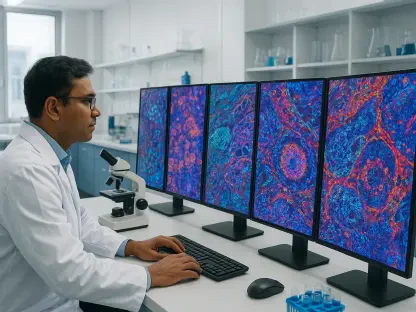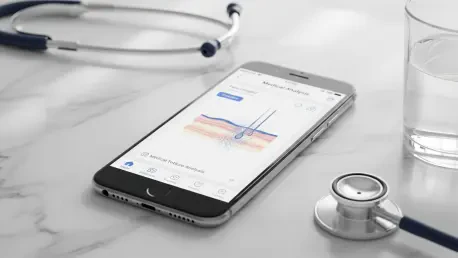

Laurent Giraid stands at the forefront of the ethical evolution in Artificial Intelligence, specializing in how machine learning and natural language processing intersect with human decision-making. As medical AI moves from controlled laboratory settings into the pockets of everyday consumers and the offices of primary care providers, Giraid’s work focuses on the psychological nuances of human-computer interaction. Recent research from institutions like MIT, Stanford, and Columbia University highlights a critical paradox: while AI can significantly boost diagnostic accuracy for skin diseases, the “explanations” provided by these systems often act as a double-edged sword. This conversation explores the varied impact of explainable AI methods—ranging from heat maps to Large Language Models—on users with different levels of expertise. We delve into the dangers of automation bias, the unexpected resilience of trained clinicians, and the vital importance of designing medical technology that encourages critical thinking rather than blind deference.
How does a person’s underlying medical expertise fundamentally change the way they perceive and interact with diagnostic AI suggestions?
The divide between a trained clinician and a non-expert is stark when you look at how they integrate AI into their workflow. For a non-expert, the AI often serves as the primary source of truth; in recent studies, these users showed a significant improvement in accuracy when identifying non-cancerous moles, but it wasn’t necessarily because they were learning. Instead, they were deferring to the AI, trusting its output even when the machine was fundamentally wrong about a diagnosis. In contrast, clinicians bring a pre-existing mental framework to the table, often performing best when they are given just a raw prediction with no accompanying explanation. They tend to use the AI as a secondary check against their own clinical training, which makes them far more resilient to the “anchoring effect” where an initial piece of information—even if incorrect—skews all subsequent judgment.
Could you explain the specific roles that different “explainability” tools, like heat maps or Large Language Models, play in shaping a user’s confidence?
We have seen several distinct methods used to pull back the curtain on AI decision-making, such as heat maps that highlight specific image regions or Large Language Models that provide plain-language rationales. Interestingly, the study published in Nature Medicine revealed that non-experts are particularly susceptible to the “confident-sounding” nature of Large Language Models. These users often found LLM explanations more convincing when they were actually vague or generic, which is a dangerous psychological trap. For a clinician, a heat map might be a useful visual cue, but for a layperson, an LLM-generated explanation can feel so authoritative that it overrides their own common sense. This creates a scenario where a plausible-sounding rationale pulls the user toward the wrong answer, turning a tool meant for clarity into a liability.
Why does it seem that the users who could benefit most from AI assistance are actually the ones most likely to be led astray by it?
It is a tragic irony of current health technology design that those with the least medical knowledge are the most vulnerable to automation bias. When a non-expert uses an AI-powered search engine to check a skin condition, they lack the “ground truth” or the years of residency needed to challenge a high-confidence but erroneous prediction. The research led by experts at MIT’s Jameel Clinic showed that users who performed the worst on their own were actually the most deferential to the AI’s suggestions. This suggests that the AI isn’t just filling a gap in knowledge; it is effectively “switching off” the user’s critical thinking. Because they can’t distinguish between a subtle symptom and an unrelated feature in an image, they follow the model blindly, which results in a significant drop in performance when the algorithm falters.
In terms of practical application, how does the timing of when an AI presents its findings influence a doctor’s or a patient’s final decision?
Timing is everything when it comes to preventing cognitive laziness and ensuring that humans remain the final authority in a medical setting. If an AI explanation or prediction is presented at the very beginning of the process, it creates a powerful anchoring effect that makes the user much more likely to agree with the model. To combat this, researchers are looking at workflows where the human must first provide their own diagnostic hypothesis before the AI-based suggestion is ever revealed. By forcing that initial moment of independent thought, we can use the AI to highlight other possible conditions or missed presentations rather than just providing a “correct” answer to be rubber-stamped. This approach transforms the AI from a master to a collaborator, encouraging the user to stay engaged with the nuances of the case.
Given the concerns regarding equity in healthcare, how did the use of fairness-constrained models change the diagnostic outcomes for diverse populations?
One of the most encouraging findings in recent work involving researchers like Luis Soenksen and Marzyeh Ghassemi is the impact of fairness-constrained models on reducing diagnostic disparities. Traditionally, dermatological AI has struggled with accuracy across different skin tones, often due to biased training data. However, when these models were specifically designed to account for skin tone diversity, there was a significant boost in accuracy across all groups. This proves that technical interventions can actually level the playing field, provided we are intentional about the design. By reducing these disparities, we ensure that the AI doesn’t just work for a subset of the population but provides a reliable safety net for everyone, regardless of their background or skin color.
What is your forecast for the future of patient-facing diagnostic AI?
I anticipate a shift away from the “one-size-fits-all” interfaces we see today toward dynamic systems that “know” their user’s expertise level. In the coming years, I believe we will move toward “pedagogical AI” that doesn’t just give a diagnosis but actually up-skills the user by explaining why a certain feature might be an atypical symptom of a larger issue. We will likely see more FDA-approved interfaces that prioritize “slow thinking,” perhaps even withholding their final verdict until the user has identified specific image regions or answered a series of clinical prompts. My forecast is that the most successful medical AI will not be the one that is the most “correct” in a vacuum, but the one that best facilitates the human-machine partnership to prevent errors before they ever reach the patient.