
The acquisition of specialized safety firms by larger technology conglomerates highlights a shift toward holistic, critical event management strategies. This move reflects a broader realization among global industrial leaders that isolated safety protocols are no longer sufficient in an era of rapid digital transformation. As of 2026, the global landscape for industrial security and worker protection is undergoing a seismic shift, transitioning from traditional, reactive methods to intelligent, predictive, and proactive frameworks. At the heart of this massive transformation is the AI-Powered Video Analytics for Workplace Safety market, which integrates sophisticated computer vision, deep learning algorithms, and advanced sensor technology into existing surveillance infrastructures. This sector is currently projected to witness a robust compound annual growth rate of 20.5% during the forecast period extending from 2026 to 2035. This sustained growth is underpinned by an urgent corporate necessity to reduce workplace incidents, comply with increasingly stringent international safety regulations, and leverage the ongoing digitalization of industrial operations, frequently referred to as the Fourth Industrial Revolution or Industry 4.0.
The Evolution of Safety Management
Strategic Market Drivers: The Proactive Shift
The primary catalyst for market expansion in 2026 is the decisive global transition from reactive to proactive safety management. Historically, safety protocols were often audited post-incident, focusing heavily on what went wrong after a tragedy had already occurred. AI-powered analytics disrupts this cycle by identifying “near-misses” and high-risk behaviors in real-time, allowing for immediate automated or human intervention. In high-risk sectors like mining, construction, and heavy manufacturing, the window to prevent a fatality is often measured in seconds, making real-time hazard mitigation a critical life-saving tool rather than a luxury. For instance, sophisticated AI systems can now detect a worker entering a designated “red zone” near active heavy machinery and instantly signal the machine to halt or alert the individual via wearable haptic devices. This immediate feedback loop is fundamentally changing the risk profile of modern industrial sites.
Corporate Responsibility: ESG and Operational Efficiency
Beyond the immediate preservation of life, modern corporations are under intense scrutiny regarding their Environmental, Social, and Governance performance. Protecting worker health and safety has become a cornerstone of the “Social” component of ESG reporting, leading global companies to invest in these technologies to demonstrate a genuine, data-backed commitment to worker well-being. Furthermore, as factories and logistics hubs become “smarter,” the data generated by video analytics becomes a valuable asset for general operational efficiency. By analyzing “traffic jams” between forklifts and pedestrians, facility managers can optimize warehouse layouts to improve throughput while simultaneously reducing the risk of collisions. This dual benefit of enhanced safety and increased productivity is a major selling point for CFOs who might otherwise view safety technology strictly as a cost center. The integration of safety data into the broader business intelligence stack is now a standard practice for industry leaders.
Technical Hurdles: Privacy and Data Governance
Despite the clear benefits, the market continues to face significant hurdles related to ethics, privacy, and data governance. The implementation of continuous AI monitoring can be perceived by employees as intrusive “Big Brother” surveillance, which can strain relations with labor unions and worker advocacy groups. To combat this perception, technology vendors are increasingly incorporating “privacy by design” features. These include the automatic blurring of faces or the use of pose estimation technology, which focuses strictly on skeletal movements and limb positioning rather than individual identities. This approach aims to maintain rigorous safety standards without compromising the personal privacy of the workforce, ensuring that the technology is viewed as a supportive tool rather than a disciplinary one. Navigating this balance is essential for long-term cultural acceptance of AI in the workplace.
Regulatory Complexity: Compliance and System Accuracy
Regulatory hurdles also present a substantial challenge in 2026, as navigating the complex web of data protection laws requires significant investment in secure data architecture. Companies operating internationally must ensure that video data is handled, stored, and deleted according to diverse local laws, such as the GDPR in Europe or specific state-level privacy acts in the United States. This can be a deterrent for smaller enterprises that lack the legal and technical resources to maintain such complex systems. Additionally, technical challenges like “alert fatigue” caused by false positives remain a concern. If an AI incorrectly identifies a safe situation as a hazard too frequently, safety officers may begin to ignore the warnings. Consequently, there is an ongoing and intense focus on the refinement of AI models to ensure high precision even in diverse environmental conditions like low light, heavy dust, or steam-filled corridors.
Detailed Market Segmentation
The Software Engine: Delivering SaaS and PPE Compliance
The software segment currently stands as the primary engine of this market, encompassing core detection engines, rule-based configuration tools, and advanced analytics dashboards. The industry has seen a massive move toward Software-as-a-Service models, which allow companies to scale their safety infrastructure across multiple sites without the need for massive upfront capital expenditure on local servers. This delivery model ensures that AI models can be continuously improved through over-the-air updates, enabling the system to recognize new types of hazards or evolving safety equipment requirements as they change. This flexibility is vital in a fast-paced industrial environment where new machinery and processes are introduced regularly. Software solutions also provide the necessary integration layers to connect video data with existing Enterprise Health and Safety software, creating a unified record of site safety performance.
Critical Applications: Monitoring Equipment and Environment
Regarding specific safety applications, Personal Protective Equipment monitoring has emerged as the fastest-growing area due to the universal challenge of ensuring compliance with helmet, vest, and glove requirements. AI simplifies this by providing an objective, automated audit trail that replaces manual spot checks. Other significant applications include vehicle-pedestrian safety protocols to prevent forklift-related accidents in busy logistics hubs and ergonomics analysis to prevent long-term musculoskeletal disorders, which remain a leading cause of industrial downtime and insurance claims. Additionally, the technology is being used more frequently for housekeeping tasks, such as detecting spills, blocked fire exits, or debris that could lead to slips, trips, and falls. These “everyday” hazards often cause more cumulative lost time than high-profile accidents, making their automated detection an essential part of a comprehensive safety strategy.
Vertical Integration: High-Stakes Industrial Environments
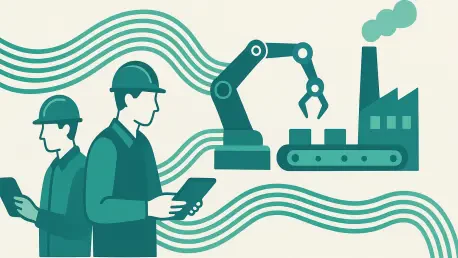
Adoption of these technologies is heavily concentrated in high-stakes industries such as manufacturing, construction, and oil and gas. In the manufacturing sector, facilities use AI to monitor assembly lines for machine-guarding compliance and to ensure that human-robot collaboration remains safe. Construction sites, which are often temporary and lack fixed infrastructure, utilize mobile, solar-powered AI units to monitor fall protection and site perimeter security. The oil and gas sector, meanwhile, prioritizes “permit-to-work” compliance and the detection of environmental hazards like gas leaks or fire flare-ups. These industries have the highest risk of catastrophic failure, which justifies the investment in high-end AI systems. The versatility of AI allows it to be tuned to the specific risks of each vertical, whether that means identifying a chemical leak or ensuring a worker is properly tethered at a height.
Deployment Architecture: The Rise of Edge AI
The market is witnessing a significant shift toward Edge AI, where video data is processed locally on-site—either on the camera itself or a local “vision box”—rather than being sent to a distant cloud server. This architecture is essential for safety applications where latency must be kept to a minimum to allow for real-time alerts. It also addresses significant bandwidth costs and privacy concerns by ensuring that raw video data never leaves the facility. However, hybrid models are becoming the standard for large-scale enterprises. In these setups, the edge handles real-time alerts and immediate machine stops, while the cloud manages long-term trend analysis, historical reporting, and cross-site benchmarking. This combination offers the best of both worlds: the speed of local processing and the analytical power of centralized data management. As edge hardware becomes more powerful and affordable, more complex AI models are being pushed to the periphery of the network.
Regional Dynamics and Global Competition
Geographic Trends: Comparing Innovation Hubs
North America currently leads the global market, fueled by a high concentration of pioneering technology firms and a mature industrial base that is quick to adopt new innovations. The presence of specialized startups, combined with strict Occupational Safety and Health Administration regulations, creates a fertile ground for rapid adoption. High labor costs also drive North American companies toward automated monitoring to avoid the massive financial penalties and insurance premiums associated with workplace injuries. Meanwhile, Europe is characterized by a dual focus on industrial excellence and stringent data privacy, leading the way in the development of “ethical AI” frameworks. European companies are often the first to implement sophisticated anonymization techniques, setting a global standard for how safety can be achieved without compromising worker dignity. The regional competition is driving a race to the top in terms of both technological capability and ethical implementation.
Emerging Markets: Growth in Asia-Pacific
The Asia-Pacific region is expected to see the most rapid growth through 2035, driven by the massive scale of manufacturing and infrastructure development in nations like China, India, and across Southeast Asia. As these countries modernize their safety standards to compete on a global level, the demand for scalable and cost-effective AI safety solutions is skyrocketing. Many manufacturers in this region are skipping traditional safety steps and moving directly to “Safety 4.0” technologies, using AI to manage thousands of workers across sprawling industrial complexes. The sheer volume of data generated in these environments is also helping to train more robust AI models, as the systems are exposed to a wider variety of industrial scenarios. This region is likely to become the testing ground for the mass-market deployment of video analytics, proving that the technology can be effective even in the most challenging and crowded industrial environments.
Competitive Landscape: Mergers and Market Maturity
The competitive landscape is currently populated by a mix of specialized AI startups, established video surveillance giants, and diversified technology conglomerates. Specialized firms like Intenseye and Voxel have built their platforms from the ground up specifically for industrial hazards, offering deep expertise that generic surveillance companies often lack. Conversely, veterans such as Axis Communications and Motorola Solutions are integrating AI safety features directly into their hardware, providing an “all-in-one” approach that is highly attractive to businesses looking to upgrade their existing security infrastructure without managing multiple vendors. This consolidation trend, exemplified by major acquisitions in recent years, highlights the industry’s shift toward holistic “critical event management.” Video analytics is no longer a standalone product but is becoming a integrated part of a broader emergency response and operational resilience strategy that encompasses communication, data analysis, and incident resolution.
Research Framework: Validating Market Growth
The findings regarding this market’s 20.5% growth trajectory are the result of a rigorous research approach involving both secondary and primary research methods. Analysts have examined thousands of public records, annual reports, and regulatory filings to establish historical baselines, while direct interviews with CEOs, technology directors, and safety managers have provided deep insights into real-world pain points and adoption barriers. This data triangulation ensures that revenue estimates are grounded in both bottom-up and top-down economic modeling. Furthermore, scenario modeling has been employed to consider various global outcomes, ranging from rapid AI deregulation to potential economic slowdowns. This comprehensive framework allows for a realistic forecast through 2035, accounting for the technological and regulatory shifts that will define the next decade. By combining hard quantitative data with qualitative insights from the field, the research provides a clear, reliable picture of a market that is fundamentally changing how the world works.
The Future of Industrial Safety 4.0
By the mid-2030s, AI-powered video analytics will likely be as ubiquitous in industrial settings as the hard hat or the high-visibility vest is today. The convergence of 5G connectivity, more powerful edge computing, and increasingly sophisticated “multimodal” AI—which can process sound, thermal data, and environmental sensor readings alongside video—will make these systems even more reliable and comprehensive. This technological evolution will move workplace safety from a simple checklist of rules to a living, breathing digital ecosystem that protects workers across every shift and every facility. The era of manual safety audits is quickly coming to an end, replaced by a system that never sleeps, never tires, and never overlooks a potential hazard.
For modern organizations, the choice to adopt these technologies was framed not as an optional upgrade but as an operational necessity. The ability to prevent even a single catastrophic accident proved to pay for the entire system’s implementation several times over in terms of avoided legal costs, insurance premiums, and lost productivity. As AI models became more accurate and workforce concerns were addressed through transparent data governance and ethical design, the market successfully redefined the “gold standard” for safety in the industrial world. Moving forward, the focus shifted toward ensuring that these digital systems remain resilient against cyber threats and that they are utilized to empower workers rather than merely monitor them. The foundation laid during the current growth period ensured a more resilient, efficient, and human-centric industrial future where technology served as a constant guardian of human life.