
Artificial intelligence has officially moved out of the abstract realm of software and into the tangible fabric of daily life, a trend made unmistakably clear across the sprawling halls of the 2026 Consumer Electronics Show. No longer confined to the role of a silent background process, AI has emerged as the headline feature, driving a fundamental evolution in user experience that prioritizes profound personalization, intuitive convenience, and startlingly realistic interaction. This year’s innovations demonstrate a significant departure from mere automation, showcasing devices that are not just pre-programmed but are actively responsive, learning, and capable of simulating human-like partnership. From the kitchen to the cosmetic counter and onto the tennis court, the message is consistent: technology is becoming a more intelligent, adaptive, and seamlessly integrated companion in our everyday activities, fundamentally reshaping our expectations of the objects we use.
The Smart Home Reimagined
The German engineering group Bosch is at the forefront of the AI-powered kitchen revolution with its fully automated 800 Series coffee machine, a sophisticated appliance that signifies a new era of home convenience. With a starting price of $1,700, this machine’s deep integration with Amazon’s Alexa voice assistant allows for completely hands-free operation, transforming the morning ritual. A user can simply speak a command upon waking, such as ordering a double espresso, and the machine will handle the entire brewing process without any physical interaction. The system’s advanced capabilities extend to preparing some 35 different espresso options, all accessible via voice control. This is a deliberate strategic move for the century-old company, which, according to spokesperson Andrew de Lara, is consciously “leaning in with AI” to position itself as a leader in this technological shift. The coffee machine is a flagship product within a much broader corporate vision centered on infusing AI throughout the kitchen ecosystem, primarily managed through the Home Connect mobile application.
This initiative is part of a larger trend where AI serves as the central intelligence hub for an entire suite of smart appliances, enabling a level of synergy previously seen only in science fiction. Through the Home Connect app, which already facilitates remote control over various devices, Bosch is building an ecosystem where appliances communicate and learn. This AI-driven network can anticipate user needs, manage inventory by reordering supplies, and optimize energy consumption. The 800 Series coffee machine is therefore not just an isolated gadget but a node in an intelligent home network. Its high price point reflects a growing consumer appetite for technology that offers not just novelty but a tangible enhancement to daily routines. The shift from manual operation to voice-activated, AI-managed systems represents a pivotal moment for the smart home market, where value is increasingly defined by the intelligence and seamlessness of the user experience rather than by hardware specifications alone.
Personalized Creation on Demand
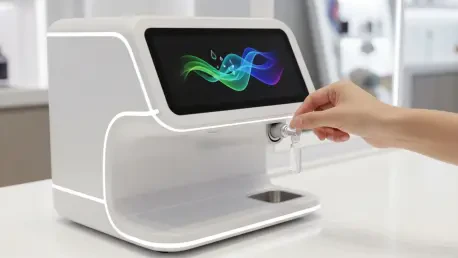
In the realm of personal care, the South Korean company DigitalScent has unveiled an innovative application of artificial intelligence that offers deeply personalized sensory experiences. The company has developed a machine capable of generating a custom fragrance based on an individual’s specific mood and stated preferences. The user interacts with the device through a simple interface, making selections that reflect their current emotional state or desired scent profile. The machine’s core technology is a sophisticated AI that analyzes this input and navigates a vast library of over 1,150 distinct scent combinations to formulate a “virtually unique” fragrance in mere seconds. A crucial part of the process is an interactive preview, where the machine produces and releases a small sample, allowing the user to experience the scent and make adjustments before committing to a final product. This co-creation process between human and machine culminates in the final, personalized scent being dispensed into a small, portable vial at an accessible price point of $3 to $4. The technology has already moved beyond the conceptual stage, with deployment in select airports signaling its transition into a commercially available service.
The DigitalScent platform is emblematic of a broader technological and consumer trend moving away from mass-produced goods toward on-demand, hyper-personalized products. This model, where AI acts as a creative collaborator, has profound implications for a wide range of industries beyond perfumery. The same principles could be applied to create customized beverages tailored to a person’s nutritional needs, cosmetics blended to perfectly match a specific skin tone, or even therapeutic aromatherapy developed in response to real-time biometric data. This marks the rise of “sensory AI,” a field focused on catering to individual human tastes and experiences with a level of precision that was previously unimaginable. By empowering consumers to become active participants in the creation process, companies are leveraging AI not just to sell products, but to offer unique, memorable, and deeply personal experiences that foster a stronger connection between the user and the brand.
The New Frontier of Athletic Training
The revolutionary impact of AI is now extending into the world of sports and recreational training, with a new generation of intelligent ball machines for tennis leading the charge. To understand the significance of this development, it is useful to consider the existing landscape of sports robotics. For instance, the Singaporean firm Sharpa has developed a humanoid table tennis robot with an astonishingly fast reaction time of just two-hundredths of a second. However, no direct humanoid equivalent currently exists for the more complex, full-court game of tennis. While the Chinese company UBTech recently showcased its Walker S2 robot engaging in a slow-paced rally, this was widely seen as a marketing demonstration designed to highlight the industrial robot’s agility for business clients rather than a serious entry into the sports market. These examples underscore the immense challenge of creating a machine that can truly simulate the dynamic and strategic nature of a human tennis opponent.
The primary focus in this emerging field is on the commercially available tennis robot from another Chinese company, Tenniix, which represents a significant leap forward in training technology. In terms of raw performance, the machine is formidable, capable of firing balls at speeds up to 75 miles per hour and executing 10 different types of shots, including those with heavy spin and high lobs reaching eight meters. The most groundbreaking innovation, however, is its use of AI. The advanced version, which costs $1,600 and includes cameras and wheels, analyzes the trajectory of the player’s return shots in real-time. For example, after a player hits a cross-court forehand, the AI predicts where a human opponent would most likely position themselves for the next shot and dynamically moves the machine to fire the ball from that simulated location. This intelligent repositioning creates what Tenniix spokesperson Run Kai Huang described as a “real rhythm,” giving the player the distinct impression of engaging in a rally with a live person rather than a static, predictable machine. The availability of a more affordable basic version for $699 further indicated that this advanced training technology was becoming accessible to a wider audience. The innovations showcased by Tenniix at CES pointed toward a future where AI had become a sophisticated partner in human activity, capable of not just automating tasks but of challenging, adapting to, and improving human performance.