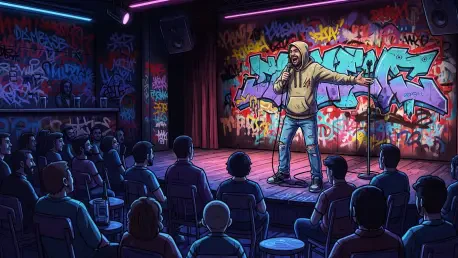

Imagine sitting in a dimly lit comedy club, the crowd buzzing with anticipation, only to discover that the punchline hitting the mark was crafted with the help of artificial intelligence. It’s a scenario that’s no longer pure fantasy, as AI creeps into the deeply personal and nuanced world of humor. The burning question isn’t just whether a machine can make us laugh, but whether it can truly understand what tickles the human funny bone. Today, comedians are dipping their toes into AI tools, using them to brainstorm ideas, animate quirky concepts, and produce content at lightning speed. Yet, even as they embrace this tech, they’re quick to remind everyone that the heart of comedy—its soul, timing, and cultural pulse—remains a distinctly human domain. This fascinating intersection of technology and laughter reveals a delicate balance: AI can assist, but the mic is still firmly in the comedian’s hands. As this trend unfolds, it’s worth exploring how AI is reshaping the comedy landscape, what it can and can’t do, and why the human touch remains irreplaceable in a craft built on connection and authenticity.
Harnessing AI: A Boost for Creativity
The allure of AI for comedians often lies in its sheer efficiency, transforming what used to be grueling, expensive processes into something far more accessible. Take Jon Lajoie, a comedian who’s tapped into AI to bring wild ideas like a “talking baby podcast” to life without breaking the bank. Similarly, Willonius Hatcher, known as King Willonius, has used AI to produce viral parody songs such as “BBL Drizzy,” blending music and visuals at a fraction of the usual cost. For independent creators, this is a game-changer. Tasks that once demanded teams of animators or sound engineers can now be tackled solo, thanks to algorithms that churn out content in mere hours. It’s not hard to see why many in the comedy world are intrigued—AI offers a shortcut to execution, letting artists focus on the creative spark rather than logistical headaches. This practicality is driving a wave of experimentation, especially among those who might not have the resources of a major studio behind them.
Beyond saving time and money, AI is also cracking open doors for comedians who’ve long been on the fringes of the industry. During challenging times like the Hollywood strikes a couple of years back, Willonius pivoted from struggling comic to online sensation by leveraging AI to craft content that clicked with huge digital audiences. This kind of story highlights a broader shift: technology is lowering barriers, giving underdogs a shot at the spotlight without needing traditional gatekeepers. For aspiring comedians, AI can be a launchpad, amplifying their reach and helping them test ideas in real time across social platforms. However, this democratization comes with a catch. While the tools empower new voices, they also raise questions about whether the content retains the raw, personal edge that defines great comedy. Still, the potential for AI to reshape who gets to make people laugh is undeniable, and it’s a trend worth watching closely.
The Shortcomings of AI: Where Humor Falls Flat
Despite its shiny promise, AI often trips up when it comes to the essence of comedy—delivering a joke that lands just right. Comedians like Lajoie and Willonius have been candid about this limitation, noting that AI-generated humor frequently feels shallow or forced. Academic voices, such as Michelle Robinson from UNC Chapel Hill, describe it as “corny,” lacking the bite or cultural context that makes a punchline resonate. Think about it: a machine can string together a setup and a payoff, mimicking the structure of a joke, but it struggles to capture the shared experiences or subtle emotions that turn a quip into a gut-buster. Caleb Warren, a professor at the University of Arizona, reinforces this by pointing out that while AI might handle execution, the original idea—the unique perspective—still springs from a human mind. This gap between mechanical output and heartfelt wit underscores why so many in the comedy scene view AI with a mix of curiosity and skepticism.
Moreover, the inability of AI to adapt to the unpredictable nature of live comedy adds another layer of doubt. Humor often thrives in the moment—reading the room, riffing off a heckler, or tweaking a line based on the crowd’s vibe. These are skills rooted in human intuition, something no algorithm can replicate with precision. Even in scripted content, AI lacks the knack for timing or tone that comedians hone over years of trial and error. This isn’t to say AI can’t contribute; it’s just that its role feels more like a paintbrush than the artist. As comedians experiment with these tools, they’re finding that the magic of laughter—its spontaneity and connection—remains stubbornly out of reach for machines. This realization keeps the spotlight on human creativity, even as technology nudges its way into the craft.
Navigating Control: Comedians Stay at the Helm
One thing comedians using AI agree on is the importance of maintaining creative control, ensuring the tech serves their vision rather than steering it. Willonius, for example, describes a meticulous process of guiding AI through repeated prompts, refining outputs until they match his intent for a parody or skit. It’s a back-and-forth that demands patience, but it ensures the final product carries his unique stamp. Similarly, Lajoie uses AI to bring oddball concepts to life—think birds strutting in jeans—but he’s clear that the humor’s origin is his own brainchild. This hands-on approach reveals a critical mindset: AI might handle the heavy lifting of production, but the soul of the joke, the idea that sparks a laugh, must come from the comedian. It’s a dynamic where technology is a helper, not a co-creator, preserving the artist’s voice in an era of rapid digital innovation.
This insistence on control also stems from a desire to keep comedy personal, a craft tied to individual perspective and lived experience. When AI churns out content, there’s a risk of it feeling generic, stripped of the quirks or cultural nuances that define a comedian’s style. By staying in charge, artists like Willonius and Lajoie ensure their work doesn’t lose its authenticity, even if it’s polished by algorithms. This balance isn’t always easy—refining AI outputs can be a slog—but it’s a line many are willing to hold. After all, comedy isn’t just about laughs; it’s about connection, about sharing a piece of one’s worldview. As long as comedians keep their hands on the wheel, AI remains a tool in service of that mission, not a replacement for the messy, beautiful humanity at comedy’s core.
Ethical Tangles and Industry Resistance
As AI weaves deeper into comedy, it’s stirring up serious ethical concerns that can’t be laughed off. High-profile pushback, like Sarah Silverman’s legal battle over copyright infringement with chatbot developers, shines a light on fears that AI could plunder original work or blur the lines of ownership. Zelda Williams’s public dismay over AI-generated “deepfakes” mimicking her late father, Robin Williams, adds an emotional dimension to the debate, highlighting how personal artistry risks being exploited. These cases aren’t isolated gripes; they reflect a broader anxiety in the comedy community about losing control over one’s creative legacy. When machines can replicate a voice or style, the question of authenticity looms large. Is it still comedy if it’s not born from a human’s unique struggle or insight? This unease is prompting many to demand clear boundaries for how AI is used in the space.
In contrast, there’s a palpable tension within the broader entertainment industry, where innovation clashes with tradition. The George Carlin estate’s settlement over an unauthorized AI-generated special underscores the potential for technology to cross ethical lines, recreating a beloved figure without consent. Meanwhile, venture capital giants like Andreessen Horowitz champion AI as a transformative force, dismissing critics as resistant to inevitable change. This divide echoes past disruptions—Lajoie likens it to the “Napster era” of music, a chaotic time of unchecked sharing that reshaped an industry. The parallel suggests AI’s integration into comedy might follow a rocky path before finding equilibrium. For now, the clash between pushing boundaries and protecting integrity remains a hot-button issue, with comedians caught in the middle, weighing the benefits of tech against the risk of losing what makes their art theirs.
Shaping the Future: Innovation with Guardrails
Reflecting on this journey, it’s evident that comedians who ventured into AI did so with a mix of excitement and caution, achieving impressive feats while grappling with its limits. Their experiences showed that AI excelled at streamlining production—turning raw ideas into polished content with speed and affordability. Yet, it consistently fell short of capturing humor’s elusive human essence, leaving the craft’s emotional depth and cultural resonance in the hands of flesh-and-blood creators. Ethical battles and industry resistance further colored this landscape, revealing a community wrestling with how to embrace progress without sacrificing authenticity. Looking back, these early experiments painted a picture of a field in flux, where technology amplified reach but couldn’t replicate the soul of a well-timed joke.
Moving forward, the path for AI in comedy seems to lie in striking a careful balance, where innovation is paired with robust guardrails. Comedians and industry stakeholders might consider frameworks that protect intellectual property while encouraging creative use of tech, ensuring tools like AI enhance rather than exploit. Collaborative efforts between artists and developers could refine these platforms, making them more attuned to the nuances of humor without overstepping into mimicry or theft. Additionally, fostering dialogue about ethical standards could help shape a future where AI supports comedians without diluting their unique voices. As this technology evolves, staying vigilant about its impact—while remaining open to its possibilities—will be key to preserving comedy as a deeply human art form, one that thrives on connection, not just code.