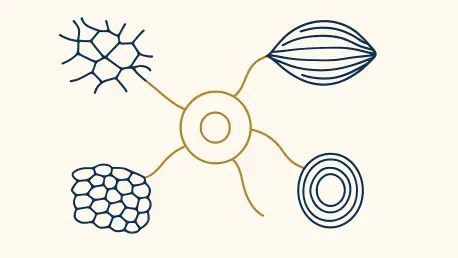

A single cell contains the intricate blueprint for an entire human being, yet the mechanisms that dictate how these microscopic entities transform into specialized organs have remained largely indecipherable until now. This process, known as cellular differentiation, involves a cell deciding to become a neuron, a muscle fiber, or a liver cell based on a complex series of environmental cues. For decades, the biological community operated under the assumption that these instructions were a chaotic collection of localized signals, unique to every specific tissue and impossible to map collectively. However, recent advancements in machine learning are changing this perspective by treating cellular development as a unified, readable language.
The development of a new AI model titled IRIS has provided researchers with a universal translator for the body’s internal dialogue. By analyzing how cells respond to chemical signals, scientists from MIT and the Whitehead Institute have discovered that the instructions for building a human are governed by consistent patterns rather than random occurrences. This breakthrough represents a significant leap forward in developmental biology, suggesting that the “secret language” of life is not a mystery to be guessed but a code that can be cracked and utilized for medicine.
The Rosetta Stone of the Human Body
Every human begins as a cluster of identical embryonic stem cells, yet somehow these “blank slates” transform into the intricate architecture of a beating heart, a thinking brain, or a filtering lung. For decades, scientists viewed this transformation as a chaotic symphony of chemical signals where every cell type seemed to follow its own unique and localized set of rules. This complexity made it difficult to understand the underlying principles of growth, as the sheer variety of developmental outcomes suggested a lack of central logic in the way cells communicated with their surroundings.
However, groundbreaking research revealed that this cellular dialogue is not a collection of hundreds of different dialects, but rather a universal language. By leveraging a new AI model, researchers have begun to translate the secret instructions that build a human being from the ground up. This discovery suggests that the fundamental rules of life are consistent across different tissues, allowing for a more cohesive understanding of how the human body assembles itself from a single fertilized egg into a complex organism.
Cracking the Code of Cellular Decision-Making
Understanding how a cell chooses its destiny is the primary objective of developmental biology, relying heavily on signaling pathways. These pathways are complex chemical sequences that tell a cell when to turn specific genes on or off, functioning as the operating system for biological development. Contrary to the long-held belief that cellular signals are entirely context-dependent, researchers discovered that each signaling pathway leaves a consistent, identifiable fingerprint of gene activity regardless of the cell type.
During embryonic development, cells must navigate a series of rapid-fire instructions that determine their eventual function and location within the body. Mapping these interactions was previously considered too labor-intensive to perform at scale because scientists believed they had to start from scratch for every organ. The move from mapping individual pathways to identifying universal patterns marks a transition from manual observation to predictive digital modeling, allowing biologists to anticipate how a cell will behave before it even begins to change.
IRIS: The Neural Network Reading the Diary of Life
At the heart of this discovery is IRIS, or Inference of Relevant Induced Signals, a machine learning model designed to reconstruct the developmental history of a cell. Much like a voice recognition system that understands a person despite their accent, IRIS uses transfer learning to identify signaling patterns in cell types it has never encountered before. This capability enables the AI to “read” the genetic history of a cell, pinpointing exactly which signals it received hours or even days prior.
To train the AI, the research team exposed thousands of stem cells to various combinations of six primary signaling pathways, creating a massive data repository of cellular responses. When applied to mouse embryos during gastrulation—the most volatile phase of development—IRIS accurately predicted the pathway activations for cells destined to become the gut, heart, and spinal cord. By decoding these signals, the model acts as a digital diary, revealing the hidden instructions that guided the cell toward its final form.
Expert Insights and Real-World Validation
The efficacy of IRIS is supported by its ability to solve biological mysteries that have frustrated researchers for years, providing a high-resolution map of tissue construction that was previously invisible. Led by Pulin Li and Nicholas Hutchins, the study published in Nature Methods demonstrated that AI could move beyond mere observation to provide reliable predictions about biological growth. This level of precision was once thought impossible due to the inherent noise and variability found in living biological systems.
The team specifically used IRIS to pinpoint the exact signaling sequence required for lung formation, a process involving highly specialized cell types. These predictions were later confirmed through successful experiments on mouse embryos, proving the AI could reliably guide biological development. This validation confirmed that the model was not just finding correlations in data but was actually uncovering the functional rules that drive the physical creation of organs and tissues.
Practical Frameworks for the Future of Regenerative Medicine
The ability to decode cellular signals has immediate, practical applications for laboratory research and patient care, moving beyond theoretical biology into engineering. Scientists can use IRIS-generated roadmaps to grow miniature 3D organ models, known as organoids, that mimic human tissue with unprecedented accuracy. These models allow for the testing of new drugs and therapies in a controlled environment, reducing the reliance on animal testing and improving the success rate of clinical trials.
By observing IRIS-guided organoids, researchers can track the progression of complex conditions like pulmonary fibrosis, asthma, and lung cancer. This technology provides a framework for generating functional, lab-grown tissues, potentially leading to regenerative treatments that can repair damaged organs without the need for traditional donors. Starting from 2026, the focus in regenerative medicine has shifted toward utilizing these AI blueprints to create personalized tissue grafts, ensuring that the next generation of healthcare is built on a foundation of precision signaling.
The implementation of the IRIS model changed the landscape of biological research by providing a clearer understanding of cellular growth. Researchers successfully transitioned from a trial-and-error approach to a predictive system that harnessed the power of machine learning. This progress allowed for the creation of more accurate organ models, which facilitated a better understanding of chronic respiratory diseases. The study proved that the complexities of human development followed a logical and readable code. These advancements paved the way for future innovations in tissue engineering and personalized medicine.