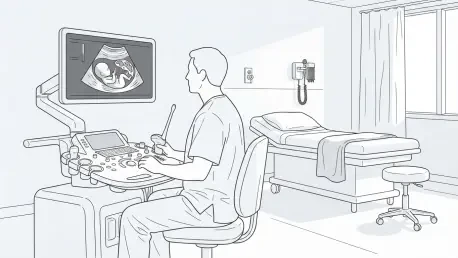

The transition from dedicated single-task networks to a multi-task architecture offers a practical solution for the memory-intensive nature of medical image processing. As clinical settings from 2026 and beyond increasingly integrate artificial intelligence, the reliance on high-performance computing becomes a significant hurdle for widespread adoption. Conventional computer-aided diagnosis systems typically utilize separate, dedicated models for distinct tasks like lesion classification and segmentation, which inevitably leads to high computational overhead and complex deployment protocols. To address these inefficiencies, researchers have developed a unified attention-gated framework that performs both functions simultaneously within a single forward pass. This innovation effectively consolidates the diagnostic workflow, allowing radiologists to obtain comprehensive insights without the hardware strain associated with running multiple independent neural networks in parallel. By streamlining the underlying architecture, the system minimizes the latency often experienced when processing high-resolution imagery.
Technical Validation: Performance and Accuracy Benchmarks
This specific model, constructed upon a shared ResNet-34 encoder, underwent rigorous evaluation using the publicly available Breast Ultrasound Images dataset to determine its effectiveness against traditional benchmarks. In a head-to-head comparison with single-task baselines, the unified network demonstrated a classification accuracy of 93.16 percent and achieved a macro F1-score of 0.931. These metrics indicate that the multi-task approach maintains a high level of diagnostic precision, performing at a level statistically comparable to specialized classification models. The success of this architecture lies in its ability to leverage shared features for multiple diagnostic outputs, ensuring that the breadth of the analysis does not come at the cost of its depth. Such results provide evidence that consolidating neural functions is a viable strategy, proving that versatility and high accuracy are not mutually exclusive when designing deep-learning frameworks for complex clinical assessments.
Beyond basic classification, the system’s ability to delineate lesion boundaries through segmentation was scrutinized to ensure it met clinical standards for diagnostic imaging. The unified system achieved a mean Dice similarity coefficient of 0.766, a result that matched the statistical performance of standalone segmentation networks. What makes this particularly notable is the system’s clinical robustness, especially regarding its 100 percent recall rate for normal scans. This ensures that healthy patients are correctly identified, reducing the burden of unnecessary follow-ups. Furthermore, the architecture ensured that no malignant cases were misidentified as normal, which is the most critical metric for any screening tool intended for front-line medical use. By accurately identifying the presence and the spatial extent of lesions, the framework provides a holistic view of the patient’s condition, facilitating faster decision-making for various oncology teams and improving the overall diagnostic pathway.
A primary advantage of this unified framework was the substantial reduction in resource requirements, which often represented the biggest barrier to AI integration in smaller clinics. By utilizing a shared encoder for both classification and segmentation, the architecture operated with only 24.7 million parameters, representing a 46 percent reduction compared to the 45.9 million parameters required by two separate models. Although the inclusion of attention gates did not yield a statistically significant boost to segmentation accuracy, the overall consolidation offered practical benefits for clinical integration. Researchers concluded that the value of this system rested in its workflow efficiency and reduced memory footprint. Future considerations should have prioritized the implementation of these light-weight models in mobile screening units to increase accessibility. Stakeholders were encouraged to adopt these integrated systems to optimize their existing hardware while maintaining high screening accuracy.