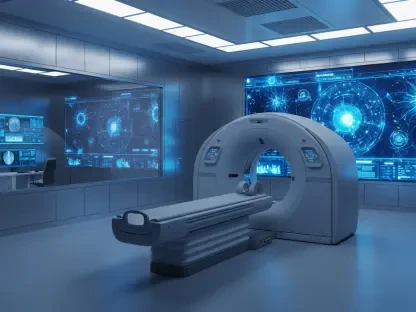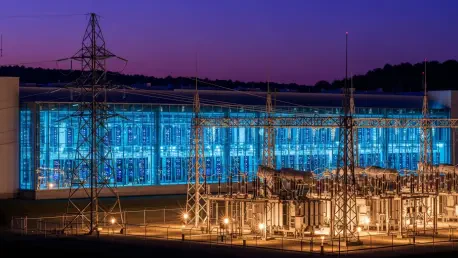

The hum of a transformer in a quiet Pittsburgh suburb now carries the weight of a global technological revolution, signaling a shift that the architects of our original electrical grid could never have envisioned. As the digital economy pivots toward machine learning and high-capacity data processing, the physical infrastructure required to sustain these advancements is being pushed to its breaking point. Pennsylvania, particularly the Pittsburgh metropolitan area, has emerged as a primary theater for this shift, fueled by a unique combination of legacy industrial sites and proximity to world-class research institutions like Carnegie Mellon University. However, this influx of high-intensity energy users arrives at a precarious moment for an aging utility system. This analysis explores whether the state’s electrical backbone can withstand the unprecedented strain of the AI revolution, analyzing the technical, economic, and regional challenges that define this new era of energy consumption.
From Industrial Roots to Digital Powerhouses: The Evolution of Pennsylvania’s Infrastructure
To understand the current crisis, one must look at the historical context of Pennsylvania’s energy landscape. For over a century, the state’s grid was designed to support a predictable rhythm of industrial manufacturing and residential growth. This human-centric consumption model featured clear peaks and valleys, allowing utilities to schedule maintenance and manage loads with relative ease. The system was built on the assumption that factories would close at night and households would dim their lights, providing the mechanical components a chance to cool and recover.
However, the legacy equipment and high-voltage transmission lines built decades ago were never intended to support the relentless, high-density demand of modern data centers. These past developments have created a foundational mismatch; while the state has the industrial footprint to host massive tech facilities, the underlying electrical architecture is a relic of a bygone era, now forced to adapt to a digital appetite that never sleeps. This transition represents more than just an increase in volume; it is a fundamental change in the behavior of the grid itself, moving from a rhythmic cycle to a constant, high-pressure flow.
The Unique Burden of AI on Local Energy Resources
Continuous Consumption and the Death of the Idle State
A critical aspect of this discussion is the fundamentally different energy profile of AI-focused data centers compared to traditional commercial facilities. Unlike standard cloud storage or website hosting centers—which can enter low-power idle states during periods of low activity—AI installations are relentless. These facilities utilize high-performance computing clusters that run specialized processors continuously to train and deploy large-scale models. This intensity means that the cooling systems must also run at peak capacity indefinitely, creating a feedback loop of massive electricity usage.
This around-the-clock demand means the grid experiences no respite, leading to higher baseline loads that leave little room for system maintenance or cooling. Such sustained intensity accelerates the wear and tear on electrical components, challenging the very definition of grid reliability. When a transformer is constantly subjected to maximum thermal load without the traditional “nighttime dip” to cool down, its operational lifespan is drastically shortened. This technical reality forces utilities to reconsider their entire maintenance and replacement schedule in real time.
The Temporal Disconnect: Tech Speed vs. Utility Reality
The integration of these facilities is further complicated by a massive discrepancy in project timelines. Data center developers often operate on “Silicon Valley time,” expecting high-capacity power connections within months to meet market demands and investor expectations. They view electricity as a plug-and-play commodity that should be available upon request. In contrast, traditional electric utilities operate on decadal planning cycles that prioritize long-term stability over short-term agility.
Designing, permitting, and constructing new substations or transmission lines can take up to ten years, involving complex regulatory hurdles and environmental impact assessments. This mismatch has led to a growing national trend where utilities must delay or reject interconnection requests to preserve the stability of the existing system. In Pennsylvania, this tension is palpable as the fast-paced tech sector slams into the slow-moving, highly regulated world of utility infrastructure, creating a bottleneck that threatens both technological growth and public service reliability.
Regional Vulnerabilities: The Pittsburgh Case Study
Pittsburgh serves as a perfect microcosm for the broader national struggle to modernize the grid. The region faces a perfect storm of geographic concentration and aging infrastructure. Developers prefer clustering data centers in areas with existing fiber-optic networks, which often leads to an overloading effect on specific local substations that were originally sized for light manufacturing or residential neighborhoods. This concentration creates “hot spots” where the local distribution network is stretched far beyond its design parameters.
Furthermore, as Pennsylvania experiences more frequent extreme weather events, the safety margin of the grid is narrowing. A system already operating near maximum capacity to serve AI processors has less resilience to handle the additional load of air conditioning during heatwaves or to recover from storm-related equipment failures. This leads to subtle but damaging reliability erosion, where even minor faults can cascade into significant localized outages because the system lacks the “slack” it once possessed to absorb shocks.
Modernizing for the Future: Innovations and Regulatory Shifts
Emerging trends suggest that the only way forward is a radical shift in how we approach grid resilience through the adoption of new technologies. Utilities are beginning to move away from reactive responses, instead adopting advanced forecasting and modeling tools that merge historical outage data with projected AI load growth. These AI-driven tools are ironically being used to manage the very load that AI creates, allowing engineers to visualize potential failure points years before they manifest. This proactive stance is necessary to bridge the gap between decadal planning and immediate demand.
Beyond physical upgrades, we are seeing the rise of behind-the-meter solutions that reduce the burden on public infrastructure. Some data center operators are now exploring on-site generation, including dedicated natural gas plants or massive battery storage arrays, to draw power during off-peak hours and discharge it when the public grid is under the most stress. These technological and operational shifts are essential for a future where the grid must be as dynamic as the software it powers, creating a decentralized energy ecosystem that can withstand the demands of the next generation of computing.
Navigating the Economic DilemmConsumer Protection and Equity
The expansion of the grid to accommodate AI raises a fundamental question of equity: who pays for these multi-billion-dollar upgrades? Historically, infrastructure costs were spread across the entire customer base, but this model is increasingly viewed as unfair to residential households who do not benefit directly from the data center’s presence. There is a growing concern that the average citizen will end up subsidizing the massive profit margins of trillion-dollar tech companies through higher monthly utility bills.
In response, Pennsylvania is investigating large-user tariffs—specialized pricing structures designed to ensure that data centers pay their fair share for the additional capacity they require. By implementing these regulatory frameworks, the state aims to prevent rate shock for everyday citizens, ensuring that the arrival of high-tech investment does not result in an unmanageable increase in monthly utility bills for the general public. These financial mechanisms are vital to maintaining public support for the digital transition, as they decouple the costs of industrial expansion from the price of basic residential service.
Balancing Technological Progress with Physical Reality
The rapid appetite for power driven by artificial intelligence has fundamentally altered the rules of electrical reliability. Pennsylvania stands at a pivotal crossroads, serving as a critical node in the PJM Interconnection that coordinates power across 13 states. The themes explored here—from the relentless nature of AI demand to the need for equitable cost allocation—highlighted a transition from a predictable grid to one dominated by machine-driven consumption. The reality of 2026 showed that simply adding more generation was not enough; the entire philosophy of transmission and distribution required a total overhaul to meet the digital era’s requirements.
To move forward, Pennsylvania must prioritize the implementation of localized microgrids that can isolate data center loads from the main residential lines during peak emergencies. Strategic investment should focus on high-efficiency “solid-state” transformers and digital switching stations that can handle the rapid fluctuations of high-performance computing more effectively than traditional mechanical gear. Policymakers and utility leaders should also incentivize the construction of data centers near existing high-capacity generation sites, such as nuclear plants, to minimize the need for sprawling new transmission corridors. Ultimately, the success of the state’s energy future depended on recognizing that the physical grid is not an infinite resource, but a finite system that requires disciplined management to ensure the AI revolution does not leave the public in the dark.