


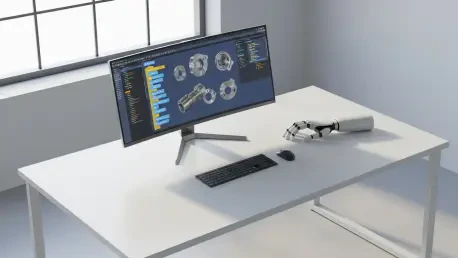

The long-standing barrier between complex digital blueprints and the physical reality of the factory floor is finally dissolving under the pressure of sophisticated autonomous reasoning. The Eigen Engineering Agent represents a pivotal shift in the industrial automation sector, moving away from rigid, manual programming toward a dynamic model of machine intelligence. This system is not merely an incremental update but a foundational change in how Siemens approaches the industrial ecosystem, specifically by enabling machines to understand and execute multi-step engineering workflows. By bridging the gap between digital design and operational environments, the technology allows for a fluid transition that was previously hindered by human latency and technical silos.
The Dawn of AI-Driven Industrial Automation
The emergence of the Eigen Engineering Agent marks a departure from traditional automation methods that relied heavily on static logic. At its core, the agent operates on principles of autonomous multi-step reasoning, which allows it to interpret high-level project goals rather than just following a predefined script. This capability is deeply rooted in the Siemens industrial ecosystem, providing a centralized intelligence that can manage everything from initial conceptualization to the final validation of industrial processes.
The relevance of this technology within the broader landscape cannot be overstated, as it serves as a critical link between the virtual and physical worlds. While digital twins have existed for years, the ability to autonomously act upon those digital models to influence physical operations is a relatively new frontier. This agent provides the necessary cognitive layer to ensure that digital designs are not just static representations but active participants in the manufacturing lifecycle, ensuring that operational environments remain as agile as the software that controls them.
Architectural Pillars and Core Capabilities
Autonomous Multi-Step Reasoning and Self-Correction
One of the most impressive facets of this technology is its ability to decompose complex engineering tasks into manageable, sequential steps without human prompting. The agent does not simply generate a single block of code; it evaluates the entire project scope, identifies the necessary logical components, and constructs them in a logical order. Moreover, the system features a self-correction mechanism that allows it to test its own outputs, such as PLC code or HMI visualizations, and refine them if they do not meet the specified industrial standards.
Deep Integration with the TIA Portal Ecosystem
The true power of the agent lies in its seamless connection to the TIA Portal, an engineering environment used by hundreds of thousands of professionals worldwide. Unlike generic AI models, this system utilizes project-specific data and legacy configurations to ensure that every output is grounded in established engineering history. This integration allows the AI to respect existing safety protocols and hardware constraints, maintaining a level of industrial-grade reliability that general-purpose large language models often struggle to achieve in a manufacturing context.
Drivers of Innovation in Engineering Workflows
The current push toward autonomous engineering is fueled by a severe global labor shortfall that threatens to stall industrial growth through 2030 and beyond. As the manufacturing sector faces a deficit of millions of skilled workers, the adoption of AI tools has transitioned from a luxury to a fundamental survival strategy. The Eigen Engineering Agent addresses this by automating the tedious, repetitive aspects of control logic and interface design, allowing a smaller workforce to manage increasingly complex systems.
Furthermore, there is a visible trend of embedding AI directly into the industrial value chain to create a scalable solution for manufacturing complexity. As production lines become more customized and smaller batch sizes become the norm, the time required for manual reconfiguration has become a major bottleneck. By internalizing the logic of the engineering process, the agent provides a way to scale technical expertise across multiple sites and projects without a linear increase in headcount.
Practical Utility and Real-World Implementation
Practical applications of this technology have already surfaced through extensive pilot programs involving over 100 companies across nearly 20 countries. These implementations have shown that the agent is capable of handling diverse industrial challenges, from automotive assembly to pharmaceutical processing. For instance, companies like Prism Systems have utilized the agent to automate the generation of Structured Control Language (SCL), a task that traditionally required hours of meticulous manual coding and debugging.
In other scenarios, such as the production line streamlining conducted for CASMT, the agent proved its worth by reducing the friction between different technical specialists. By providing a unified source of logic generation, it eliminated many of the hand-off errors that typically occur during the transition from design to commissioning. These real-world examples demonstrate that the technology is not just a theoretical exercise but a functional tool that delivers measurable improvements in operational efficiency and project turnaround times.
Obstacles to Widespread Adoption
Despite the clear advantages, the path to universal adoption is fraught with challenges, particularly regarding the quality of data used to train and guide these systems. AI is only as effective as the information it processes; therefore, inconsistent legacy documentation or fragmented data silos can lead to suboptimal outcomes. Furthermore, there remains a significant shortage of industrial workers who possess the specific skill sets required to oversee and audit AI-generated outputs, creating a new type of talent gap that the industry must work to fill.
To combat these limitations, Siemens has committed substantial resources to research, development, and patenting, aiming to refine the reliability of the agent. A massive investment of over one billion euros highlights the seriousness of this endeavor, as the company seeks to build a robust framework that can handle the nuances of industrial-grade applications. These efforts focus on ensuring that the AI remains a predictable and transparent collaborator, rather than a “black box” that introduces unknown risks into the production environment.
The Future of the Autonomous Industrial Landscape
Looking ahead, the role of the Eigen Engineering Agent is expected to expand within the Siemens Xcelerator portfolio, serving as a cornerstone for fully integrated industrial operations. The goal is to move beyond isolated engineering tasks toward a holistic environment where design, production, and maintenance are linked by a continuous thread of autonomous intelligence. This evolution will likely lead to breakthroughs in self-optimizing factories that can adjust their own parameters in real time based on changing market demands or supply chain disruptions.
The long-term impact on global manufacturing productivity could be transformative, as the technology moves from a support tool to a primary driver of engineering excellence. As these systems become more sophisticated, the focus will shift from how to use the AI to how to best manage the massive influx of data and opportunities it generates. The industrial landscape is poised to become significantly more responsive, with the potential for localized manufacturing to become more competitive through the efficiency gains provided by autonomous engineering.
Final Assessment and Summary
The review of the Eigen Engineering Agent demonstrated that the technology successfully bridged the gap between labor-intensive programming and efficient autonomous execution. It was observed that the system managed to execute complex workflows significantly faster than manual processes, often reaching speeds five times higher than traditional methods. This efficiency provided a clear path toward closing the global labor gap while maintaining the high standards required for industrial reliability.
The overall assessment indicated that the agent functioned as a critical catalyst for the modernization of manufacturing workflows. By integrating deeply with existing ecosystems and utilizing project-specific data, the technology offered a scalable solution to the rising complexity of modern production lines. Ultimately, the implementation of this AI-driven agent marked a decisive step toward a more productive and autonomous industrial future, providing engineers with the tools necessary to thrive in an increasingly digital world.







