
The engineering profession is undergoing a profound and rapid redefinition, shifting from a discipline centered on static physical infrastructure to one focused on the architecture of dynamic, intelligent, and adaptive systems. While the core mission to solve important problems remains constant, the scope of these challenges, the tools available, and the very nature of the engineer’s work are expanding in unprecedented ways. In this new era, engineers are not being replaced by technology; instead, they are becoming sophisticated orchestrators who harmonize the capabilities of people, processes, and artificial intelligence. This evolution places a premium on uniquely human skills like creativity, strategic thinking, and contextual judgment, elevating the engineer from a hands-on creator to the strategic conductor of an increasingly complex and automated world, guiding technology with precision and purpose to build the intelligent frameworks of the future.
From Blueprints to Big Data
The traditional foundation of engineering, built upon materials and mechanics, is giving way to a new paradigm shaped by data, insight, and innovation. Engineers are now at the forefront of designing the invisible digital systems that underpin a society enhanced by artificial intelligence. This transformation is not a distant forecast but a present-day reality, demonstrated by the development of self-diagnosing cities that can predict and repair infrastructure failures, self-optimizing factories that adjust production in real time, and intelligent energy grids that balance supply and demand with unparalleled efficiency. The rapid pace of this shift is underscored by research showing that 58 percent of engineering firms in the UK now consider their digital transformation efforts to be at a “Mature” or “Advanced” stage. This swift adoption places engineers in a unique position to lead the next phase of the technological revolution, leveraging data to create systems that are more resilient, efficient, and responsive to human needs.
This evolution from physical to digital is fundamentally altering the value proposition of the engineering profession itself. The focus is no longer solely on the creation of tangible structures and systems but on embedding intelligence and adaptability directly into the lifecycle of an asset. Success is increasingly measured not just by the physical integrity of a bridge or the output of a power plant, but by the system’s ability to learn, adapt, and optimize its own performance over time. Engineers are therefore transitioning from being creators of static objects to becoming architects of dynamic ecosystems. They are tasked with designing the complex interplay between physical infrastructure and its digital twin, ensuring a seamless flow of data that enables continuous monitoring, predictive maintenance, and strategic foresight. This expanded role requires a deep understanding of both the physical world and the digital systems that model and manage it, positioning engineers as the crucial link between human intent and machine intelligence.
The Engineer as The Conductor
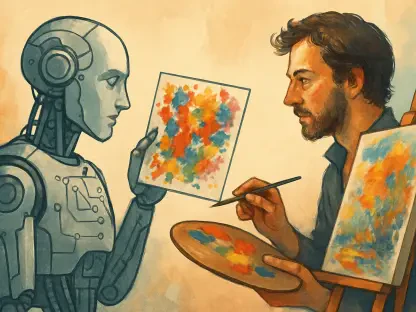
Fears of automation rendering the engineering profession obsolete are being replaced by the consensus that AI serves as a powerful amplifier for human expertise, not a replacement. This has given rise to a new role for the modern engineer: that of a conductor who orchestrates a symphony of people, processes, and intelligent technologies to achieve outcomes far greater than the sum of their parts. In this model, the engineer’s focus shifts from the granular details of hands-on execution to the high-level direction and strategic guidance of increasingly autonomous systems. While routine and repetitive tasks become digitized, the uniquely human qualities of deep domain knowledge, contextual judgment, creativity, and strategic thinking become more critical than ever. These are capabilities that cannot be automated, making the engineer indispensable in designing and overseeing processes that can effectively learn, adapt, and optimize themselves, ensuring that technology is applied with both precision and purpose.
The practical implications of this shift are transforming the daily work of engineers, recalibrating their efforts toward higher-value activities. Less time is spent on the rote generation of data and complex calculations, and more time is dedicated to the interpretation and curation of AI-assisted insights. The engineer’s primary function becomes validating the reliability of these insights and translating them into superior design decisions and more effective project strategies. In this dynamic, human expertise acts as the essential anchor for intelligent systems, providing the critical oversight needed to guide their application. This human-led, AI-powered partnership allows engineers to move beyond simply operating technology to actively shaping its deployment, ensuring that automated processes align with broader project goals, ethical considerations, and long-term strategic objectives. The engineer becomes the final arbiter of quality and intent in a world of powerful digital tools.
Building Infrastructure That Thinks
The integration of real-time data across the entire project lifecycle is making it possible to create adaptive infrastructure—systems designed to evolve in tandem with the needs they serve. This connectivity facilitates a step-change in the speed and quality of decision-making. By leveraging predictive insights unlocked by sophisticated digital tools, engineers can now proactively anticipate problems, model potential solutions, and test outcomes in a fraction of the time previously required. A crucial benefit of this approach is the elimination of “decision latency,” the costly and inefficient gap between identifying an issue and implementing a solution. By closing this gap, projects can accelerate, risks are substantially reduced, and resources are allocated with far greater intelligence. This progress is corroborated by research indicating a sharp year-on-year rise in firms’ confidence in tracking key performance metrics such as profitability and budget adherence, a direct result of breaking down data silos between design, scheduling, procurement, and maintenance.
This data-rich environment is also fundamentally redefining how project success is measured. The traditional focus on static, retrospective metrics like meeting initial deadlines and budgets is shifting toward a more holistic and forward-looking assessment of a project’s adaptability and resilience. The new benchmark for success is a project’s ability to respond to unforeseen changes, mitigate emerging risks, and deliver sustainable, long-term value in a dynamic environment. In essence, engineers are no longer just delivering a finished product; they are embedding intelligence directly into the lifecycle of an asset. This creates infrastructure that can observe its own performance, learn from its operational data, and adapt its behavior accordingly. From smart buildings that optimize energy consumption based on occupancy patterns to transportation networks that reroute traffic in real time, the result is a world of systems designed not just to exist, but to think.
Closing the Digital Skills Gap
As the industry matures, the focus of digital transformation has evolved from a reactive adoption of the latest tools—a mindset of “what’s possible”—to a more deliberate, strategic application of technology driven by “what’s valuable.” This purposeful innovation is fostering better decisions and smarter outcomes by ensuring that technology is deployed to solve specific, high-impact problems. However, this progress is threatened by a significant and growing challenge: a critical mismatch between the advanced skills required for the modern workplace and the capabilities of the current talent pipeline. The scale of this issue is stark. Recent data from the Institution of Engineering and Technology (IET) reveals that 76 percent of engineering employers are facing difficulties recruiting for key roles. Furthermore, nearly half of these employers doubt that the current education system is adequately preparing graduates for a digital-first professional environment, highlighting an urgent need to modernize training and development.
Bridging this gap requires a deliberate and sustained investment that goes beyond simply acquiring new software. It demands a fundamental commitment to upskilling the existing workforce, promoting cross-disciplinary learning, and cultivating an organizational culture that values experimentation and continuous improvement. The goal is to empower engineers to pair their deep technical expertise with a high degree of digital fluency, enabling them to confidently navigate the intersection of physical and digital worlds. This means fostering skills in data analysis, machine learning, systems integration, and cybersecurity alongside core engineering principles. Ultimately, creating a future-ready engineering workforce is not just about teaching individuals how to use new tools; it is about cultivating a new mindset—one that embraces lifelong learning, values collaboration between different fields of expertise, and is prepared to lead the ongoing integration of human ingenuity and artificial intelligence.
A Human-Led AI-Powered Partnership
The engineering profession successfully navigated a period of intense change, cementing a new paradigm built on a synergistic partnership between human ingenuity and machine intelligence. This evolution did not diminish the engineer’s role but elevated it, transforming professionals from designers of static objects into the creators of dynamic systems capable of observing, learning, and adapting. By blending their deep technical expertise with a high degree of digital fluency, engineers established a new standard for how the world is designed, delivered, and continuously improved. This human-led, AI-powered collaboration became the cornerstone of modern innovation, allowing for the creation of infrastructure and systems that were not only more efficient and resilient but also more responsive to the complex, ever-changing needs of society. The engineer’s ultimate value was realized not in replacing human effort, but in orchestrating it with unprecedented technological capability.