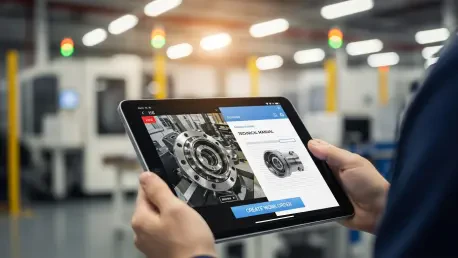

The convergence of computer vision and large language models has fundamentally transformed how modern organizations interact with the massive volumes of streaming and archival video data generated every single day. While the ability to detect objects or count people was a significant milestone in previous years, the current standard for enterprise efficiency requires a deeper level of integration where visual insights are no longer trapped within siloed monitoring systems. Today, the primary challenge lies in bridging the gap between raw video footage and the sophisticated enterprise knowledge bases, messaging platforms, and ticketing queues that run day-to-day operations. Without a cohesive way to connect what is seen with what is known through company policies and historical documentation, video analytics remain a passive tool rather than an active participant in business logic. This disconnection often results in delayed responses to critical incidents or missed opportunities for optimization in manufacturing, logistics, and retail environments. To solve this, developers are now focusing on the creation of context-aware AI agents that can perceive, reason, and act based on a comprehensive understanding of both the visual environment and the specific organizational requirements that govern it. This evolution represents a shift from simple observation to a structured, automated framework where video data serves as a catalyst for immediate, rule-based action across the entire enterprise stack.
1. Bridging the Gap: From Observation to Coordinated Action
The integration of video analytics AI agents into the existing enterprise workflow is essential for turning passive data into functional utility. Currently, many organizations struggle with fragmented systems where video footage is stored in one location, while the relevant organizational knowledge and operational tools reside in entirely different silos. For an AI agent to be truly useful, it must possess the ability to perceive the visual world, reason through the implications of those perceptions using company-specific context, and then initiate actions within the appropriate business applications. This involves connecting video search capabilities with content management systems, messaging platforms like Slack or Teams, and professional databases or ticket queues. When these systems are linked, an event captured on camera can automatically trigger a sequence of events, such as notifying a supervisor or opening a maintenance request, without requiring a human operator to manually bridge the information gap.
Moving from the basic question of what a video shows to the more complex determination of what should be done about it marks the next phase of enterprise AI development. This transition requires a sophisticated orchestration layer that can capture user intent and retrieve the correct organizational context from internal documents. For instance, a video showing a liquid spill in a warehouse is informative, but an AI agent that knows the specific safety protocol for that chemical and automatically routes a cleanup order to the nearest custodial team is transformative. By integrating structured reports and findings into downstream systems, businesses can ensure that their response to visual events is both rapid and consistent. This approach moves beyond simple alerts and into the realm of coordinated action at scale, allowing companies to manage thousands of camera feeds with the same precision they would apply to a single, manually monitored screen.
2. Establishing the Core Functional Objectives of Video AI
One of the primary goals of a context-aware video AI system is to enhance traditional Video Search and Summarization (VSS) through guided and informed analysis. In a standard setup, a VSS system might allow a user to search for specific events, but a context-aware agent takes this further by incorporating the specific goals and constraints of the organization. By enriching video analysis with external document knowledge, the system can provide answers that are not only visually accurate but also operationally relevant. This means the agent can interpret visual data through the lens of standard operating procedures, safety manuals, or technical specifications. The result is a much more nuanced understanding of the footage, where the AI can identify deviations from expected behavior based on actual company policies rather than just generic movement patterns or object detection.
Beyond simple analysis, the system must be capable of combining disparate AI blueprints into a single, manageable service that can be deployed across a large-scale corporate environment. This involves merging the capabilities of VSS with Retrieval-Augmented Generation (RAG) to create a unified intelligence layer. The objective is to produce organized reports that include specific company data, such as part numbers, employee roles, or specific location identifiers, ensuring that the output is immediately actionable for human decision-makers. Developing these multi-stage workflows allows video insights to trigger specific business tasks across different departments. Whether it is verifying compliance on a production line or managing traffic flow in a smart city, the goal is to create a seamless pipeline that scales with the growth of the enterprise and maintains a high level of accuracy across diverse operational environments.
3. Leveraging the Primary Components of the System Architecture
The technical foundation of these advanced agents relies on specialized frameworks designed for autonomous operation and efficient scaling. NVIDIA NemoClaw serves as a collection of open blueprints that enable the ecosystem to build domain-specialized, always-on agents that operate across both digital and physical workflows. This framework is particularly effective because it allows for the creation of agents that are safer and more cost-efficient than traditional, general-purpose models. By using NemoClaw, developers can build agents that not only process visual data but also interact with other software tools to perform complex tasks. These agents are designed to be modular, meaning they can be customized for specific industries such as healthcare, manufacturing, or retail, while still benefiting from a robust and standardized underlying architecture.
Complementing this framework are the NVIDIA Blueprints, which provide customizable reference workflows for building agentic AI pipelines. The Metropolis Blueprint for Video Search and Summarization is a critical component, as it handles the heavy lifting of ingesting streaming or archival video and generating captions and visual metadata. It supports semantic search and interactive Q&A, allowing users to query video data using natural language. When combined with the AI Blueprint for Retrieval-Augmented Generation, the system gains the ability to search through internal documents like manuals, policies, and historical logs to provide context for the visual data it processes. This combination ensures that the agent’s reasoning is grounded in factual, company-specific information, reducing the likelihood of errors and increasing the relevance of the insights generated by the video analysis.
4. Implementing the Three Essential Tools for Agent Intelligence
To function effectively, a video AI agent requires a suite of specialized tools that allow it to process information from different sources and format it for enterprise use. The first of these is the Video Understanding Tool, often referred to as a Language Video Summarizer (LVS). This tool is responsible for analyzing long clips and condensing them into meaningful summaries that highlight the most important events. It allows users to define specific parameters for what needs to be tracked, such as a certain type of activity or the presence of specific equipment. By focusing the AI’s attention on these defined goals, the LVS ensures that the resulting analysis is targeted and efficient, preventing the system from becoming overwhelmed by irrelevant visual data while still maintaining a high level of detail for the events that matter.
The second essential tool is the Information Retrieval Tool, commonly known as “frag,” which pulls relevant data from internal company files and guidelines. This tool acts as the bridge between the visual world and the textual knowledge of the enterprise. When the video AI agent identifies a potential issue, it can use the retrieval tool to look up the corresponding procedure in a digital manual or verify the current status of a piece of equipment in a maintenance database. Finally, the Report Creation Tool brings everything together by combining the findings from the video analysis and the data retrieved from documents into a professionally formatted report. These reports typically include timestamps, citations from manuals, and visual evidence, making them ready for immediate review or for triggering automated processes like opening a Jira ticket or sending an alert to a specialized response team.
5. Demonstrating Real-World Application through the Healthy Eating Coach
A practical way to understand the power of integrated video AI agents is through a scenario like a healthy eating coach application. In this example, a user might upload a video of themselves preparing a meal and define specific goals, such as tracking nutritional intake or ensuring they are following a particular dietary plan. The AI agent starts by observing the meal preparation process, identifying ingredients, and estimating portion sizes based on the visual data. However, the agent does not stop there; it proceeds to reason through the information by comparing what it sees in the video to a database of nutritional guidelines and the user’s specific health profile. This allows the system to provide personalized feedback that is grounded in scientific data and individual goals, rather than just offering a generic description of the food being prepared.
The true value of this system is realized through its ability to take automated action based on its reasoning. If the agent notices that the meal lacks a specific nutrient or exceeds a recommended calorie limit, it can generate a detailed report outlining these findings. Furthermore, the system can be configured to automatically open a ticket in a task management system or send a notification to a professional nutritionist for further review. This entire cycle, from video upload to the creation of a formal follow-up task, happens without any manual data entry from the user. This level of automation ensures that the user’s health goals are consistently monitored and that any deviations are immediately addressed through the appropriate channels, demonstrating how video AI can be woven into the fabric of daily activities to drive better outcomes.
6. Deploying the Video Search and Summarization Agent Infrastructure
The process of deploying a VSS agent begins with the technical setup of the repository and the authentication of cloud services. Developers must first download the necessary source code and sign in to their respective platforms to ensure they have access to the required AI models and computing resources. This initial step is crucial for establishing a secure and stable environment where the agent can operate. Once the repository is in place, the focus shifts to adjusting the system settings and environment configuration files. These files are used to point the agent to the correct servers, API keys, and data storage locations. Proper configuration ensures that the agent can communicate effectively with the various microservices it relies on, such as the video processing engine and the document retrieval system, allowing for a seamless flow of information.
After the environment is configured, the next step involves launching the software bundle using modern container tools. This allows all the necessary infrastructure and AI services to start simultaneously in an isolated and reproducible environment. Using containers simplifies the deployment process and makes it easier to scale the solution as the needs of the enterprise grow. Once the services are running, it is vital to confirm the health of the entire system. This involves checking the status of each component, from the video ingestion pipeline to the language model interface, to ensure they are all responsive and ready to process data. Regular health checks and monitoring are essential for maintaining the reliability of the system, especially in high-stakes environments where timely video analysis is critical for operational success.
7. Orchestrating Complex Workflows for End-to-End Automation
Setting up the orchestrator is the final technical hurdle in creating a fully functional video AI agent. This process typically starts with the execution of an installation script that configures the agent’s sandbox and defines the network rules that govern its communication. The orchestrator acts as the “brain” of the system, coordinating the activities of the video understanding tool, the retrieval tool, and the report generator. It ensures that data is passed correctly between these components and that the agent’s reasoning follows the intended logic. By creating a secure sandbox, developers can protect sensitive enterprise data while still allowing the agent to access the tools it needs to perform its duties. This structured approach to orchestration is what allows the system to handle complex, multi-step tasks that require both visual and textual intelligence.
Validating the complete process is the ultimate test of the system’s effectiveness. Users can use a dedicated interface to run a test request, such as asking the agent to analyze a specific clip and compare it to a set of company policies. A successful validation is one where the agent completes the full cycle, from the initial video analysis to the final output, such as the creation of a maintenance ticket or a summary report. This verification step allows developers to fine-tune the agent’s behavior and ensure that it is accurately capturing user intent. By testing the full end-to-end workflow, organizations can gain confidence in the system’s ability to operate autonomously and provide reliable insights that can be trusted for making important business decisions across various departments and use cases.
8. Expanding Industry Use Cases from Maintenance to Media
The versatility of context-aware video AI agents allows them to be applied across a wide range of industries, including predictive maintenance and sports analysis. In the field of predictive maintenance, companies can use drones equipped with cameras and thermal sensors to inspect remote infrastructure such as power lines or pipelines. The AI agent can process this footage in real-time, identifying signs of wear or potential failure. By comparing the visual evidence to technical manuals and historical maintenance logs, the agent can automatically draft work orders and schedule repairs before a minor issue turns into a major failure. This proactive approach significantly reduces downtime and maintenance costs, while also improving safety for the workers who would otherwise have to perform manual inspections in hazardous environments.
Real-time sports analysis is another area where these agents are making a significant impact. By processing live streams of games, the AI can provide instant feedback to coaches and broadcasters based on the specific rules and strategies of the sport. The agent can track player movements, identify key plays, and even suggest tactical adjustments based on a deep understanding of the game’s historical data. This level of analysis was once only possible through hours of manual video review by a team of experts, but it can now be done in seconds. Whether it is providing fans with deeper insights during a broadcast or helping coaches refine their game plans, context-aware video AI is changing how sports are consumed and played, offering a level of detail and speed that was previously unattainable.
9. Maximizing Business Efficiency through Actionable Insights
One of the most significant benefits of implementing actionable video AI is the dramatic increase in operational speed. By moving from raw footage to a final decision in a matter of seconds rather than hours, organizations can respond to critical events with unprecedented agility. In high-pressure environments like emergency response or manufacturing, this speed can be the difference between a successful intervention and a costly mistake. Furthermore, these systems offer a broader scale than human monitoring ever could. An AI agent can analyze thousands of video sources simultaneously, identifying patterns and anomalies across an entire global operation. This allows companies to gain a bird’s-eye view of their business, uncovering efficiencies and risks that would be impossible to spot through manual observation alone.
Better consistency and higher accountability are also major advantages of using automated AI agents. By ensuring that company policies are applied the same way every time, organizations can eliminate the variability and bias that often accompany human decision-making. Every action taken by the AI is backed by a clear trail of evidence, from the specific timestamp in the video to the relevant clause in a company manual. This transparency is vital for regulatory compliance and for building trust within the organization. Finally, full automation eliminates the need for manual data entry for routine tasks like alert generation and report writing. This frees up human workers to focus on more complex and strategic activities, ultimately leading to a more productive and engaged workforce that is supported by intelligent, reliable technology.
10. Advancing Enterprise Capabilities with Orchestrated AI Workflows
The transition from static video reports to active, orchestrated workflows proved to be a pivotal shift for industrial efficiency during the 2026 to 2028 expansion period. By integrating context-aware agents into the core of the enterprise, organizations were able to bridge the historical gap between visual data and administrative action. The successful deployment of these systems highlighted the importance of modularity, allowing teams to start with a single, high-impact cycle, such as pairing inspection footage with digital maintenance manuals, before scaling the architecture across other departments. This phased approach ensured that the AI agents remained grounded in factual organizational context while providing the flexibility needed to adapt to changing operational demands. Ultimately, the adoption of these tools facilitated a more transparent and accountable environment where every automated decision was backed by verifiable video evidence and documented company policy.
Stakeholders and technology leaders identified that the most effective way to begin this journey involved targeting specific, high-friction points in existing workflows. For example, by automating the initial triage of security footage or the preliminary check of product quality on a factory floor, companies realized immediate gains in productivity. These early successes provided the data and confidence necessary to justify broader implementations of agentic AI. Moving forward, the focus shifted toward deepening the integration between visual agents and more complex reasoning tasks, such as predictive logistics and long-term asset management. The evolution of these tools demonstrated that when video data was no longer a standalone resource but a primary driver of enterprise logic, the entire organization became more responsive, data-driven, and prepared for the challenges of a modern, fast-paced industrial landscape.