
The convergence of advanced generative artificial intelligence and high-precision mechanical systems represents the most significant shift in industrial automation witnessed during this decade. While digital ecosystems have rapidly absorbed artificial intelligence, the physical world has remained a challenging frontier where less than five percent of variable manual tasks have been successfully automated. This partnership between NC AI and CMES Robotics seeks to revolutionize how machines perceive and interact with their surroundings by embedding large-scale language models directly into robotic nervous systems. By combining specialized 3D vision technology with multimodal intelligence, the collaboration addresses the challenge of training robots to handle unpredictable environments. Unlike previous iterations of automation that relied on rigid scripts, this new framework allows for real-time adaptation and problem-solving. This evolution marks a departure from machines that simply follow instructions to entities that understand context in a dynamic landscape.
Integrating Generative Intelligence: Industrial Mechanics
The technical core of this initiative centers on the integration of the VARCO foundation model with sophisticated 3D sensor arrays. This integration allows a robotic system to process visual data not merely as a series of coordinates, but as a semantically meaningful map of its workspace. When a robot encounters an unfamiliar object on a warehouse floor, the onboard AI utilizes its extensive training data to infer the physical properties and required handling techniques for that specific item. This leap in capability effectively eliminates the need for expensive, time-consuming manual recalibration every time a production line changes its output. Furthermore, the use of multimodal inputs enables human operators to communicate with robotic fleets using natural language, significantly lowering the technical barrier for on-site supervisors. The result is a seamless flow of information from high-level strategic commands down to the granular motor controls required for delicate manipulation tasks.
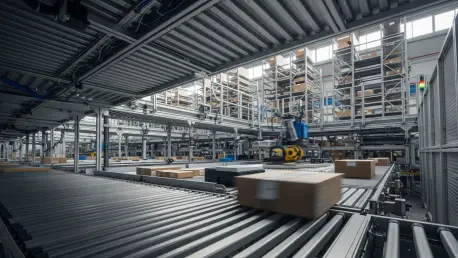
Operational efficiency in complex logistics environments serves as the primary testing ground for these advanced Physical AI implementations. Current deployments focus on high-speed sorting and palletizing operations where item variability is high and human intervention is traditionally frequent. By leveraging the spatial intelligence provided by the CMES vision platform, these robots maintain a high degree of accuracy even when lighting conditions are suboptimal or when dealing with reflective surfaces that typically confuse standard sensors. This robustness is essential for 24-hour operations in global supply chains that cannot afford downtime. Beyond simple picking, the partnership explores the potential for collaborative robotics where machines and humans share the same workspace safely. The AI’s ability to predict human movement and adjust its trajectory in milliseconds ensures a level of safety that was previously unattainable without physical cages. This shift accelerates the adoption of automation across diverse sectors.
Strategic Implementation: The Path toward Autonomous Scaling
Spatial awareness has evolved from a secondary feature to the defining characteristic of modern autonomous systems within this innovative framework. Instead of treating a factory floor as a static map, the combined AI architecture views the environment as a dynamic ecosystem where every object possesses a functional relationship to others. This perspective allows robots to perform sophisticated spatial reasoning, such as determining the most stable way to stack irregularly shaped packages or identifying the optimal path through a crowded facility. The advancement of Physical AI in this context is not just about better sensors; it is about the reasoning that occurs between perception and action. By utilizing synthetic data generation, the partnership has drastically reduced the time required to train these models for niche industrial tasks. This proactive approach ensures that the robotic systems are ready for deployment in specialized fields like pharmaceutical manufacturing and electronics assembly where precision is vital.
Strategic alignment between these two entities demonstrated that the future of robotics relied heavily on the fusion of cognitive reasoning and physical dexterity. Organizations that successfully integrated these Physical AI solutions realized immediate improvements in throughput and a marked reduction in operational errors. To capitalize on these advancements, stakeholders moved toward investing in unified data architectures that supported the massive requirements of multimodal models. The transition from legacy systems to AI-native robotics platforms became a priority for firms aiming to maintain a competitive edge in an increasingly automated economy. By prioritizing the development of intuitive human-machine interfaces, the industry ensured that the workforce could transition into supervisory roles with minimal friction. Ultimately, the successful deployment of these systems provided a clear roadmap for the widespread adoption of intelligent machines. The focus remained on creating resilient infrastructures.