
The historical distinction between the biological architecture of the human brain and the silicon-based logic of artificial intelligence is rapidly dissolving as researchers uncover the precise mathematical nature of neural plasticity. For years, the scientific community operated under the assumption that biological learning was a relatively messy process compared to the clean, algorithmic adjustments found in machine learning. However, current evidence suggests that the mammalian cortex utilizes a sophisticated system of feedback that mirrors the most advanced digital architectures. This discovery provides a new framework for understanding how organisms master complex behaviors with high efficiency and minimal error.
The Evolution of Learning Theory: From Global Reinforcement to Precision Neuroscience
The field of neuroscience has transitioned from observing broad chemical floods to identifying surgical-level communication between individual neurons. For decades, the dominant theory suggested that the brain learns through global reinforcement, primarily driven by dopamine. This chemical acts as a broadcast signal, informing vast regions that an action was successful without specifying which exact neural pathways were responsible for the success. Moving beyond these non-specific broadcasts toward localized feedback implies that every neuron receives unique instructions tailored to its specific performance.
This shift represents a fundamental change in how biological hardware is perceived by the global research community. Instead of viewing the brain as a generalized organic engine, scientists now treat it as a high-precision computational processor capable of solving the credit assignment problem. This problem involves identifying exactly which synapses should change to improve a complex skill. The move away from biological hardware observations toward computational software logic suggests that biological learning is a calculated refinement of individual cellular responses, mirroring the precision of modern artificial networks.
Bridging the Gap Between Biological Intelligence and Machine Learning
Emerging Trends in Vectorized Instructive Signaling and Neural Efficiency
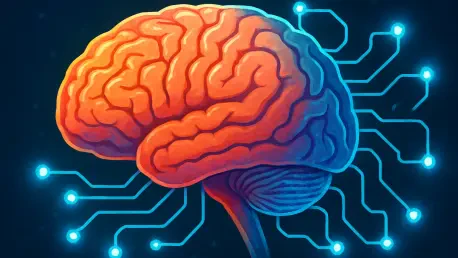
The integration of machine learning principles into biological research has revealed a striking parallel between backpropagation and cortical activity. In artificial systems, an error signal travels backward through layers to adjust weights with mathematical precision. Recent observations show that the human cortex employs a similar mechanism, using specific pathways to deliver corrective data to individual synapses. This convergence suggests that the fundamental principles of intelligence are universal, regardless of whether the substrate is biological tissue or a silicon chip.
A significant trend in current research involves the study of vectorized signals, which provide a specific direction for adjustment rather than a simple notification of success or failure. Dendrites function as specialized processors for these direction-specific error signals, allowing the cell to determine whether to increase or decrease its firing rate based on the intended outcome. Brain-Computer Interfaces have become essential tools in this mapping process, enabling researchers to isolate individual neurons and observe their learning patterns in real time. This capability is driving the creation of biologically plausible models that significantly enhance the efficiency of contemporary AI development.
Market Projections for Brain-Inspired Artificial Intelligence and Neurotechnology
Investment in neuro-mimetic hardware is expected to accelerate significantly from 2026 through the end of the decade as industries seek energy-efficient alternatives to traditional computing. The potential for green AI, modeled after the low-energy consumption of the human cortex, offers a practical solution to the massive power requirements of current data centers. Analysts predict that the market for neuromorphic computing and advanced BCI technologies will see substantial growth, with performance indicators showing a high demand for systems that can learn autonomously with minimal data input.
The economic impact of these developments is anticipated to be profound across the medical and computational research sectors. Performance indicators for BCI technology suggest that the ability to map cellular learning will lead to more intuitive human-machine interfaces. Investment trends are currently favoring startups that focus on the integration of cortical feedback loops into autonomous systems. By leveraging the low-power logic of the brain, these new technologies aim to reduce the environmental footprint of global digital infrastructure while increasing the speed of cognitive processing in synthetic agents.
Overcoming the Complexity of the Biological Black Box
Identifying the contribution of a single neuron within a population of billions remains a significant technical hurdle for modern science. While BCI technology has narrowed the research focus, the sheer density of neural connections creates a background noise that is difficult to filter with absolute certainty. Current high-resolution microscopy provides a window into cellular activity, yet visualizing real-time changes across multiple layers of the cortex requires a level of precision that still tests the limits of optics. Capturing the nuance of a dendritic signal before it is integrated into the cell body is an ongoing challenge.
Furthermore, translating the chemical and electrical signals of biology into mathematical code presents a formidable computational task. A biological signal is not a simple binary value; it involves temporal dynamics and chemical gradients that are difficult to replicate in digital formats. Strategies for isolating specific neural circuits from the noise of natural behavior involve the use of advanced algorithms that can distinguish between intentional learning signals and general physiological maintenance. These obstacles necessitate a multi-disciplinary approach that combines physics, engineering, and advanced mathematics to decode the brain’s internal teaching signals.
Ethical Standards and Regulatory Landscapes in Neural Research
The rapid advancement of optogenetics and invasive BCI studies has prompted a reevaluation of animal welfare standards across international research hubs. Regulatory bodies are increasingly focused on ensuring that the benefits of mapping neural signals justify the use of advanced experimental techniques. This includes the development of non-invasive alternatives that can achieve similar resolutions without physical disruption to brain tissue. Compliance with these evolving standards is now a prerequisite for continued funding and institutional approval in the neurotechnology sector.
In the realm of human applications, the legal framework governing data security is becoming more robust to protect the privacy of individual neural signatures. As BCIs move toward broader medical use, the risk of unauthorized access to brain-activity data poses a unique ethical challenge. International standards are being drafted to ensure that brain-mimetic AI is deployed responsibly, preventing the misuse of neural mapping for non-therapeutic purposes. These regulations aim to balance the need for scientific innovation with the fundamental rights of cognitive privacy and data ownership.
The Future Frontier: Unified Theories of Biological and Synthetic Learning
The next stage of cognitive science points toward a unified theory that describes learning as a singular process occurring across both biological and synthetic domains. Researchers are currently identifying specialized interneurons that act as the physical carriers of vectorized signals, serving as the biological equivalent of error-checking algorithms. Understanding these pathways could lead to a revolution in neuroplasticity treatments, allowing for the targeted rehabilitation of cognitive functions after injury by artificially stimulating specific feedback loops.
Forecasting the development of AI reveals a trajectory where synthetic systems learn with the speed and efficiency of the human cortex. These systems will not require the massive datasets typically associated with machine learning but will instead rely on localized feedback to refine their performance. This shift toward self-optimizing hardware could disrupt industries ranging from robotics to personalized medicine. The ability to simulate cortical feedback loops in silicon will enable machines to adapt to new environments with human-like intuition, marking a new era of autonomous learning.
Synthesizing a New Era of Cognitive Science and Artificial Intelligence
The discovery of vectorized signals fundamentally altered the trajectory of neural research by providing a solution to the long-standing problem of neural credit assignment. It was observed that the brain did not rely on vague reinforcement but instead utilized a sophisticated language of precise, directional feedback. This shift in understanding allowed neurobiologists and machine learning experts to speak a common language for the first time. The evidence gathered from BCI studies confirmed that the cortex operated with a level of mathematical elegance previously attributed only to artificial systems.
Cross-disciplinary investment in neuro-computational research became the standard for organizations seeking to develop the next generation of intelligent machines. The focus moved toward identifying the specific biological pathways, such as specialized interneurons, that facilitated this rapid learning. As the industry moved forward, the transformative potential of understanding the brain’s internal teaching signals became evident in both medical rehabilitation and energy-efficient computing. These insights provided the foundation for a future where the distinction between biological and synthetic intelligence served as a source of innovation rather than a limitation.