
The integration of AI algorithms into network infrastructure is essential for managing the massive bandwidth requirements of high-resolution volumetric data transfers. This fundamental shift marks a new era where Nokia has successfully transitioned from its heritage as a consumer handset manufacturer to becoming the backbone of the global digital economy. As of 2026, the company operates at the intersection of high-speed connectivity and immersive content, driving what industry experts call the AI supercycle. By providing the fixed, mobile, and optical foundations necessary for data-intensive applications, the organization has enabled a world where digital experiences are no longer restricted to flat surfaces. The legacy of the durable mobile phone has been replaced by a more resilient mission: building the invisible architecture that supports the convergence of physical and digital realities. This transformation was not merely a strategic pivot but a necessity to lead the next generation of media where every pixel carries depth and every interaction feels tangible. The emphasis on network intelligence ensures that as media becomes more complex, the infrastructure remains one step ahead, preventing the bottlenecks that once hindered the growth of extended reality.
Revolutionizing Visual Fidelity: The Power of Gaussian Splatting
A cornerstone of contemporary innovation involves the development of volumetric video through a breakthrough method known as Gaussian splatting. Unlike traditional 3D modeling, which often relies on complex geometric meshes that can appear artificial or require immense computational overhead, Gaussian splatting allows for the creation of photorealistic digital representations. This radiance-field-based technology captures the nuances of light, reflection, and texture with unprecedented accuracy, making digital twins and virtual replicas almost indistinguishable from their real-world counterparts. The process involves representing scenes as a collection of 3D Gaussians, which can be rendered much more efficiently than traditional polygons. By refining these representations through machine learning, the technology achieves a level of visual fidelity that was previously impossible in real-time environments. This progress is particularly vital for capturing human subjects, where the subtle details of facial expressions and skin textures are essential for maintaining a sense of realism and emotional resonance in digital spaces.
To make these high-fidelity experiences accessible to a broader audience, researchers are pioneering adaptive streaming techniques that allow massive 3D data sets to be delivered over existing internet infrastructure. By compressing volumetric content into intelligent, streamable formats, the technical barriers that once restricted immersive media to high-end workstations have been significantly lowered. This democratization ensures that even standard mobile devices can now participate in the capture and consumption of volumetric data, signaling a major shift toward mainstream adoption. The focus remains on ensuring that these streams are responsive to network conditions, adjusting the level of detail dynamically to prevent latency. As the availability of high-bandwidth 5G and 6G networks expands from 2026 to 2028, the ability to stream photorealistic 3D content will become as ubiquitous as streaming 2D video is today. This evolution ensures that the technical requirements of the hardware do not outpace the capabilities of the average consumer, fostering a more inclusive digital landscape.
Tangible Applications: Bridging the Industrial Metaverse
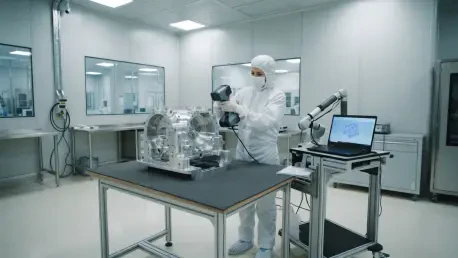
The practical application of volumetric media extends far beyond the realm of entertainment, finding its most immediate and profound value within the industrial sector. In high-stakes environments such as healthcare and precision manufacturing, the ability to record and replay procedures in three dimensions offers a revolutionary training tool. Trainees can observe an expert demonstration from any possible angle, zooming in on specific movements or viewing the scene from the perspective of the practitioner. This level of pedagogical clarity far surpasses the limitations of traditional 2D video, which often fails to convey the spatial depth and context required for complex tasks. By utilizing volumetric digital twins, organizations can facilitate immersive simulations that enhance safety and efficiency, allowing workers to practice intricate operations in a risk-free, photorealistic environment before performing them in the physical world. This approach not only reduces training costs but also significantly improves the retention of technical skills.
Furthermore, volumetric video is redefining the concepts of telepresence and remote collaboration by moving digital communication past the constraints of the traditional video call. By capturing and projecting realistic 3D representations of individuals into a shared virtual space, the technology fosters a more natural sense of human connection. Remote participants can perceive the spatial presence and non-verbal cues of their colleagues, which are often lost in two-dimensional formats. This evolution is particularly impactful for global business operations and the preservation of cultural heritage, where being “present” in a location matters as much as the information being shared. Whether it is a doctor consulting on a surgery from across the globe or a student exploring an ancient site through a lifelike reconstruction, these tools provide a sense of agency and immersion that redefines remote interaction. The goal is to move toward a future where distance is no longer a barrier to high-quality collaborative experiences or shared cultural moments.
Intelligent Optimization: Artificial Intelligence in the Media Pipeline
Artificial intelligence serves as a critical catalyst in the vision for a photorealistic digital future, acting as the primary engine for both content creation and system optimization. Rather than treating AI as a standalone product, the technology is integrated into every stage of the multimedia pipeline to simplify complex tasks that were previously labor-intensive. For instance, AI algorithms are now used to reconstruct full 3D scenes from a limited number of 2D camera inputs, which significantly reduces the amount of specialized hardware required for high-quality capture. This means that creators no longer need massive camera arrays to produce professional-grade volumetric content; instead, machine learning fills in the gaps, predicting depth and texture with remarkable precision. This reduction in hardware dependency is a key factor in moving volumetric media from a specialized niche into a democratized medium capable of being produced by smaller studios and individual creators.
Beyond the initial creation phase, AI plays a vital role in optimizing the delivery and processing of immersive content. Advanced compression algorithms powered by machine learning ensure that high-fidelity volumetric streams remain stable and clear even when network bandwidth fluctuates. These systems can intelligently prioritize the most important parts of a scene—such as a person’s face or a critical piece of machinery—to ensure that visual quality is maintained where it matters most. Looking forward, the intersection of generative AI and volumetric media holds the potential to allow users to build entire digital worlds through simple text prompts or standard video uploads. This capability effectively bridges the gap between professional production and user-generated content, empowering a new generation of digital storytellers. By automating the most technically demanding aspects of the workflow, AI allows developers and artists to focus on creativity and utility rather than the underlying complexities of 3D data management.
Strategic Alliances: Building a Standardized Ecosystem
The leadership in volumetric media is further bolstered by a commitment to collaborative ecosystems and international standardization. Through initiatives like the Veturi Industrial Metaverse LEAD program, the company collaborates with over 200 partners, including academic institutions and innovative startups, to accelerate the development of extended reality and connectivity solutions. This model demonstrates how corporate research and development can align with broader digital goals to foster a competitive and sustainable technological landscape. By engaging with a diverse range of stakeholders, the organization ensures that its innovations are grounded in real-world needs and are capable of being integrated into a variety of industrial and consumer applications. These partnerships are essential for overcoming the fragmentation that often plagues emerging technologies, providing a unified front that encourages investment and adoption across different sectors of the economy.
A central pillar of this collaborative strategy is the pursuit of global standardization to ensure interoperability across different platforms and devices. For volumetric media to achieve the same ubiquity as JPEG images or MP4 videos, it must be governed by open protocols that allow content to be viewed on any hardware, from augmented reality glasses to standard mobile devices. The organization has taken a leading role in defining these standards, advocating for formats that are both efficient for streaming and rich in detail. This commitment ensures that the digital infrastructure of the future is not composed of isolated proprietary silos but is instead a cohesive and accessible environment. As the density of 3D content grows, this foundation of interoperability will be the key to widespread adoption, allowing users to move seamlessly between different digital experiences without worrying about compatibility issues. By prioritizing the human-centric aspects of technology, these initiatives ensure that the digital future remains secure, trusted, and focused on enhancing human interaction.
Strategic Imperatives: Next Steps for Immersive Infrastructure
The progress observed in the field of volumetric media throughout recent years demonstrated that the technical hurdles of quality and hardware costs have largely been addressed. Industry leaders focused on the scaling and integration phase, ensuring that the infrastructure was robust enough to handle a massive influx of 3D data. The transition from 2026 to the following years required a proactive approach to network management, where AI was utilized not just for content but for predictive maintenance and traffic optimization. Organizations that prioritized these upgrades found themselves at the forefront of the industrial metaverse, benefiting from improved training outcomes and more efficient remote collaboration. This period of development proved that the success of immersive technology was inextricably linked to the strength and intelligence of the underlying connectivity.
Moving forward, stakeholders must prioritize the adoption of open standards to prevent the market fragmentation that could stifle the growth of the immersive ecosystem. Practical next steps involve the implementation of cross-platform development kits that allow creators to build once and deploy across multiple hardware types. Businesses should consider investing in volumetric capture capabilities for high-value assets, creating a library of digital twins that can be used for everything from marketing to maintenance. Furthermore, the focus must shift toward energy-efficient computing to ensure that the massive processing power required for volumetric media does not conflict with sustainability goals. By maintaining a balance between high-fidelity visual output and efficient data transmission, the industry can ensure that the photorealistic, 3D-connected world remains accessible and sustainable for the global population. This strategic focus on reliability and interoperability will be the defining factor in how successfully these technologies are integrated into the daily lives of billions.