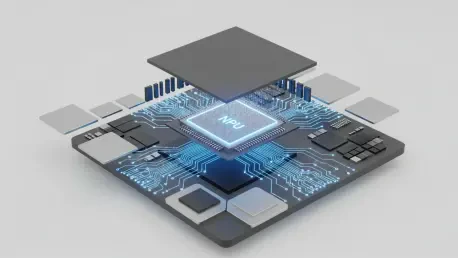

Intel is embarking on an ambitious strategy to fundamentally reshape the personal computing landscape, positioning its upcoming Panther Lake platform as the primary catalyst for an aggressive expansion of AI-powered PCs into the mainstream consumer market. The company has laid out a bold projection for the current year, anticipating that a full 50% of all computers sold will be classified as AI PCs, signaling a massive push to transition this technology from a niche curiosity to an everyday standard. This initiative is not merely about selling new hardware; it represents a comprehensive effort to redefine user expectations and establish a new baseline for what a personal computer can and should do, embedding intelligent, on-device processing into the core of the user experience. The central challenge, however, lies not in the hardware’s potential but in convincing the average consumer that this potential translates into tangible, must-have benefits.
The Technological Leap Forward
Powering the Next Generation of AI
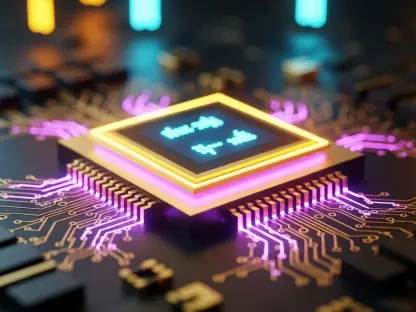
The central technological driver propelling this industry-wide shift is the introduction of Panther Lake’s fifth-generation Neural Processing Unit (NPU), a specialized processor core engineered specifically for artificial intelligence workloads. This new NPU represents a substantial performance uplift, delivering up to 50 Tera Operations Per Second (TOPS), a metric that quantifies its raw processing power for AI tasks. This advancement is strategically designed to dismantle the hardware limitations that have previously constrained the effectiveness and responsiveness of on-device AI. By integrating such a powerful NPU directly into the CPU architecture, Intel aims to make sophisticated edge computing not only more accessible but also significantly more affordable for the average consumer. The goal is to enable complex AI models to run locally on a laptop or desktop, reducing reliance on cloud-based services and paving the way for a new class of applications that are faster, more private, and capable of functioning without a constant internet connection.
This significant increase in processing capability is critical to Intel’s vision, as it directly addresses the performance bottlenecks that have relegated many AI features to the realm of novelty. With 50 TOPS of dedicated AI compute, Panther Lake processors can handle demanding tasks such as real-time language translation, advanced generative AI content creation, and proactive system optimization without compromising overall system performance or draining the battery. This move is intended to shift the balance of power from remote data centers to the user’s own device, a concept known as edge AI. This architectural transition is foundational to Intel’s strategy, as it seeks to normalize the presence of powerful AI hardware in every computer. By making on-device AI a standard feature rather than a premium add-on, the company is laying the groundwork for a future where intelligent, context-aware computing is seamlessly integrated into daily digital interactions, fundamentally changing how users interact with their technology.
The Vision for a New Computing Standard
Intel’s overarching objective extends far beyond simply incorporating a new piece of silicon into its processors; the company is actively working to shift the fundamental perception of what a personal computer is. The long-term strategy is to make the “AI PC” designation redundant, creating a future where artificial intelligence capabilities are so integral to the computing experience that they become the expected “normal” for all consumers. This ambition involves a concerted effort to move the market past the current phase, where AI is often seen as an optional or high-end feature, and toward a new reality where it is a core component of every device. The company envisions a landscape where consumers no longer question the necessity of an NPU, much like they no longer question the need for a GPU for graphics. This transition requires not just technological innovation but also a significant marketing and educational push to communicate the value proposition of on-device AI to a broad audience, transforming it from a technical specification into a clearly understood user benefit.
This effort to establish a new industry standard is built on the belief that as on-device and agentic AI become more capable, the demand for dedicated processing hardware will become self-evident. The company is betting that the proliferation of sophisticated AI applications—from intelligent personal assistants that can manage complex workflows to creative tools that generate art and code locally—will create a natural pull from consumers. As these applications mature, the performance difference between a standard PC and an AI PC will become increasingly stark, making the latter an essential tool for productivity, creativity, and daily convenience. Intel’s goal is to be at the forefront of this evolution, ensuring that its hardware, spearheaded by platforms like Panther Lake, is the foundational technology that powers this new era of personal computing. The success of this vision hinges on creating an ecosystem where the software is compelling enough to make the hardware indispensable.
Bridging the Gap Between Hardware and User Adoption
The Current Consumer Disconnect
Despite the advanced capabilities of modern AI hardware, Intel acknowledges a critical disconnect between its technological vision and the current market reality. At present, a significant portion of consumers who purchase AI-enabled PCs are not primarily motivated by a desire to use specific AI-related functions. Instead, their purchasing decisions are often driven by the ancillary benefits that come with the high-performance hardware, such as superior overall system speed, enhanced multitasking capabilities, and notably longer battery life. These are tangible, easily understood advantages that appeal to a wide range of users, regardless of their interest in AI. The NPU, while being the enabler of AI features, contributes to the overall efficiency of the system, but this crucial detail is often lost on the average buyer. For many, the explicit AI features currently available are perceived as a “gimmick” with limited practical application in their day-to-day lives, leading to a situation where the most transformative technology in the device goes largely underutilized.
This perception problem represents a significant hurdle for the widespread adoption of AI PCs as a distinct category. While users appreciate the faster and more efficient machines, they do not yet associate these improvements directly with the NPU or its AI capabilities. The existing software ecosystem has not yet produced a “killer app” for on-device AI that captures the public imagination in the same way that web browsers or office suites did for earlier generations of PCs. As a result, the value proposition of an AI PC remains abstract for many. Intel’s challenge is to guide the market beyond this initial phase, where the NPU is an unsung hero of system performance, and toward a future where consumers actively seek out AI PCs because they want to leverage the unique, intelligent features that only this specialized hardware can provide. This requires a fundamental shift in consumer understanding, moving from passive appreciation of performance gains to active engagement with AI-powered tools.
Fostering a Compelling Application Ecosystem
To effectively close the gap between hardware potential and consumer demand, Intel’s strategy is heavily focused on fostering a vibrant and innovative ecosystem of compelling AI applications. The company understands that powerful hardware is only half of the equation; without software that can fully leverage the NPU’s capabilities in meaningful ways, the AI PC will struggle to differentiate itself in the eyes of the consumer. Consequently, Intel is actively collaborating with software developers and independent software vendors (ISVs) to create applications that showcase the tangible benefits of on-device AI. This involves providing developers with the tools, resources, and support necessary to build and optimize software for the Panther Lake architecture. The ultimate aim is to cultivate a rich library of applications that move beyond novelty and offer real-world utility, from productivity tools that automate tedious tasks to creative suites that offer powerful generative AI features without relying on the cloud.
The strategic promotion of these tangible benefits is at the core of Intel’s plan to change consumer perceptions. The company intends to move the marketing narrative away from technical specifications like TOPS and toward user-centric stories that highlight what is now possible with an AI PC. This could include showcasing how a student can receive real-time, on-device tutoring, how a professional can summarize lengthy meetings and draft responses instantly, or how a digital artist can generate and refine complex images without an internet connection. By creating a future where people specifically choose an AI PC because they want to use its intelligent features, Intel believes it can catalyze a market-wide transition. While consumer reception is currently lukewarm, the company remains confident that the rise of more capable on-device and agentic AI, powered by next-generation hardware like Panther Lake, will not only make this transition possible but ultimately inevitable.
A Calculated Path Forward
Intel’s strategic initiative reflected a clear understanding that technological advancement alone was insufficient to guarantee market success. The company had identified the crucial gap between the sophisticated capabilities of its Panther Lake platform and the prevailing consumer perception, which saw AI features as more of a novelty than a necessity. The core of its strategy was a dual-pronged approach that coupled the launch of powerful new hardware with a concerted effort to cultivate a software ecosystem that could demonstrate undeniable value. By focusing on the development of practical, compelling applications, the company aimed to shift the consumer mindset from appreciating passive benefits like battery life to actively seeking out the unique, intelligent functionalities that on-device AI enabled. This long-term vision was built on the premise that as software caught up with hardware, the AI PC would transition from a marketing term to an essential tool, redefining the standard for personal computing.