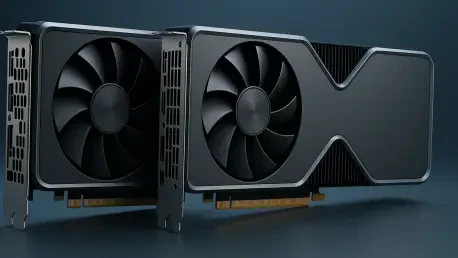

The maturation of the oneAPI software stack remains the final hurdle for Intel as it attempts to bridge the ecosystem gap with established AI hardware incumbents. As the industry gathers at the Open Compute Project Global Summit, Intel has finally pulled back the curtain on its highly anticipated GPU D-Series, a hardware lineup formerly recognized by the internal code name Crescent Island. This launch marks a significant departure from the company’s previous attempts to compete in the high-stakes training arena, where specialized high-bandwidth memory typically reigns supreme. Instead, the D-Series signals a fundamental strategic pivot toward the burgeoning domain of artificial intelligence inference, specifically designed to meet the metaphors and demands of the emerging agentic AI era. By delivering an air-cooled, 350-watt PCIe accelerator that integrates 1.3 petaflops of FP8 compute power, Intel is addressing the critical need for scalable, cost-effective infrastructure that can handle massive, real-world deployment scenarios without the extreme thermal requirements of high-end training clusters.
Strategizing for the Inference Market
Shifting Focus: From Training to Serving
The artificial intelligence hardware landscape has effectively split into two distinct specialized paths: model training and model inference. While the early years of the AI boom were dominated by the need for massive clusters of chips designed to build models from scratch, the industry consensus in 2026 has shifted toward the realization that long-term operational costs are driven by the serving phase. Intel’s positioning of the D-Series acknowledges that the race to create models is secondary to the challenge of running them efficiently for millions of concurrent users. By stepping away from the training-intensive high-bandwidth memory sector, Intel is targeting the massive volume of the inference market, which requires a different set of hardware priorities focused on throughput and sustained availability.
This strategic redirection acknowledges that the economic center of gravity for AI is moving toward inference-as-a-service and enterprise-level model deployment. High-end training chips are often over-engineered for the specific task of running a finished model, leading to unnecessary power consumption and higher per-token costs. Intel’s D-Series aims to solve this disparity by offering a platform that is optimized specifically for the “agentic AI” era, where models are constantly interacting with users and external tools. This focus on the “serving” phase allows data center operators to allocate their most expensive resources to training tasks while utilizing more efficient, high-capacity GPUs like the D-Series to handle the day-to-day heavy lifting of processing user requests and generating real-time responses across global networks.
Overcoming Bottlenecks: Memory Capacity Strategies
In the realm of large-scale AI deployment, inference workloads are frequently limited by memory capacity rather than raw processing speed. To run a trillion-parameter language model effectively, the entire set of model weights and the “key-value” cache must be accessible within fast, on-board memory. If the available memory is insufficient, the system is forced to swap data back and forth from external storage or split the model across multiple cards, which introduces significant latency and drives up the overall complexity of the software stack. Intel addresses this specific bottleneck by equipping the D-Series with an unprecedented 480 GB of memory on a single PCIe card, ensuring that even the most massive enterprise-level models can reside entirely within the resident memory of a single node.
The provision of such high memory volume is a direct response to the “context window war” that has characterized model development from 2026 onward. As users demand longer conversations and more detailed document processing, the memory required to maintain that context grows exponentially. By providing a 480 GB buffer, Intel allows organizations to serve large models without the performance penalties associated with model sharding. This capacity-first philosophy ensures that developers can prioritize the quality and depth of their AI interactions without worrying about hitting the physical limitations of their hardware. This approach naturally leads to a more streamlined deployment process, where a single server can manage requests that previously would have required a complex, interconnected cluster of smaller-capacity accelerators.
Architectural Innovations and Memory Choices
The Xe3P Architecture: Data Center Optimization
The technical foundation of the D-Series is the Xe3P architecture, which represents the third major evolution of Intel’s graphics and compute technology. Unlike previous iterations that had to balance the needs of consumer gaming with professional workloads, the “P” branch of the Xe3P is specifically streamlined for high-throughput data center operations. Intel engineers have surgically removed features that are superfluous for artificial intelligence, such as traditional graphics rasterization hardware and ray-tracing units, to reclaim valuable die space. This reclaimed area is instead dedicated to massive matrix math engines and improved memory controllers that can manage the vast amounts of data required for modern inference tasks, allowing the chip to achieve its target of 1.3 petaflops of FP8 precision performance.
By utilizing a refined version of the Xe architecture, Intel maintains a unified software roadmap that benefits from years of discrete GPU development. This architectural consistency is vital for developers who are already familiar with Intel’s hardware ecosystem, as it reduces the learning curve associated with adopting new silicon. The Xe3P architecture is built to handle the specific mathematical operations that define transformer-based models, providing a highly efficient path for tensor calculations. This optimization ensures that every watt of power consumed by the 350-watt card is translated into actual compute throughput, rather than being wasted on legacy graphics functions that serve no purpose in an AI-centric data center. This level of specialization is what allows the D-Series to compete effectively with more generalized compute solutions.
Embracing LPDDR5X: Advantages over HBM
A defining technical choice in the development of the D-Series was the decision to utilize LPDDR5X memory instead of the more traditional High Bandwidth Memory (HBM) found in high-end training chips. While HBM offers superior bandwidth, it is notoriously difficult to manufacture, expensive to implement, and currently suffers from significant supply chain constraints. By opting for LPDDR5X, Intel has been able to triple the memory capacity of its initial designs, moving from early 160 GB estimates to the final 480 GB specification. This choice reflects a pragmatic approach to the 2026 hardware market, prioritizing the total amount of available memory over the raw speed of data transfer, which is often a more important metric for the current generation of large-scale inference tasks.
Beyond the capacity benefits, the use of LPDDR5X provides a much-needed level of supply chain stability for hyperscalers and enterprise customers. Because LPDDR5X is produced in massive volumes for the mobile and laptop markets, Intel can avoid the packaging complexities and shortages that frequently plague HBM-based products. This allows for a more predictable manufacturing schedule and ensures that customers can scale their infrastructure without waiting for rare components. Furthermore, the lower price-per-gigabyte of LPDDR5X memory translates directly into a lower total cost of ownership for the end user. This makes the D-Series an attractive option for companies that need to deploy thousands of inference nodes while keeping their capital expenditures under control, offering a viable alternative to the scarcity-driven pricing of competitors.
Practical Deployment and Thermal Management
Simplified Air-Cooling: Data Center Integration
One of the most significant challenges facing modern data centers is the extreme power and cooling requirements of the latest AI hardware, which often exceed 700 to 1,000 watts per chip. Such high power envelopes frequently necessitate the installation of complex and expensive direct-liquid-cooling (DLC) systems, which can require a complete overhaul of existing facility infrastructure. Intel has deliberately avoided this path with the D-Series by capping the power consumption at 350 watts, allowing the card to remain entirely air-cooled within a standard PCIe form factor. This design choice enables the D-Series to fit into traditional 2U or 4U server chassis that are already present in thousands of enterprise and colocation facilities around the world.
This “plug-and-play” capability is a major differentiator for Intel, as it allows organizations to modernize their AI capabilities without investing millions of dollars in specialized plumbing and liquid-cooling racks. Data center operators can simply install the D-Series into their existing server slots and utilize standard high-velocity fans to manage the thermal output. This ease of integration significantly lowers the barrier to entry for companies that want to bring large-scale inference capabilities in-house but lack the resources for a massive facility renovation. By sticking to a 350-watt limit, Intel provides a sustainable path for scaling AI operations, ensuring that the increase in compute power does not outpace the physical capabilities of the world’s existing digital infrastructure.
Large-Scale Models: Reaching the Trillion-Parameter Mark
The raw capacity of the D-Series allows it to tackle models of a scale that were previously reserved for massive training clusters. Intel has stated that a single D-Series card can comfortably support models with approximately 300 billion parameters at FP8 precision, while still leaving over 100 GB of memory available for the context cache. This is a critical threshold for modern applications, as it allows for sophisticated, “long-context” interactions that are necessary for autonomous agents to function effectively. Without this level of resident memory, these models would experience significant slowdowns as they struggled to retrieve information, but the D-Series ensures that the entire model remains active and responsive at all times.
For organizations working with frontier-scale open models, the D-Series offers an even more impressive scaling path through its support for multi-GPU clusters. Intel claims that a single server node equipped with eight D-Series cards can serve models that exceed one trillion parameters. This positioning targets the very peak of the current AI landscape, providing a simplified deployment path that avoids the need for complex, multi-node interconnects. By enabling a trillion-parameter model to run within a single physical server chassis, Intel reduces the networking overhead and potential points of failure that often plague larger, more distributed systems. This makes the D-Series a powerful tool for research institutions and large enterprises that need to deploy the most advanced AI models with maximum efficiency and minimum operational friction.
The Competitive Environment and Software Hurdles
Standing Out: Analyzing Hardware Rivals
The D-Series enters a competitive landscape that is currently defined by several distinct philosophies of AI compute. Nvidia remains the incumbent performance leader, relying on a highly integrated ecosystem of HBM-driven hardware and proprietary software. Meanwhile, AMD continues to compete on raw specifications and an open-source approach with its ROCm platform. There are also custom silicon solutions from major cloud providers like Google, though these are typically not available as discrete components for the open market. In this crowded field, Intel has identified a unique “white space” by focusing on high-capacity, air-cooled inference that prioritizes infrastructure compatibility and memory volume over the extreme bandwidth required for model training.
By carving out this specific niche, Intel provides hyperscalers and large enterprises with critical leverage in their hardware procurement strategies. The presence of a viable, high-capacity alternative to the established leaders helps to prevent vendor lock-in and encourages more competitive pricing across the entire industry. The D-Series is not trying to be everything to everyone; instead, it is a specialized tool for a specific task: serving large models at scale with the lowest possible complexity. This focus on “model-in-resident” simplicity and lower power envelopes makes it a compelling choice for companies that value operational stability and cost-efficiency. As the market continues to diversify, the D-Series represents a maturing of the AI hardware sector where different chips are chosen for their specific strengths rather than just their raw speed.
The Software Ecosystem: Prioritizing oneAPI Development
Despite the impressive hardware specifications of the D-Series, its ultimate success will be determined by the strength of the software ecosystem that supports it. Intel has invested heavily in the development of its oneAPI framework, which is designed to provide a unified programming model across CPUs, GPUs, and other accelerators. However, the industry remains heavily influenced by the decades of optimization found in competing proprietary platforms. For the D-Series to achieve widespread adoption, Intel must demonstrate that developers can easily port their existing AI workloads and inference kernels to the Xe3P architecture without a significant loss in performance or a lengthy rewriting process.
The ongoing maturation of the software stack is a top priority for Intel as it moves into the latter half of 2026. This involves not only improving the core compilers and libraries but also working closely with the open-source community to ensure that popular AI frameworks like PyTorch and TensorFlow have first-class support for Intel hardware. If the software experience is seamless, the D-Series can capitalize on its hardware advantages to win over a large segment of the inference market. However, if developers find the transition too difficult, the hardware’s potential may remain untapped. Intel’s commitment to an open, standards-based software approach is a long-term play intended to attract developers who are wary of proprietary ecosystems, but the immediate challenge remains bridging the performance gap through software-level optimizations.
Historical Evolution and Future Uncertainties
From Development: The Road to Crescent Island
The path to the official unveiling of the D-Series has been marked by a series of evolutionary steps in Intel’s discrete GPU strategy. Historically, the company has experimented with various architectures, from the early Larrabee project to the more recent acquisition of specialized AI hardware firms. The D-Series represents the culmination of these efforts, signaling a shift from experimental or “one-off” products to a stable, permanent category within the Intel data center portfolio. The transition from the Crescent Island codename to the formal D-Series designation is more than just a branding change; it is a declaration of intent that Intel is committed to being a primary player in the GPU space for the long term.
Throughout the development process, Intel showed a remarkable ability to adapt its designs to the changing needs of the AI market. Early specifications for the project suggested a much lower memory capacity, but as the importance of large language models and long context windows became clear, Intel engineers significantly boosted the memory ceiling to the current 480 GB limit. This responsiveness indicates that Intel is no longer developing hardware in a vacuum but is instead listening closely to the requirements of the world’s largest AI developers. The journey to Crescent Island was long and occasionally non-linear, but the resulting product is a more mature and strategically focused piece of hardware that reflects the lessons learned from previous generations of silicon development.
Factors Awaiting Confirmation: Market Readiness
As with any major hardware launch, there are several critical factors that remain unconfirmed as the industry looks toward the actual deployment of the D-Series. While the technical specifications are impressive, Intel has yet to release final pricing for the different models in the lineup. Without a clear price point, the theoretical “cost-per-token” advantage remains just that—theoretical. Potential buyers need to see the final numbers to determine if the D-Series can truly deliver on its promise of superior total cost of ownership compared to the established incumbents. Furthermore, while the 1.3 petaflops of FP8 compute power is a strong headline figure, independent benchmarks are necessary to see how the chip performs under the stress of real-world, concurrent user requests.
Availability is another key concern for the industry as it moves through the final months of 2026. While Intel has begun customer sampling, the dates for general availability and volume shipping have not been set in stone. In a market where demand for AI compute often exceeds supply by a significant margin, the ability to deliver chips in quantity is just as important as the quality of the chips themselves. The industry is also watching closely for more detailed information on specific SKUs within the D-Series family, as initial reports have mentioned a “D270” model but official materials have remained more general. Until these details are finalized and the first wave of third-party performance data is released, the full impact of the D-Series on the data center landscape will remain a subject of intense speculation.
Synthesis of Industry Impact
Hardware Trends: The Commoditization of AI
The arrival of the Intel GPU D-Series serves as a clear indicator of the broader commoditization of AI hardware. By utilizing high-volume components like LPDDR5X memory and focusing on a standard air-cooled PCIe form factor, Intel is moving AI compute away from the realm of exotic, boutique systems and toward standardized, reliable enterprise hardware. This shift is essential for the long-term sustainability of the AI industry, as it allows for more predictable scaling and lower entry costs for a wider range of companies. As AI technology matures, the focus is shifting from “what is the fastest chip possible” to “what is the most efficient and reliable way to run these models at a global scale.”
This trend toward standardization also extends to the way that data centers are designed and operated. The focus on air-cooling and reasonable power envelopes shows that the industry is starting to prioritize facility compatibility and environmental sustainability alongside raw performance. In the progress from 2026 to 2028, we can expect to see more hardware providers following Intel’s lead by offering specialized inference chips that are designed to play nicely with existing infrastructure. This maturing of the market is a natural part of the technology lifecycle, where the initial period of rapid, unconstrained growth is followed by a period of optimization, efficiency, and widespread adoption across diverse economic sectors.
Catering to Agents: The Next Generation
The decision to prioritize massive memory capacity in the D-Series is a direct response to the rise of autonomous AI agents, which represent the next major phase of the artificial intelligence revolution. Unlike simple chatbots that respond to a single prompt, these agents are designed to handle complex, multi-step tasks that require them to “remember” vast amounts of information and context over long periods. This type of workload puts an incredible strain on hardware memory, as the agent must keep all relevant data readily available to maintain its reasoning capabilities. By providing 480 GB of resident memory, Intel is giving these agents the “brain space” they need to operate effectively without the constant interruptions of data swapping.
This focus on the agentic AI era demonstrates that Intel is looking beyond the current crop of simple large language models and toward a future where AI is integrated into every aspect of professional and personal life. These agents will require hardware that is not only powerful but also highly reliable and easy to deploy in a variety of environments. The D-Series is built to be the foundational infrastructure for this new generation of software, providing the memory and compute necessary to bring advanced agency to everything from enterprise resource planning to personal digital assistants. As developers continue to push the boundaries of what these agents can do, the presence of high-capacity hardware like the D-Series will be a critical enabling factor in their success.
New Chapters: Infrastructure Compatibility
The Intel GPU D-Series represented a calculated bet on the future of the global AI economy. By choosing to compete on memory capacity, power efficiency, and infrastructure compatibility rather than raw training bandwidth, Intel identified a significant opportunity in the market. The transition from the Crescent Island codename to the D-Series product line marked the company’s most serious effort to become a primary player in the data center GPU space. As the industry moved from the training phase to the deployment phase, the D-Series provided a compelling solution for enterprise customers who needed to serve massive models without rebuilding their existing facilities. This shift in focus helped democratize access to high-end AI capabilities for a much broader range of organizations.
In the future, the success of this platform was determined by how effectively the software ecosystem evolved to support the underlying hardware. Intel’s commitment to oneAPI and open standards was a significant step toward creating a more competitive and diverse market for AI compute. As the first independent benchmarks began to surface, they confirmed that the capacity-first gamble was a viable path for the industry. This led to a more balanced hardware landscape where developers could choose the best tool for their specific needs, whether that was a high-bandwidth training cluster or a high-capacity, air-cooled inference node. The D-Series served as a benchmark for the next generation of data center hardware, proving that efficiency and scale were just as important as raw speed.