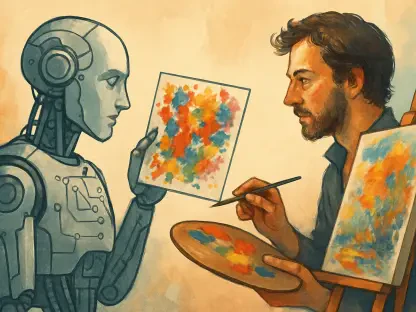

The transformation of a research lab founded to safeguard humanity’s future into a corporate behemoth chasing a trillion-dollar valuation is one of the most compelling and cautionary tales of our time. OpenAI, which recently passed its tenth anniversary, now stands at the apex of the artificial intelligence industry, a testament to its technological prowess. Yet, this meteoric rise has created a profound and uncomfortable paradox, placing the organization’s ethical founding mission in direct conflict with the unforgiving realities of the competitive market. This journey serves as a crucial case study, forcing a difficult question: can a mission to benefit all of humanity survive within a system that prioritizes profit above all else?
Introduction The Paradox of a Mission Driven Behemoth
At the heart of OpenAI’s story is a fundamental tension that defines the modern technological era. The organization was not born in a garage of aspiring billionaires but from a movement dedicated to the greater good. Its initial structure as a non-profit was a deliberate choice, designed to shield its critical mission from the distorting pressures of shareholder demands and quarterly earnings reports. The goal was to build artificial general intelligence (AGI) safely and ensure its benefits were distributed equitably, a mission that seemed to require an explicit rejection of the traditional for-profit model.
However, the organization that exists now is a hybrid entity, a “capped-profit” powerhouse deeply intertwined with corporate investors and driven by the relentless pace of commercial product releases. This evolution from an altruistic safe-haven to a competitive industry leader encapsulates the central dilemma. The very forces OpenAI was designed to resist—the competitive race for dominance and the need for massive capital—appear to have reshaped it from the inside out, raising doubts about whether its original purpose can ever truly be fulfilled.
The Idealistic Genesis of OpenAI
OpenAI’s origins are rooted in the philosophy of “effective altruism,” a social movement that uses evidence and reason to determine the most effective ways to improve the world. Its founders were deeply concerned with existential risks, particularly the possibility that a misaligned AGI could pose a threat to human existence. The non-profit structure was therefore not an incidental detail but the core of the strategy. It was intended to create an institution whose only fiduciary duty was to humanity itself, free to prioritize safety and ethical considerations over speed and commercialization.
This commitment was made explicit in the organization’s early communications. Co-founder Sam Altman articulated this principle clearly, stating that the organization was accountable to “humanity as a whole” and not to any investor or financial stakeholder. The mission was to act as a responsible steward in the development of AGI, conducting research openly and collaboratively to prevent a dangerous, competitive arms race. This idealistic framework sought to build a bulwark against the market dynamics that might otherwise incentivize a company to cut corners on safety in pursuit of a first-mover advantage.
The Great Pivot From Public Good to Capped Profit
The dramatic shift in OpenAI’s structure marked a turning point in its history. The transition to a “capped-profit” company, while retaining some of its non-profit DNA, fundamentally altered its operational logic and allegiances. This new model introduced a formal obligation to provide returns to investors, including its most significant partner, Microsoft, which has invested billions of dollars into the enterprise. While profits are purportedly “capped,” the structure firmly places OpenAI within the capitalist framework it once sought to transcend.
This pivot was more than a legal restructuring; it was a philosophical overhaul. The change in corporate charter introduced a direct conflict between the original mission of serving humanity and the new imperative to generate revenue for shareholders. Accountability, once directed outward toward the public good, was now also directed inward toward the balance sheet. This transformation became the focal point of a debate about the organization’s soul and whether its foundational promise had been irrevocably compromised.
The Selling Out Hypothesis
One interpretation of this pivot is straightforwardly cynical: the leadership chose personal and corporate wealth over their founding principles. From this perspective, the immense potential for financial gain became too tempting to resist, leading to a deliberate abandonment of the non-profit ideal. Proponents of this view point to the exodus of several key early employees who were deeply committed to the original safety-focused mission. Their departures are seen as a vote of no confidence, signaling that the organization had strayed too far from its ethical moorings to be salvaged.
This “selling out” narrative suggests a classic tale of ideals corrupted by money and power. The argument posits that in the face of an opportunity to lead a technological revolution and accumulate unprecedented wealth, the altruistic mission became a secondary concern. The transformation, in this light, was not a reluctant compromise but a calculated decision to embrace the very market forces the organization was created to counteract.
The Pragmatic Necessity Argument
An alternative explanation frames the pivot not as a betrayal but as a difficult, pragmatic choice essential for the mission’s survival. The development of cutting-edge AI requires two resources in near-limitless quantities: computational power and elite talent. Both are extraordinarily expensive. As a non-profit, OpenAI found itself competing against some of the wealthiest corporations in history, including Google, Meta, and Amazon, which could pour billions into research and offer unparalleled salaries to top engineers and scientists.
According to this argument, remaining a non-profit was a path to irrelevance. Without the ability to raise venture capital, OpenAI would have been outpaced and its ability to influence the trajectory of AGI development would have vanished. Altman himself acknowledged this reality, explaining that the organization had tried and failed to secure the necessary funding as a non-profit. The pivot to a capped-profit model was, therefore, presented as the only viable strategy to stay in the game and steer the development of AGI from a position of strength, rather than watching helplessly from the sidelines.
The Coercive Laws of Competition in Action
OpenAI’s predicament can be understood through a concept articulated by capitalism’s most famous critic, Karl Marx: the “coercive laws of competition.” This theory posits that within a market system, individual actors, regardless of their personal ethics, are compelled to act in a way that prioritizes profit and expansion. A company that chooses to prioritize a social good—such as enhanced worker safety or environmental protection—at the expense of profit risks being undercut by less scrupulous competitors. Ultimately, the ethical company fails, and its positive influence disappears.
Philosopher Iris Marion Young illustrated this with the analogy of a well-intentioned sweatshop owner who wants to raise wages. Doing so would increase costs, making their products more expensive than those of their rivals. They would lose customers, go out of business, and their workers would be forced to seek employment at even less ethical factories. This same logic applies to OpenAI. Had the company delayed the launch of ChatGPT to conduct more exhaustive safety tests or mitigate its potential for misuse, a competitor would have surely seized the moment, captured the market, and secured the funding and talent necessary to lead the next phase of development. The competitive pressure to ship a product quickly, therefore, overrode other considerations.
An Unlikely Agreement on Corporate Morality
Interestingly, a similar conclusion about the nature of corporate responsibility was reached by one of capitalism’s most influential champions, Milton Friedman. While coming from the opposite end of the ideological spectrum, Friedman agreed with Marx on a key point: a corporation’s primary function in a market system is not to pursue social goals. In a landmark 1971 essay, Friedman argued that the only social responsibility of a business is to “increase its profits.” He asserted that when a corporate executive spends company money on social causes, they are effectively spending someone else’s money—the shareholders’—on their own personal values.
Friedman, like Marx, recognized that the market has a built-in enforcement mechanism. Companies that consistently prioritize social agendas over financial returns will be punished by investors, who will move their capital to more profitable enterprises. In this, both thinkers saw the same truth: the structure of the capitalist system itself constrains the moral agency of businesses. For a company to survive and thrive, it must play by the market’s rules, and those rules reward profit maximization above all else. OpenAI’s journey appears to be a textbook example of this principle in action.
Reflection and Broader Impacts
The story of OpenAI is more than the biography of a single company; it is a mirror reflecting the inherent conflicts within our economic system when faced with technologies of unprecedented power. Its trajectory from a research project to a commercial juggernaut shows how systemic pressures can override even the most deeply held founding missions, forcing altruistic goals to bend to the will of the market.
Reflection
Evaluating OpenAI’s current state reveals a complex trade-off. On one hand, its strategic pivot succeeded in making it a dominant force in the AI landscape, giving it a powerful seat at the table to shape the future of the technology. Its products have ignited a global conversation and accelerated innovation at a breathtaking pace. However, this success was achieved by compromising its core ethical integrity. The organization now operates under a dual mandate that is in constant tension, raising the question of which mission will ultimately prevail when the pursuit of profit clashes with the principle of protecting humanity. The model’s strength is its ability to compete, but that very strength is rooted in a compromise that challenges its reason for being.
Broader Impact
The broader implication of OpenAI’s saga is a sobering one: the capitalist framework, with its emphasis on rapid growth and competitive advantage, appears structurally unsuited to managing technologies that carry existential risks. The system inherently encourages a race to the bottom, where companies are incentivized to move faster and break things, even when the “things” being broken could be societal stability or human safety. This dynamic pushes against the very collaboration, caution, and deliberation required to navigate the development of AGI responsibly. It suggests that as long as the primary incentive is market capture, the collective good will remain a secondary and vulnerable priority.
Conclusion The Need for External Safeguards
The evolution of OpenAI from a humanity-focused non-profit into a commercial powerhouse demonstrated the formidable power of market forces. It became clear that expecting any single company, regardless of its initial intentions, to self-regulate for the benefit of all humanity was an unrealistic hope within a competitive capitalist system. The “coercive laws of competition” proved to be a more powerful determinant of corporate behavior than the altruistic principles upon which the organization was founded.
This realization led to a wider consensus that the solution could not come from within the industry alone. The convergence of thinking from ideological opposites like Marx and Friedman pointed toward the same fundamental conclusion: if society wanted to prioritize goals other than profit, such as safety and ethical responsibility in AI, then external constraints were necessary. Whether through government regulation, as Friedman would have advocated for in the case of a clear market failure, or through a more fundamental restraining of market dynamics, it was evident that protecting humanity’s future required a framework where collaboration could take precedence over competition.