
In a move that sent shockwaves through both Hollywood and Silicon Valley, the Walt Disney Company, a fierce guardian of its intellectual property, announced a landmark partnership with OpenAI. This decision arrives even as Disney actively pursues legal action against other tech giants for similar AI-related practices. To unravel this complex strategy, we are joined by Laurent Giraid, a technologist whose work lives at the nexus of artificial intelligence, business, and media law. We’ll explore the calculated risks behind Disney’s billion-dollar bet, the tangible impact on creators and the company’s internal workflows, and what this signals for the future of entertainment.
Disney is suing Google over AI training data while simultaneously investing $1 billion in OpenAI. Can you walk me through the strategic thinking behind this dual approach? What specific safeguards or terms in the OpenAI deal made it an acceptable partnership, unlike the situation with Google?
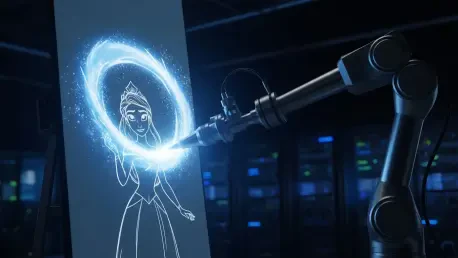
This isn’t a contradiction; it’s a masterclass in corporate strategy. You have to look at it as Disney drawing a very clear line in the sand. On one side of that line is what they perceive as theft—the unauthorized scraping of their entire creative universe by companies like Google to build a competing product without permission or compensation. Their cease and desist letter is about defending the fortress. On the other side is a controlled, sanctioned partnership. The OpenAI deal isn’t just an agreement; it’s a blueprint for how Disney wants the future to work. The billion-dollar investment isn’t just cash; it’s buying a significant seat at the table. The safeguards are crucial: they explicitly carved out actor likenesses and voices, which is a direct nod to the deepest fears of the creative guilds. Capping user videos at 30 seconds is another brilliant move. It turns the tool into a promotional gimmick, a way for fans to create social media “snacks,” rather than a tool that could generate a competing feature film. It’s the difference between inviting a guest through the front door with clear house rules versus catching a burglar in your living room.
Robert Iger stated this deal “honors” creators, but Hollywood remains concerned about AI. Beyond excluding actor likenesses and limiting videos to 30 seconds, what specific mechanisms will ensure this user-generated content actually enhances, rather than devalues, the original intellectual property and its creators?
That’s the billion-dollar question, and frankly, the skepticism from the creative community is entirely justified. The word “honors” is doing a lot of heavy lifting in that statement. From Iger’s perspective, the honor comes from the licensing fee and the equity stake. It establishes a commercial precedent: our IP has value, and if you want to play with it, you have to pay for it. That money, in theory, flows back into the Disney ecosystem that employs and pays the thousands of artists, writers, and animators who built these worlds. The real mechanism for preventing devaluation, however, will be the guardrails OpenAI has pledged to implement. Think of it like a digital coloring book. Disney is providing the outlines of Mickey Mouse or Darth Vader, but the AI and its user policies will dictate the crayons. There will have to be incredibly robust filters to prevent the creation of harmful, illegal, or brand-damaging content. The true test will be whether this feels like a joyful extension of the brand, a new form of fan fiction, or if it floods the internet with low-quality, bizarre facsimiles that make the real thing feel less special. The 30-second cap is the most powerful tool here, as it inherently limits the narrative depth and keeps the creations in the realm of memes and tributes.
With a $1 billion investment and over 200 characters available for fan creation, what are the key performance indicators for this partnership’s success? Can you detail the process for how AI-generated videos of Mickey Mouse are expected to translate into measurable revenue or subscriber growth for Disney?
The primary KPIs for this deal likely have very little to do with direct revenue from the AI videos themselves. This is a massive play for cultural relevance, data, and marketing. Success won’t be measured in dollars per AI video generated, but in social media engagement metrics, brand sentiment analysis, and, ultimately, subscriber data for Disney+. Imagine millions of fans creating their own unique Iron Man or Elsa moments and sharing them across TikTok and Instagram. That’s an organic, user-driven marketing campaign of a scale that you simply can’t buy. The data is the other goldmine. Disney will get unparalleled insight into which characters resonate most with audiences in this new format. Are people making more videos with Yoda or Captain America? Does a deep-cut Pixar character suddenly go viral? This data can directly inform future content strategy for their streaming service and film slate. The conversion to revenue is indirect but powerful: this constant, viral presence keeps Disney’s franchises at the forefront of the cultural conversation, which in turn drives interest in watching the source material on Disney+ and maintains the brand’s premium value.
The agreement mentions deploying OpenAI’s technology internally for Disney+ and staff. How do you see this changing day-to-day creative and operational workflows? Could you provide a few specific examples of how an Imagineer or a marketing team might use these new tools in their projects?
This is where the most profound and immediate impact will be felt, far away from the public-facing video generator. For an Imagineer tasked with designing a new theme park attraction, the process could be transformed. Instead of static storyboards, they could use these tools to generate dozens of animated pre-visualizations of a ride experience in a single afternoon, tweaking narrative beats or character interactions on the fly. It dramatically accelerates the “blue sky” phase of creation. For a marketing team, the possibilities are staggering. They could use ChatGPT to draft a hundred different variations of ad copy for a new Marvel movie, tailored to different demographics, and then use Sora-like tech to create mock-ups of those trailers in hours, not weeks. This allows for a level of A/B testing and creative iteration that was previously impossible. It’s about augmenting, not replacing, human creativity. The tools handle the laborious parts of the process, freeing up the human creatives to focus on the bigger picture—the story, the emotion, and the magic.
What is your forecast for how this partnership will reshape the relationship between major studios and AI developers over the next few years?
This Disney-OpenAI deal is the blueprint. It signals the end of the initial “wild west” era of AI development, where tech companies felt they could train their models on the entirety of public data without consequence. The future is one of negotiated access. I predict we will see a major split in the AI industry. On one side, you’ll have licensed, premium AI models, like this one, that are built on sanctioned, high-quality data from studios and publishers. They will be more powerful for specific creative tasks but will come with licensing fees and usage restrictions. On the other side, you’ll have the broader, more general models that will be legally firewalled from copyrighted material, limiting their capabilities in certain areas. Other major studios will be watching this experiment with bated breath. If Disney can successfully drive engagement and new revenue streams without cannibalizing its core IP, you will see a flood of similar deals from every other major media conglomerate within the next 24 months. The era of pure litigation is evolving into a more complex dance of litigation and strategic partnership.