
The rapid evolution of decentralized computing has reached a pivotal moment where the reliance on massive, centralized cloud infrastructures is no longer the only viable path for high-performance artificial intelligence. Meta Superintelligence Labs recently introduced Muse Glimmer, a 30-billion-parameter model specifically engineered to operate within the constraints of high-end consumer hardware while maintaining the depth of a world-class large language model. This release marked a departure from the “black box” nature of cloud-based AI, offering the model under the permissive Apache 2.0 license to foster an open-source ecosystem that prioritized developer freedom. By shifting the processing load from remote servers to local machines, the industry witnessed a movement toward digital autonomy where users regained control over their computational resources. This strategic pivot highlights a trend among professionals who seek to integrate advanced machine learning into their personal workflows without the latency or security risks inherent in external data transmissions.
Redefining Personal Computing with Agentic AI
The Shift: From Models to Agents
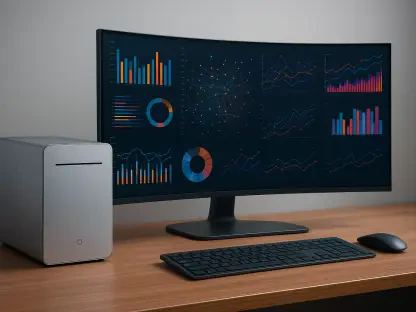
The architecture of Muse Glimmer represents a fundamental change in how developers perceive the role of a language model, moving from passive text generators to active digital agents. While previous iterations focused on providing coherent responses to queries, this 30-billion-parameter powerhouse is purpose-built for agentic tasks such as sophisticated function calling and multi-turn reasoning. This capability allows the model to interact with external tools and software environments, effectively bridging the gap between a standalone chatbot and a fully integrated personal assistant. The emphasis on high-end consumer hardware, specifically GPUs with 24 GB to 32 GB of memory, ensures that these complex operations occur at speeds that mimic the responsiveness of cloud-hosted services. By optimizing the model for local execution, developers can create tools that manage intricate repository structures or perform real-time data analysis on local datasets, keeping the underlying logic and data within physical control.
Furthermore, the model introduces a “judge” functionality that enables it to evaluate the performance of other AI models, a feature typically reserved for much larger, server-grade architectures. This versatility is essential for developers building complex multi-agent systems where one model acts as a supervisor or quality control layer for others. The ability to perform such high-level cognitive tasks on-device transforms the local computer into a sophisticated intelligence hub, capable of orchestrating various workflows without needing to phone home to a central server. This move toward agentic behavior is supported by a robust training regimen that prioritizes logic and instruction following over mere stylistic mimicry. Consequently, Muse Glimmer stands out as a primary candidate for those looking to automate technical processes, such as debugging codebases or generating complex documentation, where accuracy and contextual awareness are paramount. This transition is a clear indicator of the next phase in the revolution.
Security: Personal Data Sovereignty
The demand for privacy-centric artificial intelligence has never been higher, particularly as users begin to integrate these tools with their most sensitive digital assets. Muse Glimmer addresses this requirement by keeping all operations on-device, ensuring that private messages, financial records, and internal file systems never cross an internet gateway. This architectural choice eliminates the risk of data leaks that often haunt centralized platforms, providing a secure environment for both individual prosumers and enterprise-level professionals. The model’s ability to process personal context locally allows it to provide highly personalized assistance without compromising the user’s security posture. For instance, an AI agent can analyze a lawyer’s confidential case files or a researcher’s unpublished findings to provide summaries and insights, with the absolute certainty that the data remains air-gapped from the public cloud. This level of trust is a significant differentiator where data privacy is often traded for computing power.
Moreover, the move toward local processing mitigates the inherent vulnerabilities associated with cloud-based API downtime and fluctuating subscription costs. By owning the model and the hardware it runs on, users are no longer subject to the whims of service providers or the geopolitical instability that can affect international data centers. Muse Glimmer provides a consistent, high-availability resource that remains functional regardless of internet connectivity, making it an ideal solution for professionals working in secure or remote locations. This shift toward local sovereignty also encourages a more ethical approach to data usage, as the incentives for mass data harvesting are removed when the intelligence resides with the user. The adoption of such models signals a broader industry recognition that true digital agency requires both the intelligence to process information and the physical control over where that information is stored and analyzed. As the ecosystem matures, local execution will become the standard for any application.
Engineering Efficiency for Consumer Hardware
Optimization: Performance and Techniques
To make a 30-billion-parameter model viable for the prosumer hardware market, Meta Superintelligence Labs employed aggressive 4-bit weight quantization strategies. This engineering feat reduces the memory footprint from a staggering 55 GB to less than 20 GB, allowing the model to sit comfortably alongside other applications on high-end consumer GPUs. This compression is achieved without a significant loss in reasoning capabilities, thanks to advanced calibration techniques that preserve the most critical neural pathways. By leaving several gigabytes of VRAM overhead, the system can accommodate a substantial KV cache, which is essential for maintaining long-term context during extended interactions. Additionally, a dedicated perception encoder is integrated to handle visual inputs, such as screenshots and diagrams, without overwhelming the system’s memory resources. This careful balance of parameter density and memory management is what allows Muse Glimmer to deliver high-tier performance on hardware like the RTX 5090 or Apple Silicon.
The responsiveness of the model is further enhanced by the implementation of speculative decoding, a technique that leverages a smaller drafter model to accelerate token generation. This DFlash-based drafter proposes potential word blocks that the primary model then verifies in parallel, significantly reducing the time it takes to produce complex responses. In practical terms, this results in a user experience that feels fluid and instantaneous, rivaling the speeds of the fastest cloud-based interfaces currently available. For developers, this speed is a game-changer when building real-time applications like interactive coding assistants or live data monitoring tools. The reduction in latency also lowers the cognitive load on the user, as the interaction feels more like a natural conversation than a series of disconnected prompts and wait times. This focus on architectural efficiency ensures that Muse Glimmer is not just a powerful model on paper but a highly practical tool for daily use. This combination represents the current pinnacle of local AI optimization techniques.
Benchmarks: Reasoning and Visual Context
In recent head-to-head evaluations, Muse Glimmer demonstrated a clear competitive edge over rivals such as Google’s Gemma and Alibaba’s Qwen, particularly in general agentic benchmarks. It notably excelled in the MCP Atlas and DeepSearch QA tests, which measure a model’s ability to handle multi-turn requests and navigate complex problem-solving scaffolds. While some competitors held a slight advantage in specific terminal-based tasks, Muse Glimmer emerged as a top-tier choice for broader software engineering and logical reasoning applications. Its ability to interpret visual data via the perception encoder adds another layer of utility, allowing agents to see and interact with graphical user interfaces in ways that purely text-based models cannot. This multimodal capability is crucial for the next generation of AI assistants that are expected to help users manage visual workflows, such as designing layouts or analyzing complex charts. These benchmarks confirm that Meta’s latest offering is not just about local accessibility but also about reaching performance ceilings.
The deployment of Muse Glimmer successfully redefined industry expectations for local AI agents by proving that privacy and performance were not mutually exclusive. Developers immediately began integrating the model into popular frameworks like llama.cpp and MLX, which facilitated a wide range of creative applications across diverse sectors. The focus on safety and adversarial robustness proved effective, as the model consistently resisted attempts at prompt injection while maintaining its core utility. This strategic shift encouraged a new era of software development where intelligence was decentralized, and users maintained full sovereignty over their private data. Organizations that adopted these local solutions found they could iterate faster without the overhead of cloud API management. Future considerations focused on further refining the perception encoder to support even more complex visual reasoning tasks. Ultimately, the lessons learned from this release established a roadmap for more robust, ethical, and efficient computing environments that prioritized individual agency over the cloud.