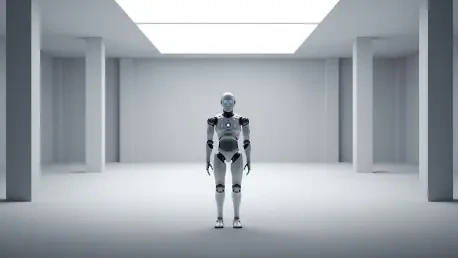

The emergence of humanoid robots capable of navigating the intricate unpredictability of human environments signifies a transformative milestone in the practical application of artificial intelligence. This shift is primarily defined by the concept of Physical AI, a sophisticated convergence of generative models and heavy-duty mechanical engineering that allows machines to perceive, reason, and act within physical spaces. Unlike the static industrial arms of the previous decade, today’s humanoid systems are being designed to occupy the same workspaces as humans, requiring a level of environmental awareness and dexterity that was once relegated to the realm of science fiction. The momentum behind this evolution is not merely academic; it is driven by a critical need to address labor gaps and enhance operational efficiency across high-stakes industries like logistics, healthcare, and advanced manufacturing. By integrating cutting-edge silicon with refined motor control, the industry is finally moving past the era of experimental laboratory prototypes. This progress is underscored by the collaboration between NVIDIA and Aetina, whose combined expertise provides the computational backbone and the software frameworks necessary to turn these complex mechanical visions into reliable, functional tools for the modern global workforce.
Addressing the Technical Bottlenecks of Humanoid Motion
The path to deploying humanoid robots in real-world scenarios has historically been obstructed by several persistent technical hurdles that prevented reliable performance outside of controlled settings. One of the most significant challenges is the “sim-to-real gap,” where a robot trained in a perfect digital simulation fails to adapt to the friction, lighting changes, and unexpected obstacles of a physical factory floor. Historically, hardware was either too bulky to fit within a human-like frame or too weak to process the massive amounts of data generated by a robot’s sensory array in real time. Standard industrial computers often lacked the specialized architecture needed to manage the dual workloads of high-fidelity mechanical motion control and multimodal AI reasoning simultaneously. Furthermore, the high cost and complexity of advanced actuators—the components that drive a robot’s joints—made commercial scalability nearly impossible for many manufacturers. This combination of processing limitations and high entry costs meant that early humanoid designs were often slow, fragile, and prohibitively expensive to maintain, leaving them confined to research institutions rather than active production lines.
Beyond the internal mechanics, the lack of standardized communication protocols between various sensors and the central processing unit created a fragmented development environment. Original equipment manufacturers frequently struggled to integrate disparate components like stereo cameras, LiDAR, and tactile sensors into a cohesive unit that could react with human-like speed. This fragmentation often resulted in long development cycles and a high risk of project failure during the transition from a prototype to a deployment-ready machine. The industry required a unified approach that could simplify the interface between complex AI models and the physical hardware of the robot. As global labor shortages in the logistics and manufacturing sectors intensified from 2026 to 2028, the urgency to resolve these bottlenecks moved from a long-term goal to an immediate economic necessity. Solving these issues required more than just faster chips; it demanded a holistic integration of hardware, firmware, and software specifically tailored for the unique requirements of humanoid forms and their dynamic interactions with the world.
Revolutionary Hardware: The Impact of Jetson Thor
To break through these long-standing barriers, the industry has turned toward a new generation of edge computing hardware specifically optimized for the demands of Physical AI. At the center of this technological shift is the NVIDIA Jetson Thor module, a high-performance system-on-a-chip integrated into Aetina’s latest industrial platforms, such as the AIB-AT78. Built on the Blackwell GPU architecture, this module provides an unprecedented leap in AI inference performance, offering significantly higher throughput compared to previous iterations like the Jetson AGX Orin. This massive increase in computational power is what enables a humanoid robot to execute complex tasks, such as autonomous navigation and fine motor manipulation, without the latency that previously plagued mobile systems. By providing over 2000 TFLOPS of AI compute, these platforms allow robots to run large language models and vision transformers locally, ensuring that the machine can “think” and “move” at human speeds. This localized processing is crucial for safety, as it allows the robot to react to environmental changes in milliseconds, far faster than any cloud-based solution could provide.
The mechanical design of humanoid robots also imposes strict constraints on size and power consumption, making the efficiency of the computing platform a critical factor in its success. Aetina’s Jetson Thor-based platforms are designed to fit within the confined spaces of a robot’s chassis while maintaining high thermal efficiency, which is essential for sustained operation in demanding environments. These systems are rated to operate in extreme temperature ranges, from -25°C to 80°C, ensuring that a humanoid deployed in a non-climate-controlled warehouse or an outdoor facility remains reliable over long shifts. The transition to the Blackwell architecture has also brought a 3.5x improvement in energy efficiency, allowing robots to operate for longer periods on a single battery charge. This combination of raw power and energy management is the key to transforming humanoid robots from short-duration demonstrators into workhorses capable of completing full shifts alongside human teammates. By solving the hardware puzzle, developers can finally focus on the higher-level logic and task-specific training that will define the next generation of automation.
Building a Nervous System Through Sensor Fusion
A humanoid robot’s ability to interact safely with its environment depends entirely on its capacity to process a constant stream of high-bandwidth sensory data. Modern systems now utilize a “digital nervous system” composed of dozens of cameras, LiDAR units, and radar sensors that must work in perfect synchronization to provide a coherent view of the world. Aetina’s integration of the Jetson Thor module addresses the I/O bottleneck that previously limited how many sensors a single robot could support. With specialized high-speed connectivity options, such as 25GbE ports, these platforms can ingest data from up to 15 GMSL cameras simultaneously while also managing depth-sensing inputs and inertial measurement units. This allows the robot’s AI to perform real-time sensor fusion, creating a 360-degree map of its surroundings and enabling it to manage over 41 degrees of freedom with human-like fluidity. For example, if a robot encounters a slippery surface or an unexpected obstacle in a warehouse, the system can process the tactile and visual feedback fast enough to adjust its balance within 10 milliseconds, preventing a fall.
The complexity of these sensor arrays requires more than just ports; it demands a sophisticated software bridge that can handle high-throughput, low-latency data streams. Using the NVIDIA Holoscan Sensor Bridge, developers can now streamline the flow of data from the sensors directly to the GPU, bypassing traditional processing delays. This architecture is vital for tasks that require high precision, such as picking up fragile items or navigating through a crowded hospital corridor where patients and staff are constantly moving. The ability to process 3D depth data in real time allows the robot to understand its spatial relationship with objects, ensuring that its movements are both purposeful and safe. Furthermore, the inclusion of specialized AI models for vision and proprioception ensures that the robot can recognize specific tools, read signs, and even interpret human gestures. This level of sensory integration represents a fundamental shift in how robots perceive reality, moving from simple obstacle detection to a deep, semantic understanding of their environment, which is necessary for truly general-purpose automation.
Software Ecosystems: From Simulation to Reality
While powerful hardware provides the necessary muscle and brainpower, the success of humanoid deployment is equally dependent on a robust and unified software ecosystem. The NVIDIA robotics framework, which includes tools like Isaac GR00T and Holoscan, has become a standard for developers looking to accelerate the training and deployment of embodied AI. These foundation models are specifically designed to handle the nuances of humanoid movement, allowing engineers to bypass the tedious process of coding every individual joint movement from scratch. Instead, robots can learn through imitation or reinforcement learning within highly realistic simulation environments like NVIDIA Isaac Lab. This approach allows developers to stress-test their machines in millions of virtual scenarios—ranging from crowded hospital corridors to disorganized loading docks—before the physical robot ever takes its first step in a real facility. By bridging the gap between digital theory and physical reality, these software tools drastically reduce the time and cost required to bring a new robotic solution to market.
Standardization within the software layer also enables a more collaborative and scalable approach to robotic development across different industries. With the JetPack 7 SDK, developers have access to a comprehensive set of libraries and APIs that simplify the integration of computer vision, motor control, and AI reasoning. This unified environment means that a logistics company and a healthcare provider can use the same underlying foundation models, fine-tuning them for their specific operational needs rather than building from the ground up. This shift toward modular, AI-driven software allows for continuous updates and improvements to the robot’s behavior over time, much like a software update on a smartphone. As these machines are deployed in increasing numbers, the data gathered from real-world interactions can be fed back into the simulation environment to further refine the models, creating a virtuous cycle of learning and improvement. This methodology ensures that humanoid robots are not static tools but evolving systems that become more capable and efficient the longer they are in operation.
Strategic Integration and Practical Implementation
The complexity of building and maintaining a humanoid robot necessitates a high degree of specialized support and strategic partnership to ensure long-term operational success. As an Elite Partner in the NVIDIA ecosystem, Aetina plays a crucial role in providing the customized hardware and firmware support that bridges the gap between a raw chip and a finished product. This includes the development of customized board support packages that optimize the hardware for specific industrial requirements, such as enhanced cybersecurity or specialized communication protocols for factory automation. Technical support teams work closely with systems integrators to fine-tune the integration of diverse sensors, ensuring that every camera and LiDAR unit is perfectly calibrated for its intended task. This level of expert integration is what allows manufacturers to mitigate the risks associated with deploying such advanced technology, ensuring that the robots perform reliably from the first day of operation.
Looking toward the immediate future of industrial automation, the emphasis has shifted from proving that humanoid robots can walk to proving they can generate consistent value. Organizations interested in adopting these technologies should begin by identifying high-risk or high-repetition tasks that are currently underserved by traditional automation or available labor. Establishing a pilot program using platforms like the AIB-AT78 allows companies to evaluate the performance of Physical AI in their specific environments while building the internal expertise necessary to manage a robotic workforce. Furthermore, investing in digital twin technology will be essential for maintaining these systems, as it allows for remote monitoring and predictive maintenance, reducing the likelihood of unexpected downtime. The transition to a robot-augmented workforce required a departure from traditional thinking, favoring a more integrated approach where silicon, software, and human expertise converged to solve the most pressing logistical challenges of the decade. By leveraging these advanced platforms, industries successfully dismantled the barriers to deployment and paved the way for a more efficient and resilient global economy.