
A robot’s ability to seamlessly hand a tool to a factory worker or gently support a recovering patient depends less on its mechanical precision and more on its capacity to understand unspoken human cues. This deeper level of cognitive awareness is moving from science fiction to reality, as new research pioneers autonomous systems capable of interpreting human intentions. The primary goal is to develop machines that are not just tools, but socially intelligent partners that can anticipate needs and adapt their actions, fostering safer and more intuitive collaboration. This shift marks a critical evolution from robots that merely follow commands to those that can truly comprehend the context of their tasks and the people they work with.
The Quest for a Robotic Theory of Mind
At the heart of this advancement is the PRIMI project, an initiative focused on endowing robots with a functional “theory of mind.” This psychological concept describes the ability to attribute mental states—such as beliefs, desires, and intentions—to oneself and others. By programming this capacity into machines, researchers aim to create robots that can infer what a person is trying to achieve, even without explicit instructions.
The central challenge addressed by this research involves moving robots beyond the rigid confines of pre-programmed task execution. A robot with a theory of mind can differentiate between a person reaching for an object to use it versus reaching to move it aside, and adjust its supportive actions accordingly. This predictive power allows the machine to become a proactive collaborator rather than a reactive instrument, fundamentally changing the dynamic of human-robot interaction.
Why Robots Need Social Intelligence
The gap between a robot’s sophisticated technical capabilities and its social ineptitude has long been a barrier to widespread adoption. A machine can possess superhuman strength and precision, yet fail at simple collaborative tasks due to an inability to read basic social signals. This disconnect not only hinders efficiency but also poses significant safety risks in environments where humans and robots work in close proximity.
Building trust is paramount for integrating autonomous systems into daily life, particularly in high-stakes fields like healthcare or assisted living. A patient recovering from a stroke needs a robotic assistant that understands their physical limitations and emotional state, not one that performs its duties with unthinking, mechanical rigidity. Therefore, developing robots that can function safely and effectively alongside people is critical for creating systems that are not just useful but also accepted and trusted by society.
Research Methodology Findings and Implications
Methodology
To tackle this complex problem, the PRIMI project adopted a multidisciplinary approach, drawing on insights from cognitive psychology, neuroscience, and artificial intelligence. The research team recognized that a purely engineering-based solution would be insufficient. Instead, they focused on creating a holistic model that integrates a robot’s physical capabilities with a sophisticated understanding of human cognitive processes.
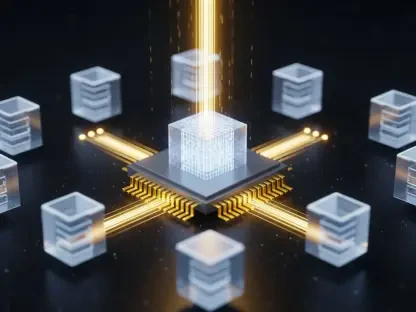
The core strategy involved merging what is known as motor intelligence with cognitive intelligence. Motor intelligence governs how a robot moves and interacts with its physical environment, while cognitive intelligence allows it to reason, plan, and model the mental states of others. By synthesizing these two domains, the project developed an adaptive autonomous system capable of learning from and responding to human behavior in a more nuanced and intelligent manner.
Findings
The primary results of this integrated model, published in ACM Transactions on Human-Robot Interaction, demonstrate a significant leap forward in collaborative robotics. The research found that robots equipped with this combined intelligence were substantially better at understanding and adapting to their human partners in real time. Unlike traditional systems that require every step of a task to be explicitly defined, these robots could infer a user’s goal from their actions and provide appropriate assistance proactively.
This key discovery validates the project’s foundational hypothesis: that a robot’s ability to collaborate effectively is directly tied to its capacity to model the intentions of its human counterpart. The findings show that this approach enables more fluid, efficient, and safer interactions, as the robot can anticipate potential conflicts or errors and adjust its behavior to prevent them. This adaptive capability is a cornerstone for building the next generation of truly collaborative machines.
Implications
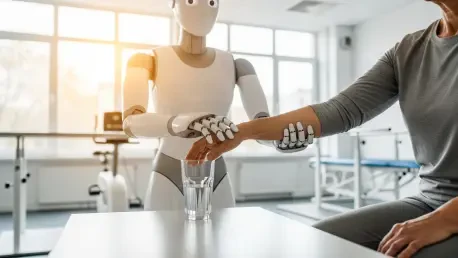
The practical applications of this technology are vast and transformative, with a primary focus on clinical settings. In stroke rehabilitation, for example, a humanoid robot could physically support a patient through exercises while adapting the level of assistance based on the patient’s perceived effort and frustration. This personalized approach could accelerate recovery and improve patient outcomes by providing support that is both physically and emotionally attuned.
Beyond healthcare, the implications extend to enhancing safety in hazardous industrial tasks, such as nuclear waste decommissioning, where clear communication and anticipation between human and robot are critical. Ultimately, this research fosters a new paradigm for robotics, one where machines are not only more intelligent but also more relatable and trustworthy. Such advancements pave the way for a future where robots are seamlessly integrated into society as reliable partners in a wide range of activities.
Reflection and Future Directions
Reflection
One of the most significant hurdles in this research was translating the abstract psychological concept of “intent” into a computable, mathematical model that a machine could process. Human intention is often ambiguous and context-dependent, making it incredibly difficult to define with algorithmic precision. The project had to pioneer new methods for capturing and interpreting the subtle cues in human movement and behavior that signal underlying goals.
Furthermore, the integration of knowledge from disparate scientific fields presented its own set of complexities. Combining principles from neuroscience on how the brain processes social information with machine learning algorithms and robotic control systems required a deeply collaborative and innovative approach. Creating a cohesive and functional system from these diverse components stands as a major achievement of the project.
Future Directions
With the foundational model now validated, the next phase of the research involves testing the technology in real-world scenarios. The team has planned clinical pilot studies to evaluate the system’s effectiveness in stroke rehabilitation environments, where its performance can be measured against traditional therapy methods. These trials will provide invaluable data on the robot’s practical utility and its acceptance by patients and clinicians.
Looking further ahead, the research will explore long-term human-robot interaction to understand how relationships and trust evolve over time. Many questions remain regarding the depth of a robot’s social understanding and the ethical considerations of creating machines that can infer human mental states. These inquiries will shape the ongoing development of socially intelligent robots for years to come.
Paving the Way for Truly Collaborative Robots
In summary, the research conducted under the PRIMI project established a new benchmark for human-robot interaction. By successfully integrating motor and cognitive intelligence, the study demonstrated that enabling robots to read and adapt to human intent was a monumental step toward creating safer and more intuitive autonomous systems. This breakthrough moved the field beyond mere task automation and toward genuine collaboration.
The project’s findings provided a robust framework for developing socially aware machines, with profound implications for healthcare, industry, and daily life. It laid the essential groundwork for a future where humans and robots could work together not as master and servant, but as true partners, navigating complex tasks with a shared understanding and mutual trust.