
For decades, guitarists have been caught in a technological tug-of-war, balancing the revered, dynamic response of traditional tube amplifiers against the undeniable convenience and portability of modern digital solutions. The quest to capture the elusive “feel” of glowing glass tubes—that complex, interactive relationship between an amp, a speaker, and a player’s touch—has driven countless innovations, yet a truly convincing alternative has remained just out of reach for many. At NAMM 2026, Synergy Amps revealed a potentially groundbreaking solution, introducing a new line of amplifiers powered by proprietary machine-learning technology. This development aims to finally close the gap, offering a no-compromise amplifier that merges the authentic sonic character of tube power stages with the efficiency and compact form factor of Class D technology, promising to reshape how musicians approach their tone both on stage and in the studio.
The Dawn of Machine Learning in Amplification
The fundamental challenge in replicating tube amp behavior lies in the intricate, nonlinear physics at play. Classic tube amps are celebrated for their touch sensitivity and rich harmonic complexity, which arise from the way vacuum tubes interact in real time with the fluctuating impedance of a connected speaker cabinet. This dynamic interplay creates effects like power sag and natural compression that are integral to the instrument’s expressive potential. In contrast, conventional Class D amplifiers, while highly efficient and lightweight, operate with a low-impedance output stage that struggles to mimic this organic, reactive feel, often resulting in a tone perceived as sterile or disconnected. Synergy’s patent-protected system confronts this issue head-on by integrating a high-efficiency Class D output stage with an advanced digital signal processing core. This hybrid design leverages the strengths of both worlds, using sophisticated machine learning as the bridge to achieve an unprecedented level of analog realism.
At the heart of Synergy’s innovation is a powerful algorithm that actively learns and adapts to its environment. The system continuously measures the voltage and current at the speaker output, analyzing the electrical relationship between the amplifier and the cabinet in real time. Upon connection to a speaker, it initiates a series of “controlled sweeps” to rapidly map the cabinet’s unique impedance curve, effectively creating a digital profile of its physical characteristics. From there, the machine-learning component continues to monitor and adjust its performance, authentically recreating the nuanced behaviors of a classic tube power amp. This includes simulating frequency-dependent damping, harmonic richness, and the subtle sag and compression that define the feel of a cranked tube amplifier. Furthermore, the technology incorporates high-quality impulse responses (IRs), providing a full, rich, miked-cabinet tone for direct recording or live performance without needing a physical speaker.
Collaborative Innovations from Industry Titans
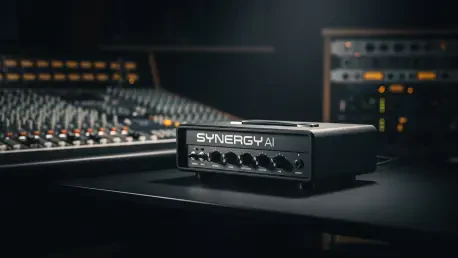
To bring this sophisticated technology to market, Synergy has partnered with two of the most respected names in the guitar effects and amplification industry: Brian Wampler and Dave Friedman. The first product of this collaboration is the Wampler Pedalhead, a compact and powerful solution designed for the modern gigging musician. This pedalboard-friendly unit is a 240-watt stereo power amp, delivering the headroom and volume equivalent of a 60-watt tube amplifier. Its design philosophy is not to create its own core amp tones but rather to impart the realism and dynamic feel of a tube power section to an existing rig, whether it consists of a standalone preamp pedal or a comprehensive digital modeling unit. The Pedalhead comes equipped with an integrated IR loader for direct connections, full MIDI control for seamless integration into complex setups, and six distinct power amp models to choose from. Its streamlined control set, featuring Master Volume, DI Level, Presence, and Depth knobs, ensures that achieving an authentic, powerful tone is both intuitive and immediate.
The second offering, the Dave Friedman IR-Load, represents a more comprehensive, all-in-one solution tailored for both stage and studio applications. Available in a traditional head-style chassis and a rack-mounted format, this unit functions as a 360-watt stereo power amp, which provides the sonic equivalent of a 90-watt tube amp. However, its capabilities extend far beyond simple amplification. The IR-Load is also a sophisticated load box, a reactive attenuator, and a high-fidelity IR loader with extensive MIDI capabilities, making it a central hub for any guitar rig. This professional-grade device offers a deep level of tonal control, with stereo knobs for Reactance, IR Level, Depth, and Presence, allowing players to fine-tune the power amp’s interaction with the virtual cabinet. An amp input level switch and a dedicated headphone output with its own volume control further enhance its versatility, positioning it as a powerful tool for silent practice, direct recording, and live performance.
A New Paradigm in Tone Crafting
With the introduction of these new products, the company made it clear that its goal was not to replace the burgeoning market of digital amp modelers but to elevate it. By focusing intently on perfecting the power amp and speaker interaction—a critical yet often overlooked link in the signal chain—Synergy provided a novel solution to the enduring dilemma of tone versus portability. This approach acknowledges the incredible progress made in preamp modeling while addressing the final frontier of digital amplification: the authentic feel and dynamic response that musicians crave. These AI-driven amplifiers represent a significant new trend in amplifier design, promising to make digital rigs sound and feel more authentic than ever before. While final pricing had not been announced at the time of the reveal, the technology itself signifies a pivotal moment for guitarists seeking the best of both the analog and digital worlds.