
The traditional methodology of writing software has undergone a fundamental transformation as the industry moves beyond simple predictive text to autonomous systems capable of executing complex logical workflows. This shift represents more than a mere incremental improvement in developer productivity; it marks a total departure from the era of assistive tools toward a future of agentic independence. Enterprise engineering departments are currently navigating the complexities of integrating these intelligent entities into existing pipelines to maintain a competitive edge.
The Evolution of AI in the Software Engineering Lifecycle
Statistical Growth and Market Adoption Trends
Recent data from leading industry observers like Gartner and GitHub suggests a massive pivot in how development environments are constructed. While the previous phase of implementation focused on basic autocomplete features, current adoption statistics highlight a surge in sophisticated AI agents that function as active participants in the codebase. Research indicates that the percentage of organizations utilizing these agents for core operational tasks has climbed steadily as the technology moved out of the experimental phase.
This transition reflects a maturing market where engineering teams no longer view AI as a novelty but as a necessity for managing modern architectural complexity. Moreover, the integration of these tools into professional software ecosystems has become a standard requirement for maintaining velocity. As a result, the shift toward autonomous agents has redefined the baseline for technical efficiency in high-scale corporate environments.
Real-World Applications and Industrial Case Studies
A prominent example of this transformation is found within Ernst & Young, where the strategic integration of AI agents resulted in a four-to-five-fold increase in coding productivity. By focusing on the creation of “integratable” code rather than just raw generated text, the firm successfully bypassed the common pitfall of producing unusable bulk data. This success was achieved by ensuring that AI-generated outputs aligned perfectly with internal compliance and proprietary engineering standards.
Furthermore, the rise of specialized platforms such as Factory, Lovable, and Replit has provided developers with a diverse toolkit for various project requirements. These platforms allow for a more nuanced approach to development, where agents handle specific segments of the lifecycle with minimal human intervention. In proprietary corporate settings, the distinction between simple generation and seamless integration has become the primary metric for evaluating the success of AI deployment.
Expert Perspectives on the AI-Driven Engineering Shift
The Significance: Why the Context Universe Matters
Stephen Newman, the Global CTO Engineering Leader at EY, has highlighted that the efficacy of any AI agent is directly tied to its “context universe.” This concept encompasses the vast array of proprietary repositories, source catalogs, and specific engineering standards that define an organization’s unique technical DNA. Without access to this specific context, agents often produce generic solutions that require significant manual correction to meet enterprise-grade requirements.
The New Framework: Distinguishing Roles and Workloads
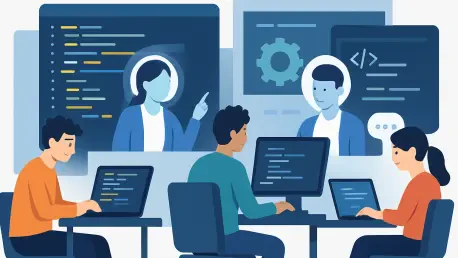
Experts also argue for the necessity of a “workload classification framework” to manage the new relationship between humans and machines. Such a system allows organizations to categorize tasks based on the degree of autonomy required, effectively separating routine maintenance from high-level strategic planning. Consequently, the role of the developer has moved away from being a traditional coder toward becoming an orchestrator of multiple autonomous agents.
Future Implications: The Road Toward Autonomous Development
The Horizon Model: Moving Toward Semi-Autonomous Systems
The industry is currently moving toward a “horizon model” of development, where the gap between assistive tools like GitHub Copilot and fully autonomous agents continues to shrink. High-autonomy tasks, including documentation generation, defect fixing, and the creation of greenfield features, are increasingly delegated to these digital workers. This progression allows human engineers to focus on higher-level architectural integrity and the solving of multifaceted system problems.
Overcoming Challenges: Cultural Readiness and Technical Stability
However, the path toward total autonomy is not without significant hurdles, such as cultural resistance and the potential for technical plateauing. Maintaining the architectural integrity of a system when multiple agents are contributing code requires a robust governance structure and a shift in workforce dynamics. Modern engineers must now develop a new set of skills focused on agent management, oversight, and the integration of diverse AI-driven outputs into a cohesive whole.
Conclusion: Redefining Productivity in the Agentic Era
The paradigm shift from simple code generation to context-aware autonomous execution established a new standard for software excellence. It became clear that achieving massive productivity gains required more than just the latest software; it demanded a fundamental change in behavioral patterns and strategic integration. Organizations that fostered cultural readiness and embraced the role of the orchestrator found themselves at the forefront of the engineering landscape. The relationship between human ingenuity and agentic speed ultimately defined the next era of technical innovation. Moving forward, the industry prioritized the refinement of workload frameworks to ensure that human-agent collaboration remained a sustainable and scalable model for global enterprises.