
The environments we inhabit, from sprawling cityscapes to the intimate corners of our homes, have historically been static backdrops against which the drama of human life unfolds. A revolutionary approach, however, is set to transform this passive relationship, proposing a future where our surroundings can learn, respond, and evolve with us in real time. A groundbreaking study integrating artificial intelligence with environmental design principles has unveiled a strategy for creating spaces that are not merely built but are brought to life. This new paradigm leverages sophisticated computational techniques to foster a seamless, interactive connection between individuals and their environment. By enabling spaces to become dynamic and deeply personalized, this work stands to reshape entire sectors, promising a world where our buildings and cities can finally understand and cater to the nuanced, ever-changing needs of the people within them.
The Technological Foundation of Responsive Design
At the core of this innovative framework is reinforcement learning (RL), a specialized field of machine learning that operates on a principle of iterative improvement through trial and error. Within an RL system, an intelligent agent learns to make optimal decisions by interacting with its surroundings and processing feedback, progressively refining its actions to maximize a desired outcome. When applied to environmental design, this technique becomes transformative. It allows for the creation of systems that can autonomously experiment with, learn from, and implement design modifications dynamically. This capability facilitates the swift and continuous evolution of a space, ensuring it can adapt to the shifting preferences, behaviors, and needs of its inhabitants. This process effectively moves design beyond a one-size-fits-all model toward one of constant optimization and hyper-personalization, allowing an environment to learn what works best for its occupants over time.
Complementing the adaptive intelligence of reinforcement learning is the technology of multimodal art element extraction. This sophisticated process involves the identification, analysis, and classification of diverse artistic and cultural components from multiple data sources simultaneously, including visual imagery, written text, and ambient soundscapes. This capacity empowers a design system to comprehend and dynamically integrate a vast repository of aesthetic and cultural references into its structure. For instance, an intelligent environment could seamlessly incorporate architectural motifs from a specific historical era, emulate the visual style of a contemporary art movement, or adjust its acoustic properties to reflect a particular mood, all based on contextual cues and direct user input. The thoughtful fusion of these varied elements—visual, textual, and auditory—results in the creation of spaces that are not only aesthetically rich and vibrant but also culturally resonant and deeply meaningful.
A New Strategy for Dynamic Adaptation
The true innovation detailed in the research lies in the strategic synthesis of these two powerful technologies to forge a “dynamic adaptation strategy.” This strategy establishes a continuous feedback loop where human interaction directly and constantly informs design adjustments. An algorithm, driven by reinforcement learning, perpetually interprets environmental feedback—such as how people move through a space, where they choose to linger, or even their direct verbal or gestural inputs—and leverages this data to make intelligent decisions. These decisions, in turn, trigger the multimodal system to select and integrate appropriate art and design elements, effectively altering the environment on the fly. This creates a profoundly engaging and interactive experience where the space is no longer a passive container but an active participant in the lives of its inhabitants, continually personalizing itself to reflect their preferences and enhance their well-being.
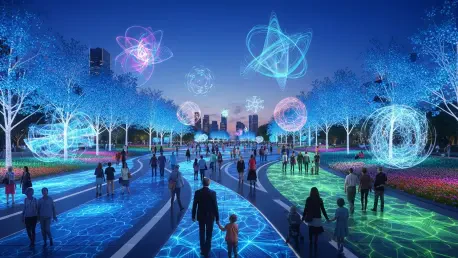
The potential applications for this adaptive technology are remarkably extensive, spanning numerous industries and aspects of daily life. In the realm of urban planning and smart cities, these strategies could be employed to develop public spaces that intelligently conform to citizen activities. A city park, for example, could have its lighting, water features, and digital art displays change based on the time of day, the density of the crowd, or scheduled community events, thereby optimizing the utility of communal areas and enriching the urban experience. Within interior design, this approach could culminate in homes and offices that automatically adjust lighting schemes, ambient sounds, and even wall-projected art based on an occupant’s mood, current activity, or biometric data. This would create environments that are both exceptionally functional and aesthetically tailored to the individual moment by moment, with further promise for immersive augmented reality experiences.
Navigating the Human and Professional Dimensions
Beyond its significant technical and practical implications, this research also thoughtfully confronts the crucial ethical dimensions that emerge with the advent of such responsive environments. As our spaces become increasingly capable of collecting granular data and adapting to human behavior, the responsibility of designers and technologists to safeguard user privacy and personal autonomy becomes absolutely paramount. The study strongly advocates for the development and implementation of robust ethical frameworks to guide the deployment of these AI-driven systems, ensuring that the pursuit of enhanced functionality and aesthetics does not inadvertently compromise personal agency or well-being. It underscores the necessity of designing systems that are transparent, controllable, and always subservient to the people they are designed to serve, preventing a future where convenience comes at the cost of freedom.
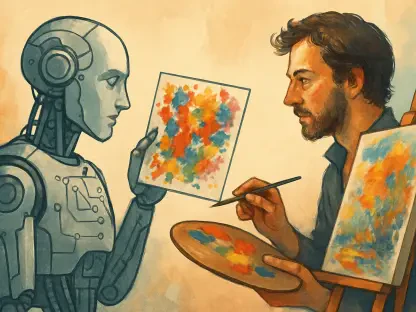
In conjunction with these vital ethical considerations, the research emphasizes the critical importance of fostering deep collaboration between technologists, designers, and artists. The synthesis of art and technology is presented not merely as a technical problem to be solved but as a symbiotic creative partnership. This vision requires a continuous and open dialogue where artistic integrity informs technological application and, conversely, where technological advancements open new, previously unimaginable avenues for artistic expression. This collaborative approach is essential for creating environments that are not only intelligent and responsive but also truly exceptional and humanistic. By integrating the nuanced sensibilities of artists with the logical precision of engineers, the resulting spaces can achieve a level of richness and cultural depth that neither field could accomplish alone.
The Dawn of a Symbiotic Architecture
The research ultimately offered a comprehensive and forward-looking vision for the future of environmental design. It presented a crucial framework that positioned designers to become champions of adaptability in an increasingly dynamic and interconnected world. The principles outlined did not suggest a replacement for human creativity but rather its augmentation, providing powerful tools that could elevate the craft to new levels of sophistication and user-centricity. The work of H. Qin and B. Qin provided a definitive roadmap for a future where the spaces we build are no longer static monuments but living systems. It was a vision where architecture and technology converged to create environments that did not just contain life but actively and thoughtfully participated in it, forging a new, symbiotic relationship between humanity and its built world.