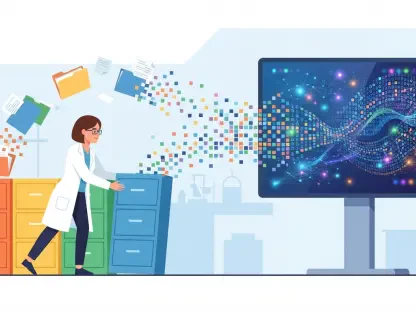

The transition from experimental research tools to validated clinical assets is fundamental to the rapid expansion of the brain AI-assisted diagnosis market. In the high-stakes environment of modern neurology, the sheer volume of data generated by advanced neuroimaging often exceeds the manual processing capacity of even the most experienced medical teams. By integrating sophisticated machine learning models directly into the clinical workflow, healthcare providers are now able to bridge the gap between massive data acquisition and actionable medical insight. This evolution represents a shift from curiosity-driven research to indispensable utility, where artificial intelligence acts as a precision filter for complex physiological signals. As hospitals worldwide continue to upgrade their digital infrastructure, these AI platforms are becoming the standard rather than the exception, ensuring that diagnostic accuracy keeps pace with the increasing complexity of neurological disorders that affect millions globally. This surge is not merely a trend but a necessary response to the rising global health burden.
Economic Growth and Financial Projections
Market Dynamics: Global Valuation Analysis
The financial trajectory of the brain AI-assisted diagnosis market indicates a period of exceptional growth and unprecedented investment within the healthcare sector. Currently valued at approximately $2.19 billion, the market is on a determined path to reach nearly $7 billion by the end of the decade, reflecting a significant appetite for advanced diagnostic tools. This sustained expansion is highlighted by a robust compound annual growth rate of over 25 percent, signaling strong confidence from both the medical community and the financial sectors that back these technological advancements. Investors are increasingly focusing on software-as-a-medical-device platforms that promise scalable solutions for high-volume hospitals. The capital flowing into this space from 2026 to 2030 suggests that the industry is no longer in a speculative phase but is instead entering a mature cycle where the primary goal is global deployment and the monetization of proven algorithmic precision.
Strategic Investment: Funding the Future of Care
This rapid market surge is fueled by an increasing volume of medical imaging procedures and a growing clinical reliance on radiology for definitive diagnoses across diverse patient populations. The widespread adoption of clinical AI tools, coupled with significant improvements in imaging resolution, has accelerated the integration of these technologies into standard medical practice. As healthcare providers look for more efficient ways to handle data, the market for AI-driven solutions continues to broaden beyond simple research applications. From 2026 to 2028, the industry expects a massive influx of cloud-native diagnostic software that reduces the barrier to entry for smaller clinics. Furthermore, the rising prevalence of chronic conditions like dementia and Alzheimer’s disease necessitates a level of screening efficiency that manual processes simply cannot match. Consequently, the commercial landscape is being reshaped by the need for speed, accuracy, and cost-effectiveness in brain health.
Clinical Utility and Patient Care
Diagnostic Precision: Enhancing Clinical Accuracy
The clinical benefits of AI in neurology are primarily centered on improving patient outcomes through unprecedented speed and mathematical precision. These tools allow for the early detection of neurodegenerative diseases and localized tumors before severe physical symptoms manifest, which is often the key to successful treatment interventions. By leveraging deep learning, these systems can identify minute changes in brain tissue density or blood flow that might be overlooked during a standard visual inspection. This level of granular analysis is particularly vital for detecting the early biomarkers of cognitive decline, where every month of early intervention can significantly alter a patient’s quality of life. As these platforms process more data, their ability to differentiate between benign anomalies and serious pathologies continues to sharpen, providing a level of confidence in the diagnostic process that was previously unattainable through traditional observation methods alone.
Operational Efficiency: Impact on Medical Workflows
Beyond individual patient outcomes, a major advantage of these systems is their ability to minimize human error caused by clinician fatigue or subjective interpretation in high-pressure environments. By providing a consistent and objective baseline for every scan, AI ensures a higher standard of diagnostic accuracy regardless of the time of day or the specific radiologist on duty. This precision also paves the way for personalized care, allowing doctors to develop customized treatment plans based on a patient’s unique neurological profile rather than relying on generalized protocols. In emergency scenarios, such as acute strokes or traumatic brain injuries, the ability of AI to rapidly interpret complex data can save critical minutes, which often translates to improved recovery prospects and reduced long-term disability. The integration of these tools into the electronic health record system facilitates a seamless transition from diagnosis to treatment, optimizing the entire care continuum.
Technological Evolution and Global Landscape
Technological Synergy: Cloud Computing and Deep Learning
The industry is currently being shaped by innovative trends such as deep learning integration and cloud-based diagnostic platforms that offer decentralized access to high-tier technology. These advancements allow healthcare facilities to access powerful diagnostic tools through the cloud, eliminating the need for expensive on-site server infrastructure and fostering a new era of collaborative diagnosis. By utilizing remote computing power, even rural hospitals can now leverage the same high-end algorithmic analysis that was once reserved for major academic medical centers. Additionally, new clinical decision support systems are moving beyond simple data analysis to provide doctors with actionable recommendations based on the synthesized patterns of millions of previous cases. This shift toward intelligent suggestion engines helps radiologists prioritize urgent cases, ensuring that the most critical patients receive immediate attention while streamlining the administrative burden of reporting.
Regional Influence: North America and Beyond
While North America currently dominates the market share due to its established infrastructure and high investment levels, the Asia-Pacific region is expected to see the fastest growth in the coming years. By 2030, experts believe that AI-assisted diagnosis will no longer be a peripheral technology but a core element of neurological care globally as adoption rates equalize across different socioeconomic landscapes. This shift promises to make high-precision brain health assessments more accessible and effective across diverse healthcare systems, from the highly centralized networks of Europe to the rapidly digitizing clinics in emerging markets. Governments are increasingly recognizing the long-term cost savings associated with early and accurate AI-assisted brain diagnosis, leading to more favorable reimbursement policies. As regulatory bodies harmonize their standards for clinical AI, the friction of international deployment is decreasing, allowing developers to scale their solutions globally.
Strategic Implementation: Practical Steps for the Industry
In light of these advancements, healthcare administrators prioritized the creation of robust data governance frameworks to ensure the ethical and secure use of patient information. The successful integration of brain AI solutions required a multi-disciplinary approach where radiologists, neurologists, and data scientists collaborated to validate algorithmic outputs against clinical realities. Forward-thinking institutions invested in ongoing training for their medical staff, ensuring that clinicians understood how to interpret AI-generated insights without becoming overly reliant on automated systems. To maximize the utility of these tools, organizations also explored interoperability solutions that allowed AI platforms to communicate seamlessly with various imaging hardware and database software. The shift toward AI-assisted neurology ultimately demonstrated that the most effective healthcare models are those that combine human expertise with the tireless processing power of advanced machine learning systems.