


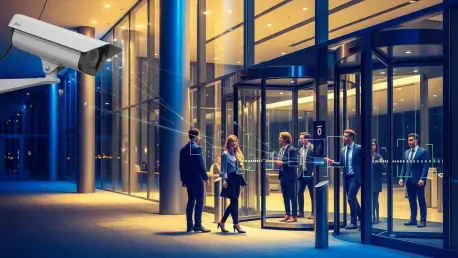

The global security landscape is witnessing a profound metamorphosis as traditional motion detection systems, which once plagued operators with constant false alarms, give way to sophisticated artificial intelligence capable of true environmental comprehension. In the recent past, legacy surveillance relied on primitive pixel-change triggers that failed to distinguish between a legitimate intruder and the swaying of tree branches during a heavy storm. This systemic inadequacy often resulted in severe alarm fatigue, where security personnel frequently ignored notifications due to a persistent lack of situational accuracy. Modern AI platforms have effectively dismantled these barriers by transitioning from passive recording devices to intelligent interpretive engines. These systems no longer merely record movement; they analyze the context of an environment in real time, determining whether an event warrants immediate human intervention. By leveraging deep learning architectures, cameras can now function as autonomous observers that prioritize critical threats over environmental noise, thereby restoring trust in digital security infrastructure.
Precise Classification: Refining the Visual Data Stream
One of the most impactful breakthroughs in modern surveillance is the ability to classify objects with a degree of precision that was previously impossible. Instead of simply flagging any movement within a frame, contemporary AI systems can differentiate between a human, a vehicle, a stray animal, or even a specific piece of industrial machinery. By continuously learning from the vast amounts of data they process, these deep learning models become more accurate as they operate, effectively filtering out irrelevant background noise and focusing strictly on events that hold operational significance. This level of granular detail turns standard video streams into a reliable source of business intelligence. For instance, a warehouse manager can use this data to track the efficiency of forklift movements or identify bottlenecks in a loading dock. This shift transforms video from a simple security tool into a strategic asset that provides actionable insights into daily business operations and facility management.
Beyond basic visual classification, the industry is rapidly adopting multimodal identification to create a more comprehensive security profile for protected environments. Newer technologies bridge the gap between visual footage and digital signatures by recognizing wireless signals emitted by mobile devices like smartphones and tablets. This layered approach allows a high-security facility to confirm a person’s identity through both facial recognition and their specific digital footprint, providing a robust method for managing access control in high-traffic environments such as international airports or corporate headquarters. This integration ensures that security teams are not relying on a single data point but are instead using a web of interconnected information to verify authorization. As organizations look toward the 2026 to 2028 period, the convergence of video analytics with radio frequency sensing is expected to become the gold standard for perimeter protection, offering a redundant and highly reliable verification process that minimizes the risk of unauthorized entry.
Proactive Defense: The Synergy of Edge and Cloud
Historically, video monitoring was a reactive discipline where security personnel reviewed recorded footage only after an incident had already occurred, often leading to lost time and unrecoverable assets. AI has completely redefined this model by enabling predictive analysis and real-time intervention through advanced behavioral monitoring. By studying specific patterns—such as a vehicle idling in a restricted zone for an extended duration or an individual attempting to bypass a secured entrance—AI systems can flag suspicious activity before it escalates into a full-scale security breach. This shift allows professional monitoring centers to stop crimes or safety violations in progress rather than merely collecting evidence for a later investigation. This transition toward proactive prevention is essential for high-stakes environments where even a few minutes of delay can result in significant financial loss or physical danger to employees and the general public.
This proactive capability is made possible by a sophisticated balance between edge computing and cloud technology, which optimizes how data is processed and stored. Edge computing allows for data to be processed directly on the camera hardware, enabling split-second decisions that are critical for emergency responses without the latency inherent in long-distance data transmission. This local processing reduces the need to send massive amounts of raw video over a network, which is particularly beneficial for remote sites with limited bandwidth. Meanwhile, the cloud offers the scalability needed to manage data across multiple global locations and integrate surveillance with other enterprise management software. This hybrid combination ensures that immediate safety threats are handled locally with extreme speed, while long-term trends, automated reporting, and historical data storage are managed centrally. This architecture provides a flexible and resilient foundation for organizations to scale their security operations globally.
Ethical Integration: Securing the Path Forward
As these intelligence tools become more widespread, organizations must navigate the ethical and security challenges that naturally accompany the collection of such detailed data. The use of facial recognition and persistent tracking raises valid privacy concerns, requiring companies to establish transparent policies and comply with strict data protection laws to maintain public trust. Furthermore, because these systems are highly connected and data-rich, they are attractive targets for cyberattacks, making robust cybersecurity a fundamental requirement for any modern security installation. Implementing end-to-end encryption and regular software audits became the necessary standard for maintaining the integrity of the surveillance network. Companies that failed to prioritize these security measures found themselves vulnerable to data breaches that compromised both physical and digital safety. Establishing a clear framework for data governance is no longer optional but a core requirement for any technology deployment.
The transition toward proactive intelligence required a fundamental reimagining of how data moved through a corporate ecosystem. Stakeholders realized that the old model of forensic review was no longer sufficient in a high-speed digital economy. By adopting these advanced frameworks, organizations successfully mitigated risks that were previously considered unavoidable. Security directors implemented privacy-by-design principles that balanced the need for public safety with individual rights. The industry moved beyond simple video capture to create a unified intelligence layer that supported both security and operational excellence. This shift ensured that investments in surveillance hardware translated into measurable business value. Ultimately, the successful deployment of these technologies hinged on the ability to integrate human oversight with machine precision. Companies that took these actionable steps secured their physical assets while fostering a culture of transparency and accountability.







