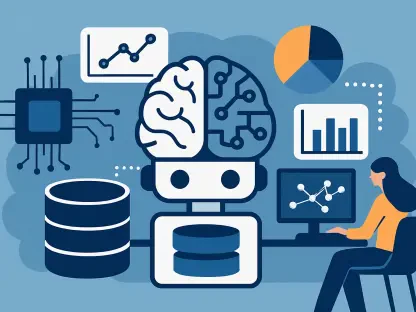

GDRFA Dubai is utilizing multi-agent architectures and data analytics to transition from reactive problem-solving to proactive anticipation of future immigration and identity management trends. The General Directorate of Residency and Foreigners Affairs in Dubai has launched two specialized facilities, the Research, Development and Innovation Lab and the AI Future Lab, to redefine the landscape of government services. This strategic shift represents a comprehensive overhaul of how administrative tasks are conceptualized and executed, moving far beyond traditional technical upgrades. By embedding a scientific approach into governance, the directorate ensures that every operational change is rooted in empirical evidence rather than mere intuition. This initiative is a core component of the broader mission to solidify the city’s position as a global leader in administrative efficiency. The labs serve as an incubator for ideas where data-driven insights meet practical application, creating a culture of foresight.
Pioneering Scientific Inquiry: Administrative Operations
The Research, Development and Innovation Lab acts as the intellectual engine of this new ecosystem, providing a rigorous scientific framework for examining modern institutional challenges. Instead of relying on traditional trial and error, the facility utilizes experimental methodologies to assess the feasibility of emerging ideas and measure their potential impact on daily operations. A significant milestone within this lab is the creation of the Research, Development and Innovation Guide, which stands as the first standardized framework of its kind within the regional government. Registered under intellectual property rights, this guide ensures that the innovation process remains consistent, scalable, and protected as a valuable organizational asset. By linking various stages of development from the initial conceptual phase to real-world deployment, the laboratory bridges the gap between theoretical research and tangible service improvements. This allows the directorate to solve complex problems with high precision.
While research provides the foundation, the AI Future Lab, also known as AI X LAB, delivers the technological execution necessary to bring these concepts to life. This facility is dedicated to exploring and testing advanced artificial intelligence applications, with a specific focus on autonomous digital systems and intelligent simulation. These tools allow the organization to model and predict future scenarios, such as sudden fluctuations in traveler volume or the widespread impact of new regulatory policy changes, before they are officially implemented. By utilizing multi-agent architectures, the laboratory can simulate complex interactions within the immigration ecosystem, identifying potential bottlenecks or errors before they affect the public. This shift toward proactive management enables a more agile government response that adapts to changing circumstances in real time. The integration of data analytics into these simulations provides a level of foresight that ensures readiness for the next wave of global mobility trends.
Integrated Ecosystems: Driving Operational Excellence
The true strength of this dual-lab initiative lies in the seamless synergy between the two facilities, where scientific validation meets technological refinement in a continuous feedback loop. The RDI Lab identifies core organizational hurdles and validates potential theories through rigorous study, which are then passed to the AI X LAB for technical prototyping and high-stakes testing. This collaborative environment significantly accelerates the transition from basic knowledge to functional, high-impact solutions. By creating a unified ecosystem where different disciplines converge, the directorate has successfully embedded innovation as a permanent institutional practice rather than a series of isolated projects. Leaders within the organization emphasize that this transformation is not simply about adopting new hardware but about fundamentally changing how ideas are cultivated and measured. This approach ensures that every technological investment yields a high return in terms of service quality and overall administrative agility within identity management.
Beyond internal efficiencies, the ultimate goal of these laboratories is to revolutionize the customer experience by streamlining every point of interaction with government systems. By applying advanced data analytics to identify and remove institutional hurdles, the directorate can provide services that are faster, more accurate, and more convenient for the general public. The labs allow for the testing of user-centric designs in a controlled environment, ensuring that digital interfaces are intuitive and that background processes are nearly invisible to the end user. This focus on operational excellence translates into reduced processing times and a significant decrease in manual intervention, which minimizes the likelihood of human error. As the directorate continues to refine its digital transformation strategy, the integration of AI-driven insights allows for a level of personalization and responsiveness. The result is a government model that feels proactive and supportive, fostering trust among residents and visitors in the city.
Global Benchmarks: Future Strategic Trajectories
This initiative is perfectly aligned with the broader regional vision of building an agile, future-ready government that excels in total digital transformation and technological resilience. By documenting its unique innovation processes and protecting its intellectual property, the directorate is creating a comprehensive blueprint for other government entities to follow on an international scale. The adoption of autonomous technologies and multi-agent systems represents a significant step toward the government of the future, where complex tasks are managed with minimal manual oversight. This transition to an evidence-based decision-making process ensures that the organization remains resilient against emerging challenges, whether they are logistical or regulatory. By prioritizing transparency and scientific rigor, the directorate is not only improving its own operations but also contributing to the city’s reputation as a hub for innovation. The focus on sustainable growth ensures that today’s foundations will support global mobility for many years.
The establishment of these specialized laboratories ultimately secured a more resilient pathway for the evolution of public administration and identity services. By integrating research with execution, the directorate moved toward a model where every policy decision was informed by simulated data and rigorous scientific testing. Moving forward, the focus shifted toward expanding these frameworks to encompass cross-border digital identity protocols and automated security verification. Organizations looking to replicate this success should consider the importance of protecting institutional knowledge through formal intellectual property registration. Furthermore, the transition to proactive management required a significant investment in upskilling staff to operate alongside multi-agent AI systems effectively. The long-term impact of these labs became evident as the directorate maintained high efficiency during periods of unprecedented global growth. This legacy of innovation provided a stable foundation for future-proofing immigration systems.