
The professional landscape has shifted so fundamentally in the last forty-eight hours that traditional notions of office productivity now seem like relics from a distant, pre-automated era. Just two days after the introduction of GPT-5.3 Instant, the technological horizon expanded again with the unveiling of GPT-5.4, a model that effectively ends the era of the passive chatbot. This release is not merely a faster iteration or a more eloquent writer; it is a strategic pivot toward agentic artificial intelligence, where systems possess the capacity to execute complex actions rather than just generating text. By integrating native computer-use capabilities and sophisticated financial modeling tools, this update positions the software as a professional-grade operating system designed for the modern workforce.
The significance of this transition lies in the move from reactive assistance to proactive collaboration. In the current market, businesses are no longer looking for tools that merely summarize meetings or draft emails; they are seeking digital entities that can manage entire workflows with minimal oversight. GPT-5.4 addresses this demand by offering a framework where the AI can navigate software, manipulate data, and coordinate between different applications autonomously. This shift represents a move toward stateful AI, where the system maintains context and purpose across long-duration tasks, fundamentally altering the relationship between human professionals and their digital tools.
As organizations begin to integrate these capabilities, the focus of human labor is expected to move from execution to orchestration. The introduction of such high-functioning agents suggests that the value of a professional will increasingly be measured by their ability to direct and audit AI-driven processes rather than performing the manual digital labor themselves. This article examines the technological underpinnings of this shift, the specialized domains where it is most disruptive, and the strategic adjustments necessary for businesses to thrive in a landscape where the line between software and employee continues to blur.
From Generative Text to Agentic Action: A Brief History
To understand the current state of the market, one must examine the rapid evolution of large language models over the last few years. The industry has traveled a long distance from the early days of GPT-3, which was primarily a sophisticated text-completion engine. From there, the introduction of GPT-4 brought multimodal capabilities, allowing systems to process images and audio, but these models still functioned largely within the confines of a dialogue box. Past developments focused heavily on improving the internal reasoning or “thought” process of the AI, yet these systems remained isolated from the actual digital environments where work occurs.
Historically, bridging the gap between reasoning and execution required complex “wrappers” or specific coding environments that often proved too cumbersome for widespread corporate adoption. These intermediaries were prone to failure and limited the AI to specific, narrow tasks. The transition observed in recent months, culminating in the current agentic era, represents the removal of these barriers. The evolution has moved from simple generative text to integrated reasoning, and finally to direct digital action. This progression is vital for market analysts to track, as it signals the end of AI as a passive advisor and the beginning of its tenure as an active participant in digital ecosystems.
Understanding this trajectory helps clarify why the latest update is viewed as a “tipping point” for enterprise adoption. Previous versions proved the concept of machine intelligence, but the current iteration proves the utility of machine agency. This shift is not just technical; it is economic. By reducing the friction between a decision and its implementation, agentic systems lower the cost of complex digital operations. As the industry moves away from the “chatbot” paradigm, the foundational architecture of workplace software is being rewritten to accommodate persistent, autonomous collaborators that can think and act in parallel with human teams.
The Architecture of Productivity: Tools, Reasoning, and Mastery
The Bifurcation of Professional Intelligence
The current release structure demonstrates a sophisticated understanding of market segmentation by splitting the technology into two distinct models. GPT-5.4 Thinking serves the broader professional market, providing a sophisticated balance between high-level reasoning and computational efficiency. This model is designed for everyday professional use, where users require advanced logic for tasks like project management, strategic drafting, and complex scheduling. By making this version accessible to a wider range of subscribers, the provider ensures that the benefits of agentic AI are felt across various layers of an organization, from administrative support to middle management.
In contrast, GPT-5.4 Pro is the specialized “heavy lifter” of the ecosystem, engineered for high-stakes environments that demand extreme precision and sustained logic. This model is optimized for the most grueling tasks, such as high-intensity software debugging or intricate legal analysis, where the cost of error is significantly higher. This dual-tier approach allows enterprises to scale their investment based on the complexity of specific roles. It prevents the waste of computational “horsepower” on routine tasks while ensuring that critical, data-heavy operations receive the necessary resources to maintain accuracy over long, multi-step workflows.
Native Computer Use and the Surpassing of Human Benchmarks
Perhaps the most disruptive feature in the current technological climate is the introduction of “native” computer-use mode. Unlike earlier iterations that were restricted to a text interface, this system can navigate a standard desktop environment by processing visual screenshots and issuing mouse and keyboard commands directly. This capability allows the AI to perform tasks across multiple different applications, mimicking the way a human worker moves between a web browser, a database, and a communication platform. This move toward autonomous workflows represents a fundamental change in how human users interact with their machines.
The performance metrics supporting this advancement are particularly noteworthy for industry observers. On the OSWorld-Verified benchmark, which evaluates a system’s ability to navigate a desktop and complete complex tasks via visual observation, the model achieved a 75.0% success rate. This figure is significant because it exceeds the reported human performance average of 72.4% on the same set of tasks. The ability of a machine to outperform humans in navigating the very interfaces designed for human use suggests that the “digital clerk” role is nearing total automation. This capability enables the AI to execute multi-step processes, such as extracting data from a specialized PDF, updating a centralized CRM system, and generating a summary report, without requiring a human to bridge the gap between those applications.
Specialized Expertise in Financial and Technical Domains
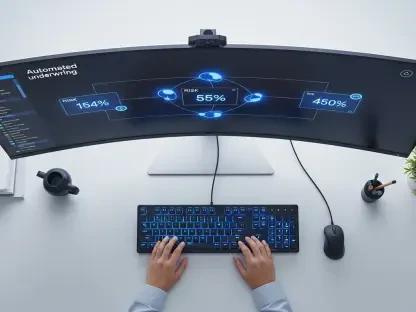
The impact of this technology is especially pronounced in the financial services sector, where deep integrations with tools like Microsoft Excel and Google Sheets have fundamentally changed data modeling. By partnering with global data providers such as FactSet and Moody’s, the system can pull real-time market data directly into complex financial spreadsheets. This specialized focus has resulted in a dramatic surge in accuracy, with performance on investment banking benchmarks rising from 43.7% in previous iterations to 88.0% in the current Thinking model. This level of proficiency directly challenges the traditional role of junior analysts, as the AI can now perform data synthesis and draft investment memos with professional-grade rigor.
Beyond finance, the technical mastery of the system extends into the realm of software development and quality assurance. New features allow the model to “watch” an application run in real-time, identifying visual glitches or logic errors that might be missed by traditional automated testing scripts. This bridge between writing code and verifying user interfaces allows for a more holistic approach to software creation. However, these advancements also bring critical questions regarding the future of entry-level white-collar roles. As the AI begins to handle the heavy lifting of data entry and initial drafting, the professional world must figure out how to train the next generation of experts who historically learned their craft through these now-automated tasks.
Anticipating the Next Shift: The Future of AI Integration
The current trajectory points toward a future where artificial intelligence is not just an occasional tool but a stateful and persistent presence in the workplace. We are moving toward a landscape where AI agents maintain a continuous existence across long-horizon workflows, rather than resetting after every prompt. These agents will likely manage entire departments’ worth of digital paperwork autonomously, functioning as the connective tissue between disparate software platforms. Market trends suggest that the next frontier involves integrating these capabilities directly into the operating system level, making the “AI agent” the primary interface through which all other work is conducted.
Regulatory and economic shifts are also on the horizon as governments and industry bodies grapple with the implications of AI agents possessing human-like control over digital interfaces. There will likely be a significant focus on the security and auditability of these autonomous systems, especially as they take on more responsibility for sensitive financial and personal data. Experts predict that as the cost of running these sophisticated models decreases, agentic capabilities will become the standard requirement for all professional software. This evolution could eventually render traditional menu-based navigation obsolete, replaced by a “command and oversight” model where humans provide the goals and the AI handles the navigational logistics.
Furthermore, the concept of a “workday” may be redefined as these agents operate twenty-four hours a day, processing data and preparing reports while their human counterparts are offline. This 24/7 operational capability will likely accelerate the pace of business, requiring companies to develop new strategies for real-time decision-making. As these systems become more reliable, the focus will shift from “can the AI do this?” to “how should we direct the AI to do this?” This transition marks the final step in the integration of AI into the core of the global economy, making it an inseparable component of modern professional life.
Strategies for Success in the Agentic Era
To remain competitive in this rapidly evolving market, organizations must adopt proactive strategies for integrating autonomous agents into their existing structures. The first step involves identifying repetitive, multi-step digital workflows that are currently slowed down by manual data entry or the need to move information between incompatible software. By targeting these bottlenecks, businesses can see immediate productivity gains from GPT-5.4’s computer-use capabilities. However, successful integration requires more than just deploying the software; it requires a reimagining of workflow architecture to ensure that the AI has the necessary access and oversight to function effectively.
Best practices for the modern era emphasize the importance of “human-in-the-loop” systems, particularly in high-stakes sectors like legal, medical, and financial services. While the reliability of these models has increased significantly, professional oversight remains essential to catch the nuanced errors that can still occur in complex reasoning tasks. Professionals should pivot their skill sets toward “agent orchestration,” which involves learning how to manage, direct, and audit multiple AI agents simultaneously. This move from “doing” to “managing” allows workers to leverage the speed of the AI while maintaining the strategic vision and ethical judgment that only a human can provide.
Furthermore, businesses should invest in robust data governance and security frameworks to manage the risks associated with autonomous digital agents. As these systems gain the ability to click, type, and navigate like humans, the potential for unauthorized actions or data leaks increases. Implementing strict permission levels and clear audit trails for every action taken by an AI agent is critical. By embracing these tools with a focus on strategy, creative problem-solving, and rigorous oversight, organizations can turn the challenge of automation into a significant competitive advantage, allowing their human workforce to focus on high-value initiatives that drive long-term growth.
Concluding Thoughts on the Workplace Revolution
The introduction of GPT-5.4 signaled a definitive end to the era of simple generative assistants and ushered in the age of the autonomous collaborator. This shift moved the relationship between humans and machines from a transactional dialogue to a continuous partnership, where the AI possessed the agency to navigate complex digital environments and master specialized professional domains. The transition to agentic systems represented a fundamental change in the definition of work, as the system’s ability to exceed human benchmarks in interface navigation proved that routine digital labor was no longer a human-exclusive domain.
Organizations that recognized this shift early began to restructure their workflows around the principles of orchestration and oversight, rather than manual execution. The impact on the financial and technical sectors demonstrated that the value of AI was no longer just in its words, but in its ability to act on data with professional-level precision. This technological milestone forced a broader societal re-evaluation of the professional journey, as entry-level roles were transformed by the automation of traditional “junior” tasks. The move toward persistent, stateful agents ensured that the AI remained an active participant in the office environment, constantly working to streamline operations and reduce the friction of digital commerce.
Ultimately, the advancements seen in this release established a new standard for what it means to be a “productive” professional in a post-generative world. The focus shifted away from the ability to operate specific software toward the ability to direct an intelligent system to do so. This evolution did not replace the need for human expertise but rather amplified its importance in a strategic and supervisory capacity. As the workplace continues to adapt to these autonomous entities, the successful integration of agentic AI was recognized as the primary driver of organizational efficiency and competitive survival in the modern economy.