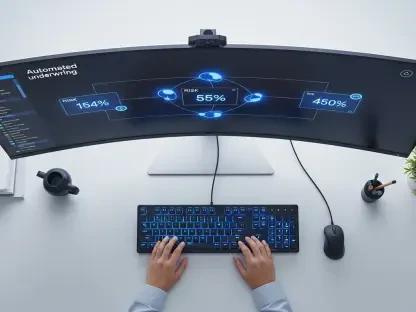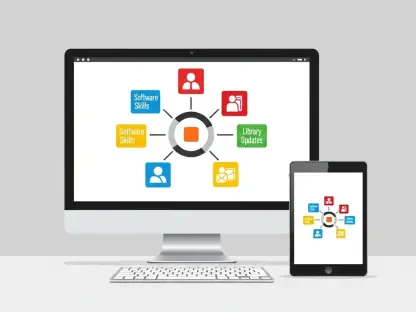

The sprawling, labyrinthine codebases that power global finance, manufacturing, and healthcare represent both a company’s most valuable asset and its greatest artificial intelligence vulnerability. As corporations race to integrate generative AI into their workflows, a critical question has emerged: how can they leverage these powerful tools without exposing decades of proprietary intellectual property to third-party systems? Answering this challenge is no longer a niche concern but the central battleground for the next phase of AI adoption. Paris-based Mistral AI has now entered this high-stakes arena with the general availability of Vibe 2.0, a developer-centric platform built on a philosophy of customization and control. The launch signals a deliberate move away from the generalist model race, positioning Mistral not merely as a competitor to Silicon Valley giants, but as a strategic partner for enterprises that view their code as a fortress to be defended, not a resource to be surrendered.
The New Battlefield for AI Is Your Company’s Private Code the Ultimate Prize
The prevailing narrative of the AI revolution has largely centered on models trained on the vast expanse of the public internet. While this approach has produced remarkable general-purpose assistants, it created a significant blind spot within the corporate world. The true operational logic of a global bank, an aerospace manufacturer, or a pharmaceutical research firm is not found on GitHub; it resides in millions of lines of private, legacy code, built with unique internal libraries and proprietary frameworks. For these organizations, sending sensitive code snippets to an external AI service for analysis or generation is a non-starter, creating a formidable barrier to adoption due to security, compliance, and intellectual property risks.
This gap between the capabilities of public-facing AI and the needs of the private sector has defined a new competitive frontier. The ultimate prize is not simply to create an AI that can write generic code, but one that can deeply understand and securely operate within a company’s unique digital ecosystem. The challenge involves training a model to navigate decades of specific coding conventions, internal APIs, and domain-specific languages that are invisible to the outside world. Success in this domain requires a fundamental shift from offering a one-size-fits-all service to providing a customizable, sovereign tool that becomes a proprietary asset for the enterprise itself.
Beyond the Hype Why Mistral’s Enterprise Push Signals a Major Shift in the AI Arms Race
Mistral AI’s strategic evolution from a celebrated research lab, known for its powerful open-weight models, into a full-stack enterprise platform marks a pivotal moment in its journey. This transition is not an incremental step but a calculated pivot designed to capture a lucrative market segment that remains underserved by its larger American rivals. The commercialization of its developer tools under the Vibe 2.0 banner is the practical manifestation of this strategy, directly linking its technological prowess to a clear revenue model aimed at achieving an ambitious €1 billion target by the end of this year. This move reframes the company’s mission from advancing AI research to delivering tangible business value through deep, secure integration.
At the core of Mistral’s go-to-market strategy is the powerful concept of “technological sovereignty.” As a French company, it leverages its European identity to appeal to a growing global demand for geopolitical diversification in critical technology sectors. In an industry dominated by a handful of American corporations, Mistral offers an alternative that aligns with the strategic autonomy goals of nations and corporations alike. This positioning is particularly resonant in highly regulated industries like finance, defense, and healthcare, where reliance on a single nation’s technology stack is increasingly viewed as a strategic liability. By championing open models and on-premises deployment, Mistral empowers clients to build AI capabilities that are insulated from the geopolitical whims and data access policies of foreign governments.
The fundamental problem Mistral aims to solve is the inherent limitation of general-purpose AI when confronted with proprietary corporate environments. Models trained on public data struggle to comprehend the context of a company’s internal software architecture, leading to irrelevant suggestions, security vulnerabilities, and an inability to perform meaningful tasks like modernizing legacy systems. Mistral’s approach is fundamentally different. Instead of offering a single, monolithic model, its platform is designed for deep customization, allowing an enterprise to fine-tune the AI on its own codebase. This process transforms the tool from a generic assistant into a specialized expert that understands the intricate dependencies and unique logic of its operational environment, turning the AI into a distinct competitive advantage.
Unpacking Vibe 2.0 A Deep Dive into Mistral’s Enterprise Toolkit
With the launch of Vibe 2.0, Mistral has officially concluded its free beta period and introduced a clear commercialization strategy through its “Le Chat” subscription tiers. This establishes a direct revenue path for its most advanced developer tools, moving the company firmly into the enterprise software-as-a-service market. The offering is structured to cater to both individual professionals and large organizations, with a “Le Chat Pro” plan and a “Le Chat Team” plan that adds crucial administrative controls and priority support. Both tiers provide substantial usage allowances with a flexible pay-as-you-go model for exceeding those limits, creating an accessible entry point while ensuring scalability for large-scale enterprise deployments.
The engine driving this new platform is Devstral 2, a powerful 123-billion-parameter dense transformer model specifically engineered to tackle enterprise coding challenges. Its architecture was deliberately chosen for its practicality in real-world deployment scenarios. Unlike the more complex mixture-of-experts (MoE) models favored by some competitors, Devstral 2’s dense structure is more straightforward to deploy on conventional hardware, making on-premises or private cloud installations feasible for a wider range of companies. This technical decision underscores Mistral’s focus on providing solutions that are not only powerful but also pragmatically implementable within existing corporate IT infrastructure, removing a significant barrier to adoption for security-conscious organizations.
Vibe 2.0 also introduces a suite of developer-centric enhancements designed to provide granular control and streamline complex workflows, moving far beyond the capabilities of a simple autocomplete tool. The platform allows for the creation of Custom Subagents, which are specialized AI assistants trained for specific, repeatable functions like generating deployment scripts or performing code reviews according to company standards. To combat the ambiguity that often leads to errors, the system uses Multi-Choice Clarifications, prompting the developer with options rather than making potentially incorrect assumptions. Common processes are accelerated through Slash-Command Skills, while Unified Agent Modes enable teams to pre-configure distinct operational contexts, allowing a developer to seamlessly switch between different projects with unique tools, permissions, and AI behaviors.
The Mistral Doctrine Expert Voices on a Contrarian Strategy
Co-founder Timothée Lacroix has articulated that Mistral’s philosophy extends beyond mere deployment options, focusing on a more profound principle of ownership. He explains, “The core issue is not merely the location of deployment… but the fundamental principle of ownership… [ensuring a company’s codebase is not] shipped to a third party.” This statement encapsulates the company’s core value proposition for the enterprise. In Mistral’s view, allowing a company to fine-tune a model on its private data and run it within its own environment transforms the AI from a rented service into a strategic, proprietary asset. It is a direct response to the deep-seated reluctance of enterprises to entrust their most valuable intellectual property to external, black-box systems.
This focus on sovereignty is echoed at the highest levels of the company, with CEO Arthur Mensch framing AI as a cornerstone of geopolitical autonomy. At global forums, he has consistently argued that national capabilities in artificial intelligence are essential for “strategic sovereignty,” particularly in critical sectors like defense and public infrastructure. This perspective positions Mistral as more than just a software vendor; it becomes an enabler of national and corporate independence in an era of technological concentration. By championing an open, controllable, and transparent approach, the company provides a technological pathway for entities seeking to avoid dependency on foreign AI ecosystems.
Despite its bold vision, Mistral maintains a refreshingly candid view of the competitive landscape. The company openly acknowledges that in head-to-head human evaluations, Anthropic’s latest closed-source model was often preferred for general-purpose tasks. However, this admission is not a sign of weakness but a clarification of its strategic focus. Mistral is betting that for the enterprise market, the marginal performance gains of a generalist model are less valuable than the profound benefits of customization, security, and control. Its core argument is that an AI that perfectly understands a company’s private universe is ultimately more useful than a slightly more eloquent one that understands nothing about it.
The Enterprise Playbook How Mistral Plans to Win with Smaller Models and Deeper Integration
Mistral is making a calculated bet on efficiency, challenging the “bigger-is-better” paradigm that has dominated the AI model-building race. By championing smaller, dense models like Devstral 2, the company offers a practical solution for enterprises wary of the colossal computational costs and complex infrastructure required by gargantuan models. The relative compactness of its technology makes on-premises deployment a tangible reality, not a theoretical possibility. This focus on performance per watt and ease of implementation is a powerful differentiator, appealing to the pragmatic needs of corporate IT departments that must balance innovation with budget and resource constraints. The availability of an even smaller model capable of running on a laptop for offline development further cements this commitment to practical, developer-friendly solutions.
The launch of Vibe 2.0 solidifies Mistral’s transition from a provider of model weights to a full-stack enterprise platform. The company’s value proposition is no longer confined to the quality of its algorithms but extends to a comprehensive suite of professional services designed to ensure a return on AI investment. This includes deep customization services, such as fine-tuning models on proprietary internal languages, using reinforcement learning to adapt to customer-specific environments, and undertaking ambitious code modernization projects. This hands-on, partnership-based approach is designed to embed Mistral’s technology deep within the operational fabric of its clients, creating lasting value and high switching costs.
The long-term vision extends far beyond a simple coding assistant. Mistral views today’s AI-powered developer tools as the foundational layer for a future of increasingly autonomous enterprise operations. The capabilities being honed for software development—such as sophisticated tool use, file system manipulation, and logical reasoning—are universally applicable to a vast range of corporate tasks. The ultimate goal is to create AI agents that can function like “your own team of developers,” capable of managing complex, asynchronous projects with minimal human oversight. This forward-looking perspective suggests that by solving the unique challenges of enterprise coding, Mistral is building the core technology to automate and optimize a much broader spectrum of business processes.
The introduction of Vibe 2.0 represented more than just a product launch; it was a declaration of a distinct strategy in the competitive AI market. By prioritizing enterprise needs for security, customization, and control, Mistral AI carved out a defensible niche that its larger competitors, with their focus on general-purpose models, had largely overlooked. The company’s emphasis on smaller, efficient models and a full-stack service offering provided a practical and compelling alternative for organizations in regulated and security-sensitive industries. This move ultimately demonstrated that the future of enterprise AI may not have been won by the largest model, but by the one that could most deeply and securely integrate into the unique digital DNA of a company.