
The long-held vision of intelligent robots seamlessly navigating our physical world is rapidly transitioning from science fiction to an engineering reality, driven by a profound strategic pivot from digital AI toward embodied intelligence. The emergence of Physical AI represents a significant advancement in the robotics and autonomous systems sector. This review will explore the evolution of Nvidia’s strategy in this domain, its key technological components, performance capabilities, and the impact it is poised to have on various applications. The purpose of this review is to provide a thorough understanding of Nvidia’s comprehensive ecosystem, its current state, and its potential future development in creating intelligent, embodied agents.
The Dawn of Physical AI Nvidia’s Strategic Pivot
Nvidia has initiated a significant strategic push into “physical AI,” marking a critical transition from its established role as a provider of AI for digital applications. This new focus centers on creating a foundational platform for embodied agents—such as robots and autonomous vehicles—that must operate, perceive, and reason within the physical world. The core principle is to equip these agents with the cognitive architecture needed to understand and interact with dynamic, unstructured environments, moving beyond the predictable confines of digital spaces.
This pivot is not merely an expansion but a redefinition of the company’s role in the next wave of artificial intelligence. By developing models that can interpret and act upon real-world sensory input, Nvidia is positioning itself as the essential enabler for industries reliant on automation. This move recognizes that the future of AI extends beyond screens and servers, requiring systems that can learn from and manipulate their physical surroundings with a degree of autonomy previously unattainable.
The Core Technological Pillars
Cosmos and Gr00t The Foundation for Embodied Agents
At the heart of Nvidia’s physical AI initiative are models designed specifically to bridge the gap between digital understanding and physical action. The Cosmos Reason 2 vision-language model (VLM) stands as a prime example, engineered for the complex reasoning required by embodied agents. It builds upon its predecessor’s two-dimensional ontology by introducing enhanced capabilities for planning and decision-making, allowing robots to better navigate the unpredictability of the real world. While many VLMs can process visual data, Cosmos is tailored to support the sophisticated logic necessary for autonomous physical tasks.
Complementing this is the Gr00t vision-language-action (VLA) model, which focuses on translating high-level instructions into executable robotic actions. Together with the Cosmos Transfer simulation tool, these components form the bedrock of Nvidia’s platform. Cosmos Transfer enables the generation of realistic training simulations, providing a safe and scalable environment for robots to learn complex behaviors. This synergy between reasoning, action, and simulation creates a powerful development pipeline for deploying advanced robotic systems.
The Nemotron Family Enhancing Cognitive Architecture
To bolster the cognitive capabilities of these physical agents, Nvidia has expanded its Nemotron family of models, which function as the system’s cognitive engine. The introduction of Nemotron Speech addresses the need for natural human-robot interaction, offering low-latency speech recognition reportedly ten times faster than competing models. This speed is critical for creating responsive agents that can collaborate with humans in real time.
Further enhancing this architecture is the multimodal Nemotron RAG, a Retrieval-Augmented Generation system that understands both text and images to provide richer, more context-aware responses. Optimized for efficiency, it delivers strong multilingual performance with less computational overhead. Crucially, the ecosystem is fortified by Nemotron Safety, a model designed to identify and filter sensitive information, ensuring that AI agents operate responsibly by preventing the inadvertent disclosure of personally identifiable data.
An Ecosystem-First Strategy
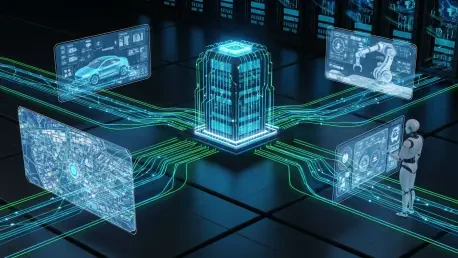
A defining trend in Nvidia’s approach is the cultivation of a holistic, interconnected ecosystem rather than a collection of standalone models. The company’s strategy recognizes that creating sophisticated physical AI demands a unified platform that addresses the entire development lifecycle. This involves providing developers with all the necessary components in one integrated environment, from initial training to real-world deployment.
This ecosystem includes not only the AI models themselves but also the underlying compute resources, access to vast datasets, and open libraries for customization. By offering deployment blueprints and a seamless pipeline, Nvidia aims to lower the barrier to entry for developing complex autonomous systems. This integrated strategy ensures that data, training, and reasoning capabilities feed into a continuous loop, allowing agents to learn and adapt in both digital simulations and their physical operational environments.
Applications in the Real World
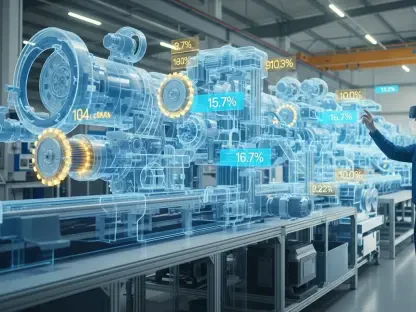
The practical impact of Nvidia’s physical AI ecosystem is already becoming visible across various industries, enabling a fundamental shift from single-task robots to more versatile systems. In manufacturing and logistics, this technology facilitates the development of “generalist specialist systems.” These are robots that possess a broad foundational knowledge base, allowing them to adapt to new tasks quickly, while also being capable of executing specific, high-precision functions with deep expertise.
Beyond industrial settings, the ecosystem is fostering unique use cases where embodied agents can combine general intelligence with specialized skills. For instance, autonomous vehicles can leverage broad environmental understanding for safe navigation while applying specialized models for complex maneuvers in dense urban traffic. This dual capability is what allows Nvidia’s platform to power a new generation of intelligent machines that are both adaptable and proficient.
Challenges and Developmental Hurdles
Despite its promise, the path to widespread adoption of physical AI is fraught with significant challenges. A primary technical hurdle is bridging the “sim-to-real” gap, ensuring that behaviors learned in a simulated environment translate accurately and reliably to the physical world. Furthermore, training robust models requires immense volumes of high-quality data, the collection and annotation of which remains a complex and resource-intensive endeavor.
Another critical challenge lies in ensuring the safe and predictable behavior of autonomous agents, especially in uncontrolled or public environments. The complexity of real-world interactions makes it difficult to anticipate every possible scenario, raising concerns about reliability and safety. Overcoming these technical limitations and addressing market obstacles related to cost and integration are central to ongoing development efforts.
The Future Trajectory An Inflection Point for Robotics
Nvidia’s concerted push into physical AI suggests the robotics industry is at an inflection point, poised for a transformative leap forward. Future developments are expected to focus on enhancing the generalization capabilities of AI agents, enabling them to perform a wider range of tasks with minimal retraining. The long-term vision is the creation of generalist AI agents that can operate with a human-like level of adaptability and problem-solving skills in any physical environment.
The maturation of this ecosystem is set to have a profound impact on both industry and society. As these technologies become more accessible and capable, they will power the next generation of intelligent autonomous systems, automating complex physical labor, and creating new possibilities in fields ranging from healthcare to exploration. The trajectory points toward a future where intelligent machines are an integral part of our daily physical lives.
Final Assessment and Key Takeaways
This review of Nvidia’s strategy reveals a deliberate and comprehensive effort to establish itself as the foundational platform for the age of physical AI. The company’s focus on building an integrated ecosystem of models, tools, and computing resources provides a powerful, end-to-end solution for developers. The synergy between models like Cosmos, Gr00t, and the Nemotron family creates a robust cognitive architecture for embodied agents.
Ultimately, the analysis concluded that while significant developmental hurdles remain, Nvidia’s ecosystem-first approach was a sound strategy for accelerating innovation in robotics. Its current state reflects a mature and well-considered platform with the potential to overcome long-standing challenges in the field. The advancements detailed here represented a critical step toward realizing a future populated by intelligent, autonomous physical systems.