
Enterprise IT operations are rapidly approaching an irreversible breaking point, strained by a level of complexity and data fragmentation that legacy models were never designed to handle. This operational strain is not merely an inconvenience; it is a direct threat to business continuity and innovation. The proliferation of artificial intelligence across the business landscape is set to multiply this problem tenfold, making a fundamental paradigm shift from reactive troubleshooting to proactive, agent-driven collaboration not just an advantage, but an absolute necessity for survival. This analysis explores the concept of AgenticOps, detailing the systemic failures it addresses, the core principles of its design, its real-world implementation, and its profound implications for the future of information technology.
The Rise of AgenticOps Data and Real-World Applications
The Tipping Point Why Traditional IT Operations Are Failing
The foundational crisis facing modern IT departments is a severe fragmentation of data. Critical operational intelligence is scattered across a vast and disconnected array of silos, spanning network infrastructure, security platforms, and application monitoring tools. This forces highly skilled IT operators into a frustratingly inefficient cycle of manual data correlation, where they must painstakingly navigate dozens of different dashboards just to piece together the context of a single incident. This siloed reality means that an enormous amount of time and effort is wasted on simply finding and aligning information before any meaningful analysis or resolution can even begin.
This long-standing challenge is now being exponentially magnified by the widespread integration of artificial intelligence. Projections indicate a near-future where every employee utilizes multiple personal AI agents for their daily tasks, each generating a constant stream of data and executing actions across the corporate network. This explosive growth in data-producing entities will completely overwhelm any operational model that relies on manual intervention and siloed tools. The current approach to troubleshooting is simply not scalable, making the transition to an automated, intelligent operational framework an urgent imperative.
Cisco’s Blueprint AgenticOps in Action
Leading technology firms are already developing blueprints for this new operational paradigm. A prime example is the Cisco AI Canvas, a unified and generative workspace designed to replace the chaotic patchwork of disparate dashboards. Within this environment, human operators use natural language to delegate complex tasks to AI agents in real time. These agents can retrieve specific telemetry, correlate signals from different domains, test hypotheses, and even recommend configuration changes, all within a single, collaborative interface that keeps the human expert firmly in control.
The intelligence behind these agentic systems is powered by highly specialized AI. This is not a generalist chatbot; it is a purpose-built model, such as Cisco’s Deep Network Model, which is trained on decades of proprietary, domain-specific data. This includes telemetry from millions of devices, insights from countless customer support interactions, and the codified expertise of top-tier engineers. This deep, nuanced understanding of network and security operations allows the AI to reason about complex problems with a level of accuracy and context that general-purpose models cannot achieve. This specialized intelligence is then applied across an integrated ecosystem, drawing data from platforms like Meraki, ThousandEyes, and Splunk to provide comprehensive telemetry and operational control.
Expert Perspectives The Rationale Behind the Shift
The Three Pillars of Agent-Driven Operations
The architecture of a successful AgenticOps model rests on three interdependent pillars. The first is unified data access. The platform must be capable of ingesting, normalizing, and harmonizing data from every corner of the enterprise, breaking down the silos that have long plagued IT. By creating a single, coherent data plane, AI agents gain the holistic visibility needed to connect the dots between seemingly unrelated events across network, security, and application domains.
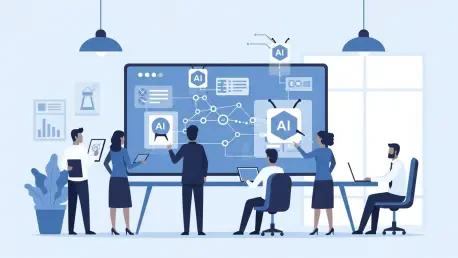
The second pillar is a “multiplayer-first” collaborative design. This principle moves beyond the linear, asynchronous nature of traditional ticketing systems and email chains. Instead, it creates a single, synchronous workspace where diverse teams like ITOps, SecOps, and NetOps can work alongside AI agents as active participants. This shared environment ensures that all stakeholders, both human and machine, have access to the same real-time information, enabling them to test hypotheses and implement solutions collectively, drastically reducing resolution times. Finally, the third pillar is the use of purpose-built, domain-specific AI. Effective IT operations demand a deep understanding of intricate systems, and generalist AI models lack the specialized knowledge required for nuanced reasoning about network configurations or security threat models. AgenticOps relies on AI trained extensively on specific operational domains to deliver precise and actionable insights.
From Fragmented Workflows to a Virtuous Cycle
This new model fundamentally transforms the workflow of issue resolution. The inefficient and error-prone practice of sharing static screenshots and manually updating tickets is replaced by a dynamic, shared context. In this collaborative workspace, all evidence, from agent-generated charts to human annotations and live data streams, coexists, creating a single source of truth that facilitates seamless teamwork and rapid escalation when necessary.
More importantly, this interactive process establishes a powerful learning loop. Every time human experts collaborate with AI agents to resolve an incident, the underlying models learn from the interaction, observing the successful diagnostic paths and remediation steps. Consequently, when a similar issue arises in the future, the agent can proactively suggest the proven solution, allowing the operator to delegate more of the routine work. This virtuous cycle of continuous improvement systematically compresses debugging time and enhances the organization’s overall operational resilience, freeing human talent to focus on more strategic initiatives.
The Future Landscape Implications and Challenges
Redefining Security and Identity in the AI Era
In an agent-driven world, security’s role evolves from a perceived barrier to a critical accelerator of innovation. Building trust in AI is paramount for its large-scale adoption, and this requires embedding robust security guardrails directly into the operational fabric. Proactive measures, such as automated detection of personally identifiable information (PII) in queries, prevention of prompt injection attacks, and strict data governance policies, are essential for enabling organizations to deploy AI capabilities confidently and securely.
Central to this secure framework is a sophisticated and comprehensive approach to identity management. It is not enough to unify data; controlling who and what can access that data is equally critical. Modern identity platforms, like Cisco Duo, are evolving beyond simple multi-factor authentication to become a complete identity fabric for the enterprise. This approach integrates identity and access controls directly into the AgenticOps platform, ensuring every action taken by an AI agent is governed by strict authorization policies. Administrators can define granular rules, dictating which agents can access specific datasets or whether they are permitted to correlate information across different security domains.
Evolving Human Roles and Strategic Imperatives
The shift toward AgenticOps does not render human professionals obsolete; rather, it elevates their role. The future of work in IT will see professionals moving away from tedious, manual execution and toward strategic oversight, validation, and high-stakes decision-making. Humans will remain firmly “in the loop,” but their primary function will be to direct and verify the work of AI agents, much like a modern software developer instructs an AI to generate code before reviewing and approving it for production.
This evolution demands a new skill set focused on strategic direction and critical validation. The inclusion of robust rollback capabilities within these platforms is crucial, ensuring that any autonomous action can be immediately and safely reversed if it produces an unintended outcome. This human-centric control mechanism is key to building confidence in automated systems. The IT professional of tomorrow will not be replaced by AI but will instead leverage it as a powerful tool to manage complexity at a scale previously unimaginable.
Conclusion Embracing the AgenticOps Paradigm
Summary of the Inevitable Shift
The transition toward AgenticOps stands as a necessary and logical response to the unsustainable fragmentation and complexity of modern IT environments. This emerging paradigm offers a unified, collaborative, and deeply intelligent path forward, moving operations from a state of constant reaction to one of proactive resolution. Agent-driven operations represent the next stage of evolution, providing the tools essential for managing the intricate, AI-powered enterprises of today and tomorrow. This is not a speculative future but a tangible shift already in motion.
A Call to Action for Enterprise Leaders
In this context, a “wait and see” approach is no longer a viable strategy; it is a significant competitive risk. Postponing engagement with this technological shift risks leaving an organization unprepared for a foundational change in how technology is managed and secured. Enterprise leaders must recognize that the landscape has already changed. Proactive exploration and the formation of strategic partnerships with vendors pioneering these new operational models are critical for building resilience and securing a competitive advantage in the new era of IT.